Mohamed Sherif E.
Before 365:
Data Science Intern
After 365:
AI Engineer at Quality Standards | Information Technology – QSIT
See all reviews
This course explores recent developments in machine learning and AI applied to financial time series, portfolio optimisation, and asset pricing.




Skill level:
Duration:
CPE credits:
Accredited

Bringing real-world expertise from leading global companies

Doctorate (PhD), Doctor of Philosophy, Economics

Description
This course teaches you how to apply advanced machine learning and AI techniques to real-world financial problems. Through hands-on projects in Python, you will explore practical applications such as time series forecasting, portfolio optimization, and asset pricing using real financial datasets.
Rather than focusing solely on theory, the course emphasizes implementation and real case studies that mirror the challenges faced by modern financial analysts and quantitative professionals. You will learn how to build, train, and evaluate machine learning models designed for financial data, gaining the skills needed to extract insights and support data-driven investment decisions.
By the end of the course, you will be able to design and implement AI-powered solutions for financial analysis, bridging the gap between advanced machine learning techniques and practical applications in finance.
Section 1 begins with a concise refresher on essential ML concepts, such as the bias-variance trade-off, overfitting, and cross-validation, before showing why standard validation methods often fail in finance.
In Section 2, the focus shifts to predictive modelling for financial time series. You’ll engineer features from raw market data (returns, volatility, lags) using Pandas and yfinance, then explore models ranging from ARIMA and ARIMAX to ensemble methods like Random Forests and Gradient Boosting. You will compare frameworks such as XGBoost, LightGBM, and CatBoost, implement walk-forward validation, and use SHAP values to interpret predictions. Special attention is given to avoiding common pitfalls like look-ahead bias and data leakage with techniques such as purging and embargoing.
Section 3 explores portfolio optimisation and asset pricing. You will apply machine learning to forecast risk and return, building on classic mean-variance optimisation with tools like cvxpy and PyPortfolioOpt. Advanced topics include the Black-Litterman model, shrinkage estimators, Hierarchical Risk Parity, and Eigenportfolios. For asset pricing, you’ll extend traditional factor models with Random Forests and Neural Networks to go beyond the Fama-French framework. We conclude with Reinforcement Learning for dynamic portfolio optimisation, where you will implement an Actor-Critic approach and design reward functions tailored to financial objectives.
By the end of this course, you will have a practical, working knowledge of how to apply machine learning and AI in finance—whether to develop trading strategies, construct portfolios, or build asset pricing models. You will gain not only the technical tools but also the intuition and confidence to use them effectively.
Are you ready to explore the frontier of ML-driven finance? Let’s get started.
Curriculum
We see ML tools in action trying to predict financial time series. Different markets are explored such as stock markets, commodities, cryptos, and interbank markets.
We see ML tools in action trying to predict financial time series. Different markets are explored such as stock markets, commodities, cryptos, and interbank markets.
Starting with mean-variance optimisation, we explore recent ML/AI applications such as Random Forests and Neural Networks for factor models in asset pricing.
Starting with mean-variance optimisation, we explore recent ML/AI applications such as Random Forests and Neural Networks for factor models in asset pricing.
Free lessons
1.1 Getting started
1 min
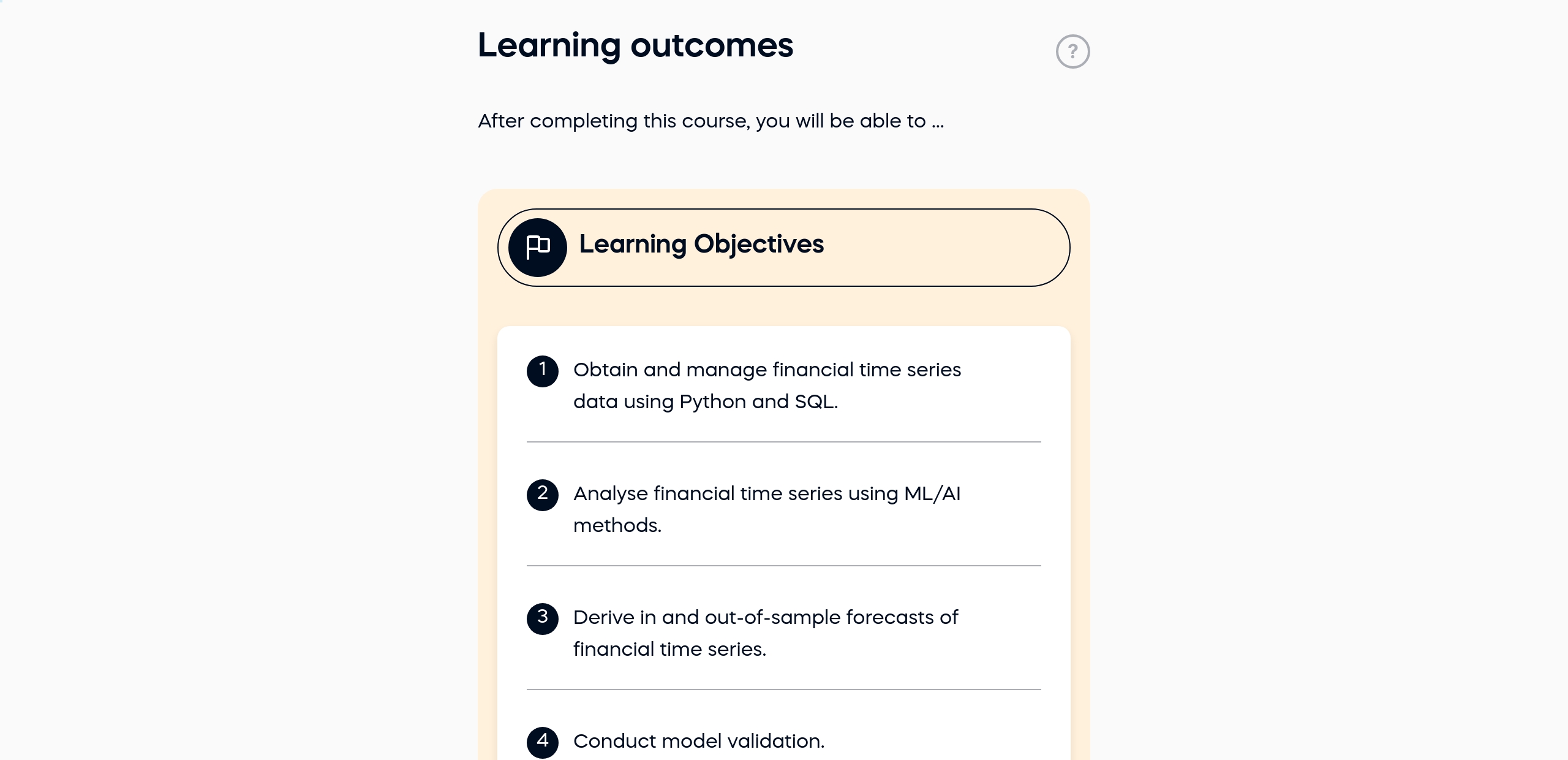
1.3 Learning outcomes
1 min
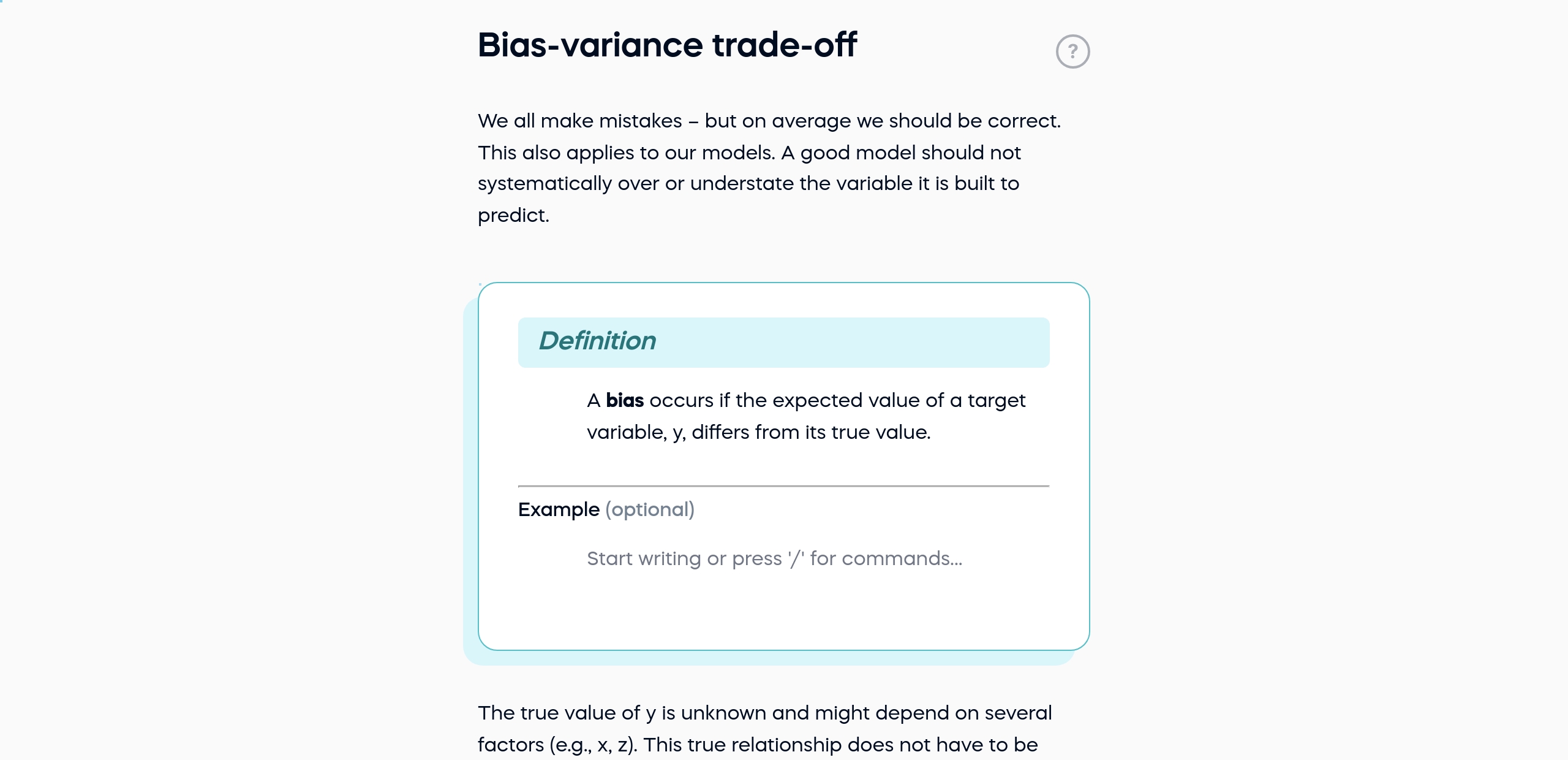
1.5 Bias-variance trade-off
2 min
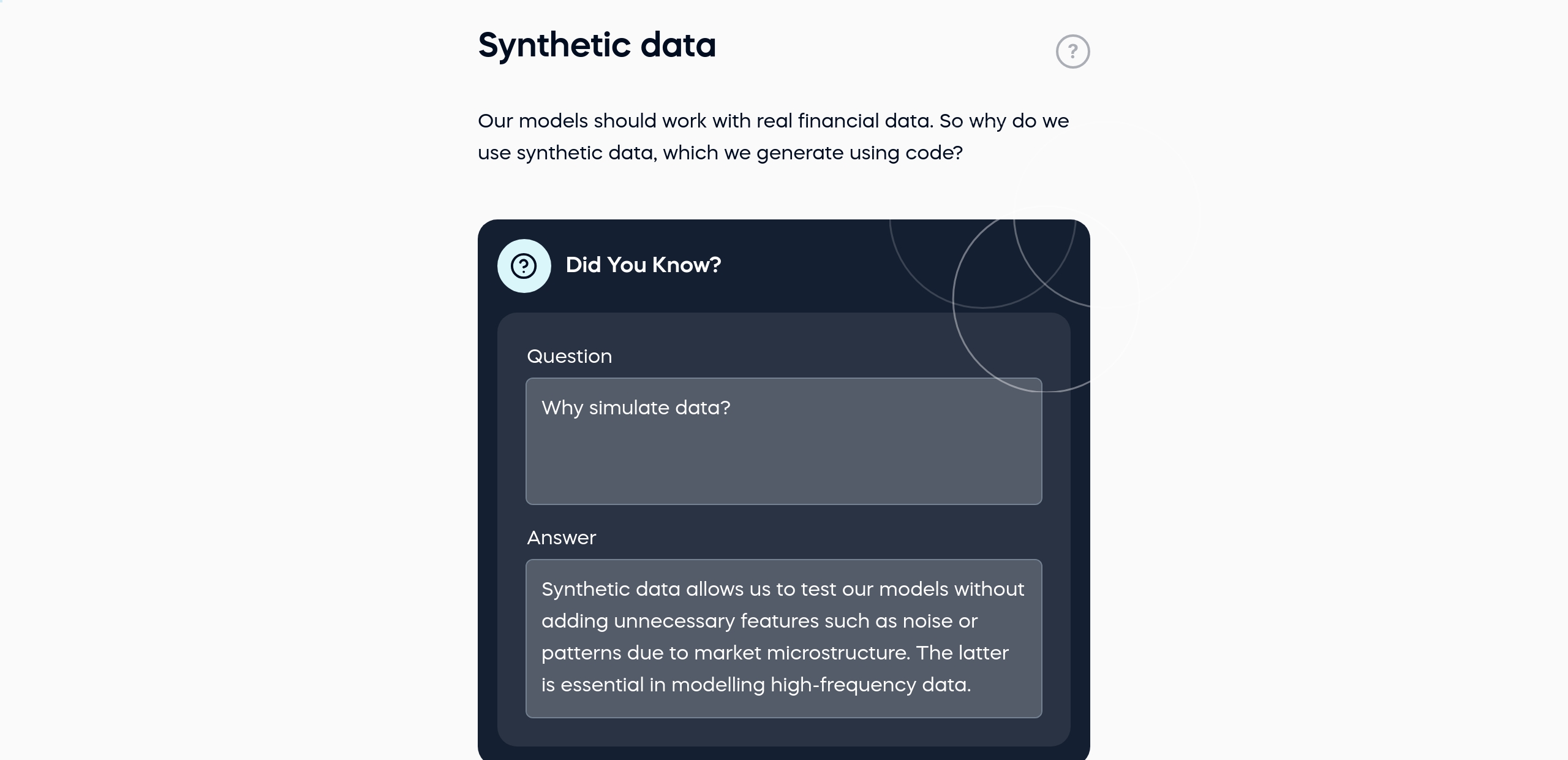
1.7 Synthetic data
1 min
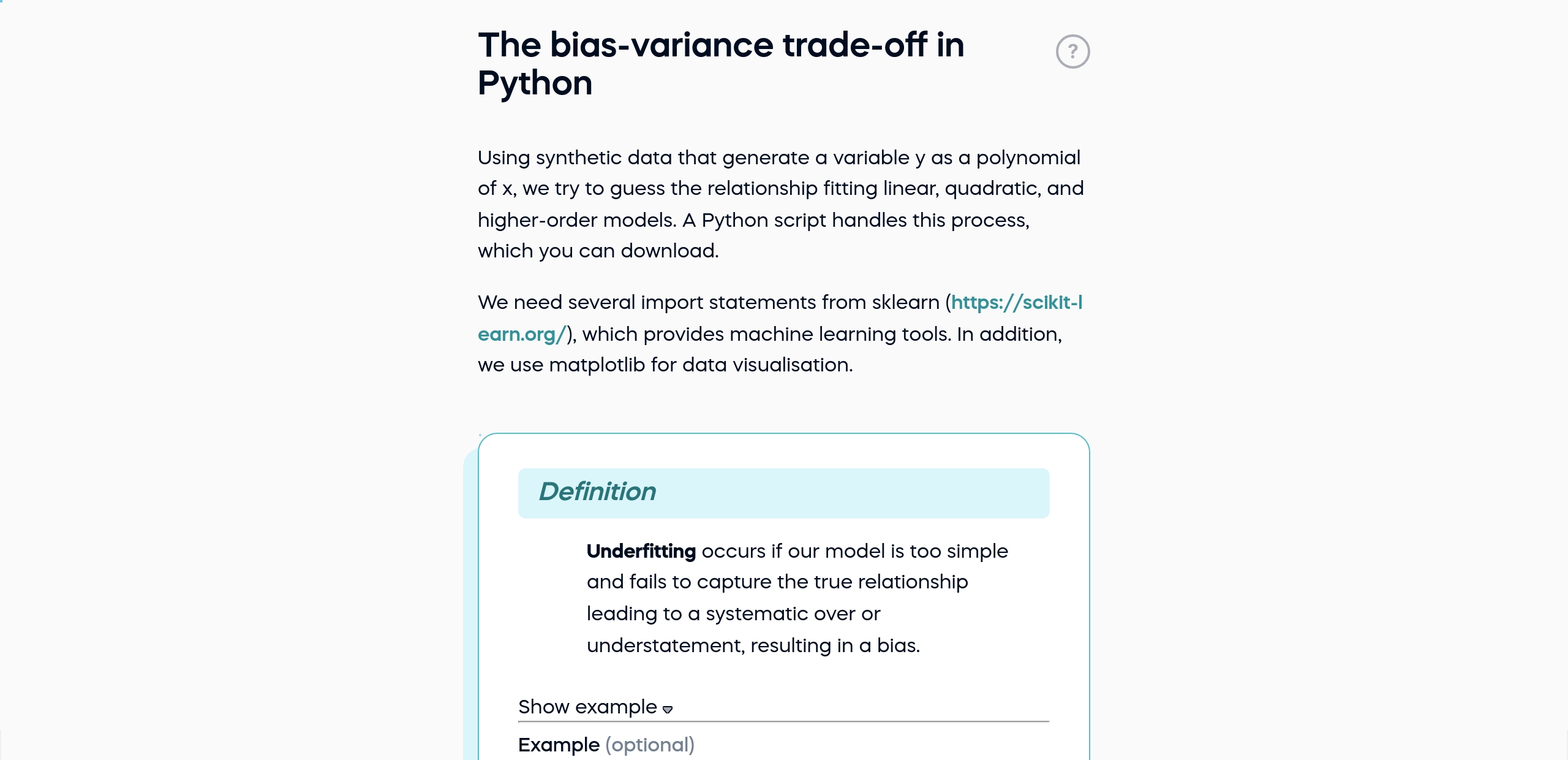
1.8 The bias-variance trade-off in Python
2 min
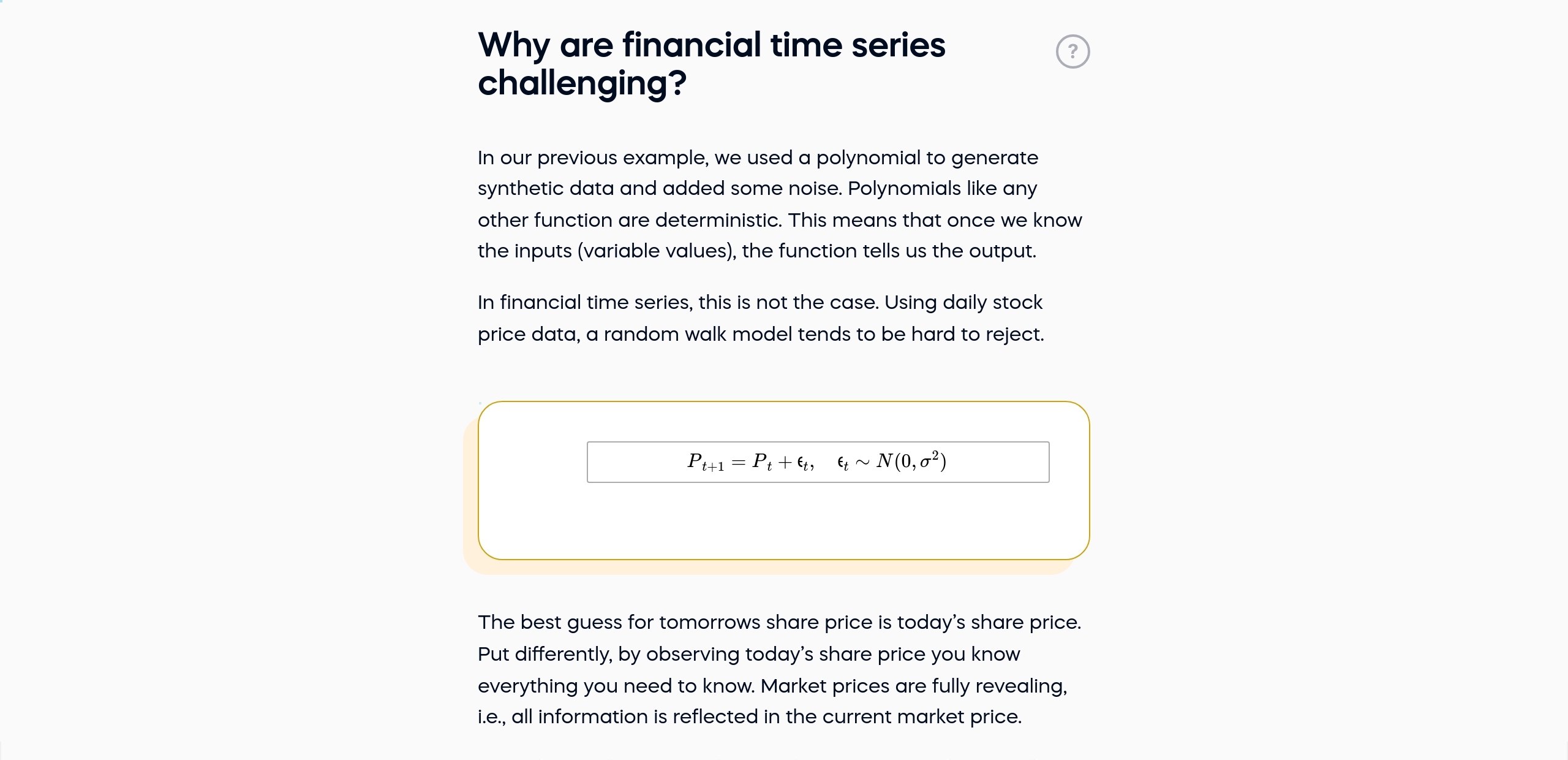
1.10 Why are financial time series challenging?
1 min
94%
of AI and data science graduates
successfully change
$29,000
average salary increase
9 in 10
of our graduates landed a new AI & data job
ACCREDITED certificates
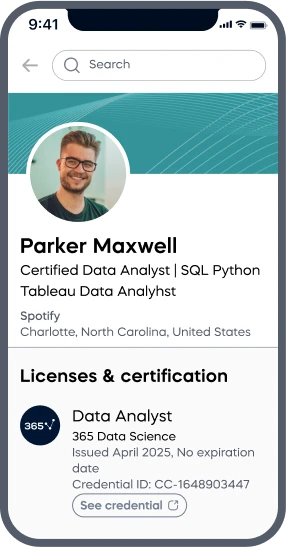
Craft a resume and LinkedIn profile you’re proud of—featuring certificates recognized by leading global
institutions.
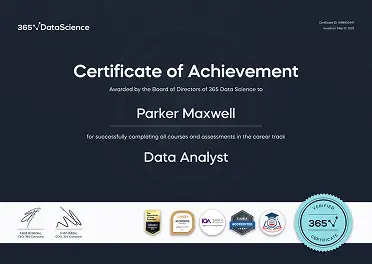
Earn CPE-accredited credentials that showcase your dedication, growth, and essential skills—the qualities
employers value most.
Certificates are included with the Self-study learning plan.
How it WORKS
Student REVIEWS