Online Course
Intro to NLP for AI

Master Natural Language Processing: Leverage Python and Machine Learning to build effective NLP systems

4.8

862 reviews on
7,939 students already enrolled
  • Institute of Analytics
  • The Association of Data Scientists
  • E-Learning Quality Network
  • European Agency for Higher Education and Accreditation
  • Global Association of Online Trainers and Examiners

Skill level:

Intermediate

Duration:

4 hours
  • Lessons (4 hours)

CPE credits:

4.5
CPE stands for Continuing Professional Education and represents the mandatory credits a wide range of professionals must earn to maintain their licenses and stay current with regulations and best practices. One CPE credit typically equals 50 minutes of learning. For more details, visit NASBA's official website: www.nasbaregistry.org

Accredited

certificate

What you learn

  • Acquire a solid foundation in NLP and text data handling.
  • Master text preprocessing to prepare data for NLP tasks.
  • Understand how models like ChatGPT work behind the scenes.
  • Create text classifiers and perform sentiment and topic analysis.
  • Vectorize and prepare text data for machine learning modeling.

Topics & tools

AINatural Language ProcessingText ClassificationPythonWorking with Text DataMachine and Deep Learning

Your instructor

Course OVERVIEW

Description

CPE Credits: 4.5 Field of Study: Information Technology
Delivery Method: QAS Self Study
Natural language processing is an exciting and rapidly evolving data science field that fundamentally impacts how we interact with technology. In this Intro to NLP for AI course, you’ll learn to unlock the power of natural language processing and be equipped with the knowledge and skills to start working on your own NLP projects. You’ll explore essential topics for working with text data via video lessons and practical coding exercises. Whether you want to create custom text classifiers, analyze sentiment, or explore concealed topics, you’ll learn how NLP works and obtain the tools and concepts necessary to tackle these challenges. We'll utilize algorithms like Latent Dirichlet Allocation, Transformer models, Logistic Regression, Naive Bayes, and Linear SVM, along with such techniques as part-of-speech (POS) tagging and Named Entity Recognition (NER). You won’t need prior natural language processing training to get started—just basic Python skills and familiarity with machine learning. This introduction to NLP guides you step-by-step through the entire process of completing a project. We’ll cover models and analysis and the fundamentals, such as processing and cleaning text data and how to get data in the correct format for NLP with machine learning.

Prerequisites

  • Python (version 3.8 or later), Natural Language Toolkit (NLTK) and pandas libraries, and a code editor or IDE (e.g., Jupyter Notebook, Spyder, or VS Code)
  • Basic understanding of Python programming is required.
  • No prior experience with natural language processing or machine learning is necessary.

Advanced preparation

Curriculum

54 lessons 23 exercises 1 exam
  • 1. Introduction
    9 min
    An introduction to the world of Natural Language Processing (NLP). Get acquainted with the basic concepts of NLP and understand its significance in today's world.
    9 min
    An introduction to the world of Natural Language Processing (NLP). Get acquainted with the basic concepts of NLP and understand its significance in today's world.
    Introduction to the course Free
    Course Materials and Notebooks
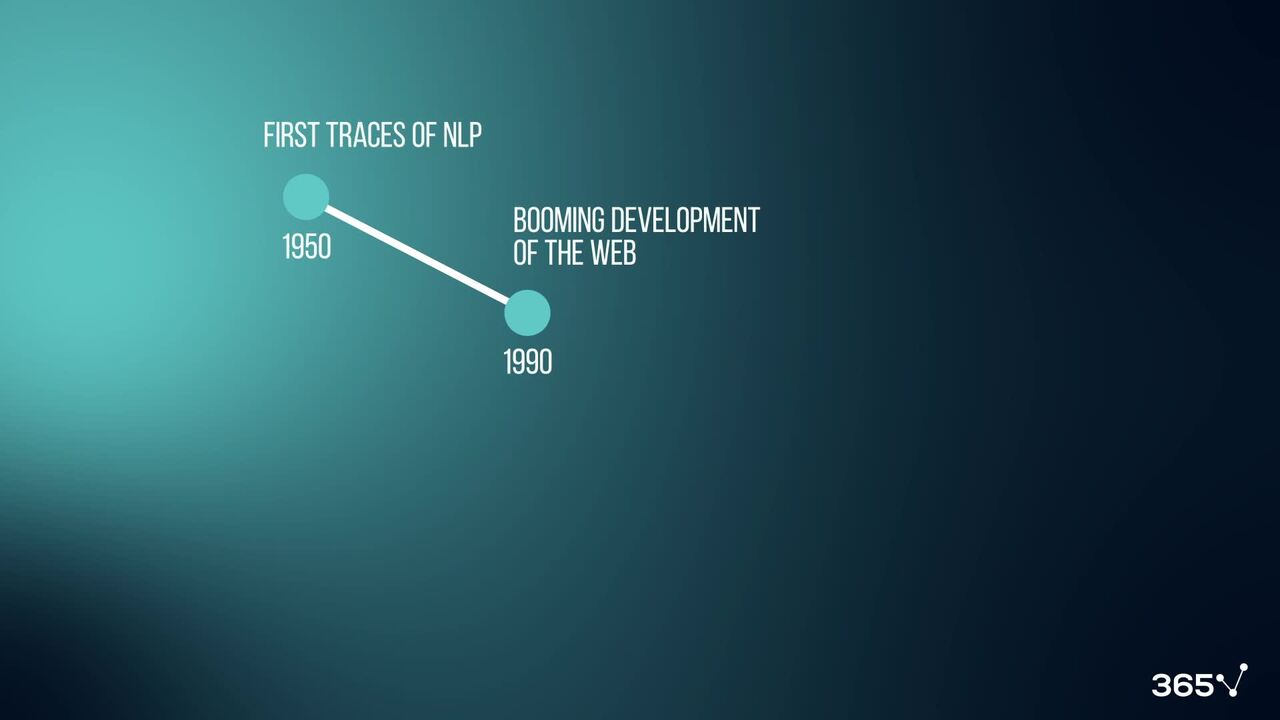
    Introduction to NLP Free
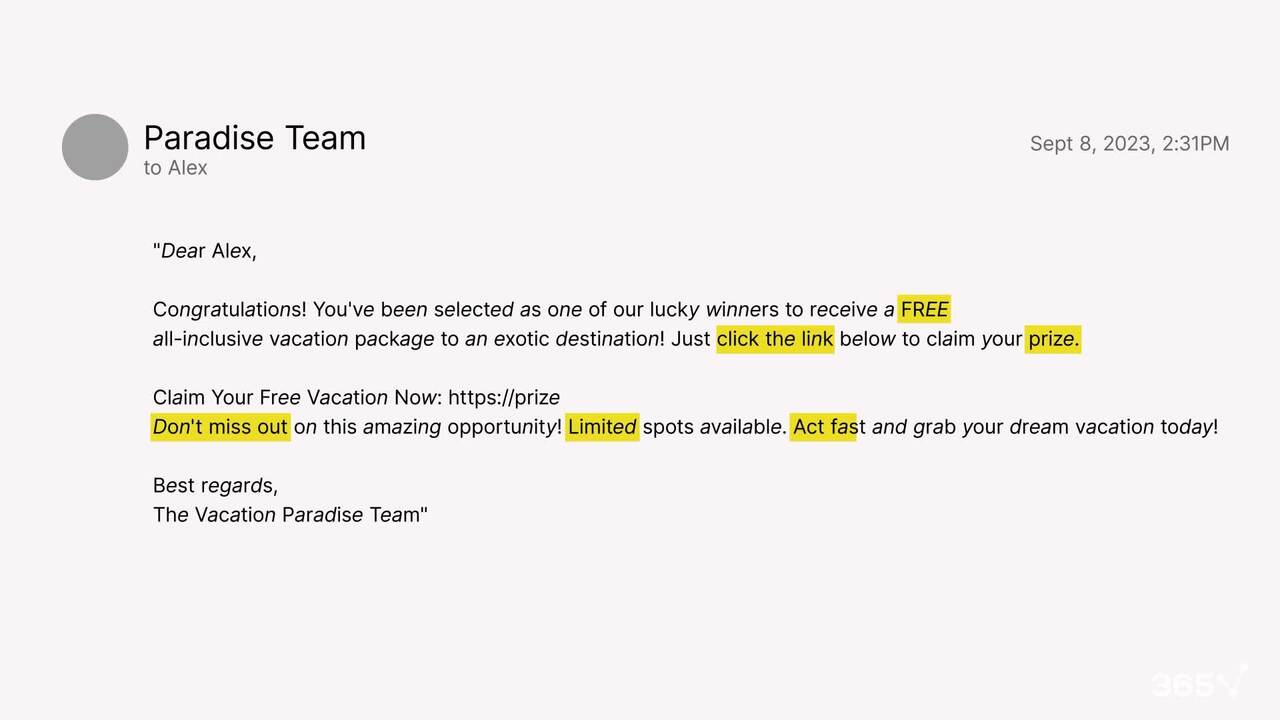
    NLP in everyday life Free
    Exercise
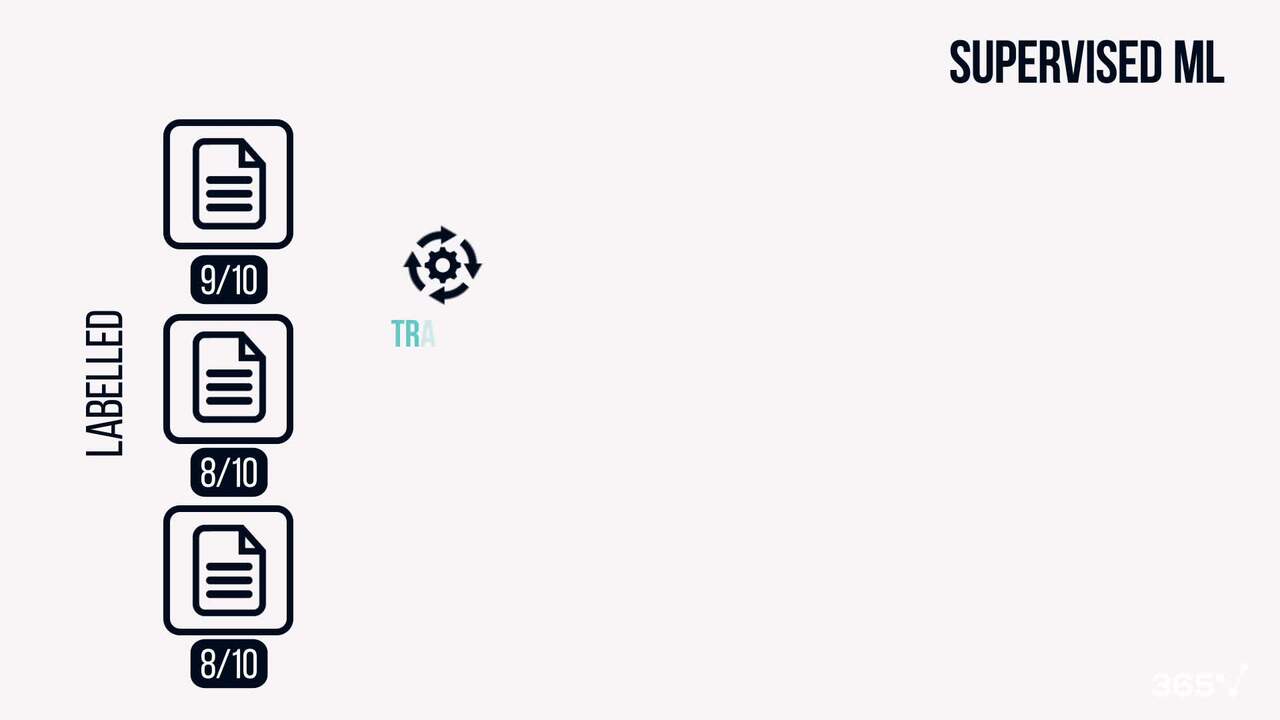
    Supervised vs Unsupervised NLP
    Exercise
  • 2. Text Preprocessing
    57 min
    Preprocessing is a fundamental part of any NLP task. Learn about the various techniques employed to clean and prepare textual data, ranging from basic tasks like lowercasing to more complex ones like tokenization and lemmatization.
    57 min
    Preprocessing is a fundamental part of any NLP task. Learn about the various techniques employed to clean and prepare textual data, ranging from basic tasks like lowercasing to more complex ones like tokenization and lemmatization.
    The importance of data preparation
    Exercise
    Setting up the environment
    Lowercase
    Removing stop words
    Regular expressions
    Exercise
    Tokenization
    Stemming
    Exercise
    Lemmatization
    Exercise
    N-grams
    Exercise
    A note on the text preprocessing practical task
    Text preprocessing: Practical task
  • 3. Identifying Parts of Speech and Named Entities
    33 min
    Learn how to classify words based on their roles in sentences and how to identify and categorize named entities in your text.
    33 min
    Learn how to classify words based on their roles in sentences and how to identify and categorize named entities in your text.
    Text Tagging
    Exercise
    Parts of speech (POS) tagging
    Named entity recognition (NER)
    Exercise
    A note on the POS and NER practical task
    POS and NER: Practical task
  • 4. Sentiment Analysis
    26 min
    Understand the fundamentals of sentiment analysis, the methodologies behind it, and the power of pre-trained transformer models in discerning sentiments.
    26 min
    Understand the fundamentals of sentiment analysis, the methodologies behind it, and the power of pre-trained transformer models in discerning sentiments.
    What is sentiment analysis?
    Rule-based sentiment analysis
    Exercise
    Pre-trained transformer models
    A note on the sentiment analysis practical task
    Sentiment analysis: Practical task
  • 5. Vectorizing Text
    10 min
    Textual data in its raw form isn't suitable for machine learning algorithms. Discover techniques to transform text into numerical vectors, enabling computational processes.
    10 min
    Textual data in its raw form isn't suitable for machine learning algorithms. Discover techniques to transform text into numerical vectors, enabling computational processes.
    Numerical representation of text
    Exercise
    Bag of Words Model
    Exercise
    TF-IDF
  • 6. Topic Modelling
    25 min
    Delve into the art of extracting underlying topics from vast text-based content. Explore various methods like Latent Dirichlet Allocation (LDA) and Latent Semantic Analysis (LSA). Learn how to determine the optimal number of topics.
    25 min
    Delve into the art of extracting underlying topics from vast text-based content. Explore various methods like Latent Dirichlet Allocation (LDA) and Latent Semantic Analysis (LSA). Learn how to determine the optimal number of topics.
    What is topic modelling?
    Exercise
    When to use topic modelling?
    Exercise
    Latent Dirichlet Allocation
    Exercise
    A note on the following lesson
    LDA in python
    Latent Semantic Analysis
    Exercise
    LSA in python
    How many topics?
    Exercise
  • 7. Builing your own text classifier
    17 min
    Familiarize yourself with popular algorithms like logistic regression, naive bayes, and support vector machines, and build custom text classifiers tailored to specific needs.
    17 min
    Familiarize yourself with popular algorithms like logistic regression, naive bayes, and support vector machines, and build custom text classifiers tailored to specific needs.
    Building a custom text classifier
    Logistic regression
    Exercise
    Naive Bayes
    Exercise
    Linear Support Vector Machine
  • 8. Case Study: Categorizing Fake News
    51 min
    In this section of the course, you will have the opportunity to work on a real-world application of NLP. Through this case study, understand the nuances of fake news, process and analyze the data, and build a classifier to segregate genuine news from the fabricated ones.
    51 min
    In this section of the course, you will have the opportunity to work on a real-world application of NLP. Through this case study, understand the nuances of fake news, process and analyze the data, and build a classifier to segregate genuine news from the fabricated ones.
    A note on the case study
    Introducing the project
    Exploring our data through POS tags
    Exercise
    Extracting named entities
    Processing the text
    Does sentiment differ between news types?
    What topics appear in fake news? (Part 1)
    What topics appear in fake news? (Part 2)
    Categorizing fake news with a custom classifier
  • 9. The Future of NLP
    9 min
    Look ahead into the future of NLP. Understand the role of deep learning in advancing NLP, explore the challenges and opportunities in non-English NLP, and ponder on what the future holds for this dynamic field.
    9 min
    Look ahead into the future of NLP. Understand the role of deep learning in advancing NLP, explore the challenges and opportunities in non-English NLP, and ponder on what the future holds for this dynamic field.
    What is deep learning?
    Exercise
    Deep learning for NLP
    Exercise
    Non-English NLP
    What's next for NLP?
  • 10. Course exam
    30 min
    30 min
    Course exam

Free lessons

Introduction to the course

1.1 Introduction to the course

3 min

Introduction to NLP

1.3 Introduction to NLP

2 min

NLP in everyday life

1.4 NLP in everyday life

1 min

Supervised vs Unsupervised NLP

1.6 Supervised vs Unsupervised NLP

2 min
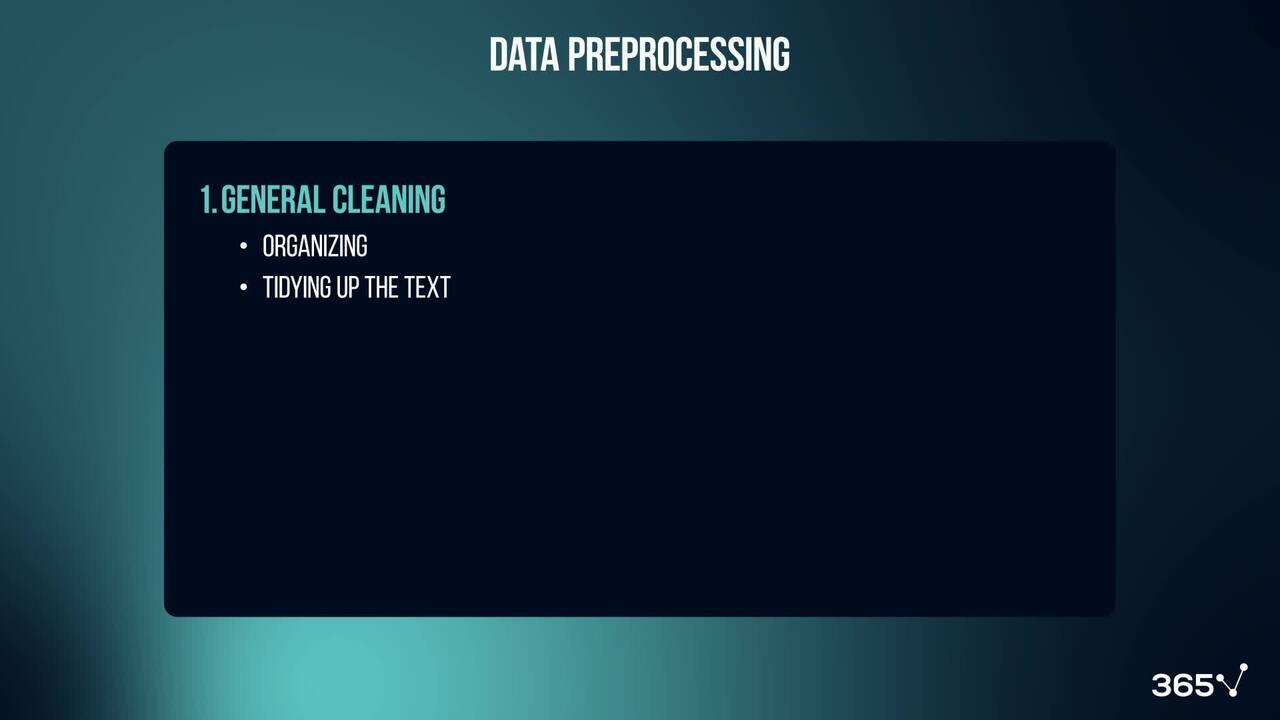
The importance of data preparation

2.1 The importance of data preparation

2 min

Start for free

ACCREDITED certificates

Craft a resume and LinkedIn profile you’re proud of—featuring certificates recognized by leading global institutions.

Earn CPE-accredited credentials that showcase your dedication, growth, and essential skills—the qualities employers value most.

  • Institute of Analytics
  • The Association of Data Scientists
  • E-Learning Quality Network
  • European Agency for Higher Education and Accreditation
  • Global Association of Online Trainers and Examiners

Certificates are included with the Self-study learning plan.
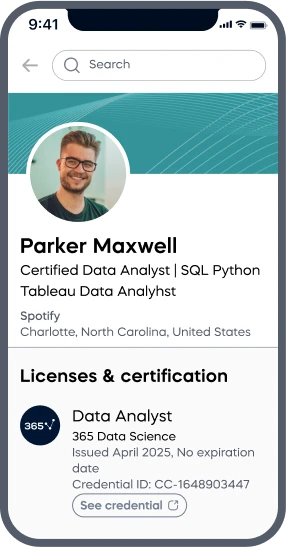
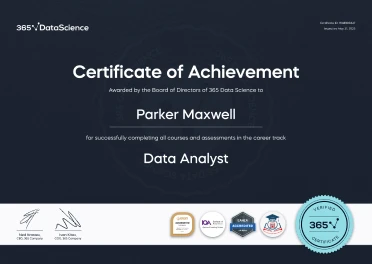
A LinkedIn profile mockup on a mobile screen showing Parker Maxwell, a Certified Data Analyst, with credentials from 365 Data Science listed under Licenses & Certification. A 365 Data Science Certificate of Achievement awarded to Parker Maxwell for completing the Data Analyst career track, featuring accreditation badges and a gold “Verified Certificate” seal.

How it WORKS

  • Lessons
  • Exercises
  • Projects
  • Practice exams
  • AI mock interviews

Lessons

Learn through short, simple lessons—no prior experience in AI or data science needed.

Try for free

Exercises

Reinforce your learning with mini recaps, hands-on coding, flashcards, fill-in-the-blank activities, and other engaging exercises.

Try for free

Projects

Tackle real-world AI and data science projects—just like those faced by industry professionals every day.

Try for free

Practice exams

Track your progress and solidify your knowledge with regular practice exams.

Try for free

AI mock interviews

Prep for interviews with real-world tasks, popular questions, and real-time feedback.

Try for free

Student REVIEWS

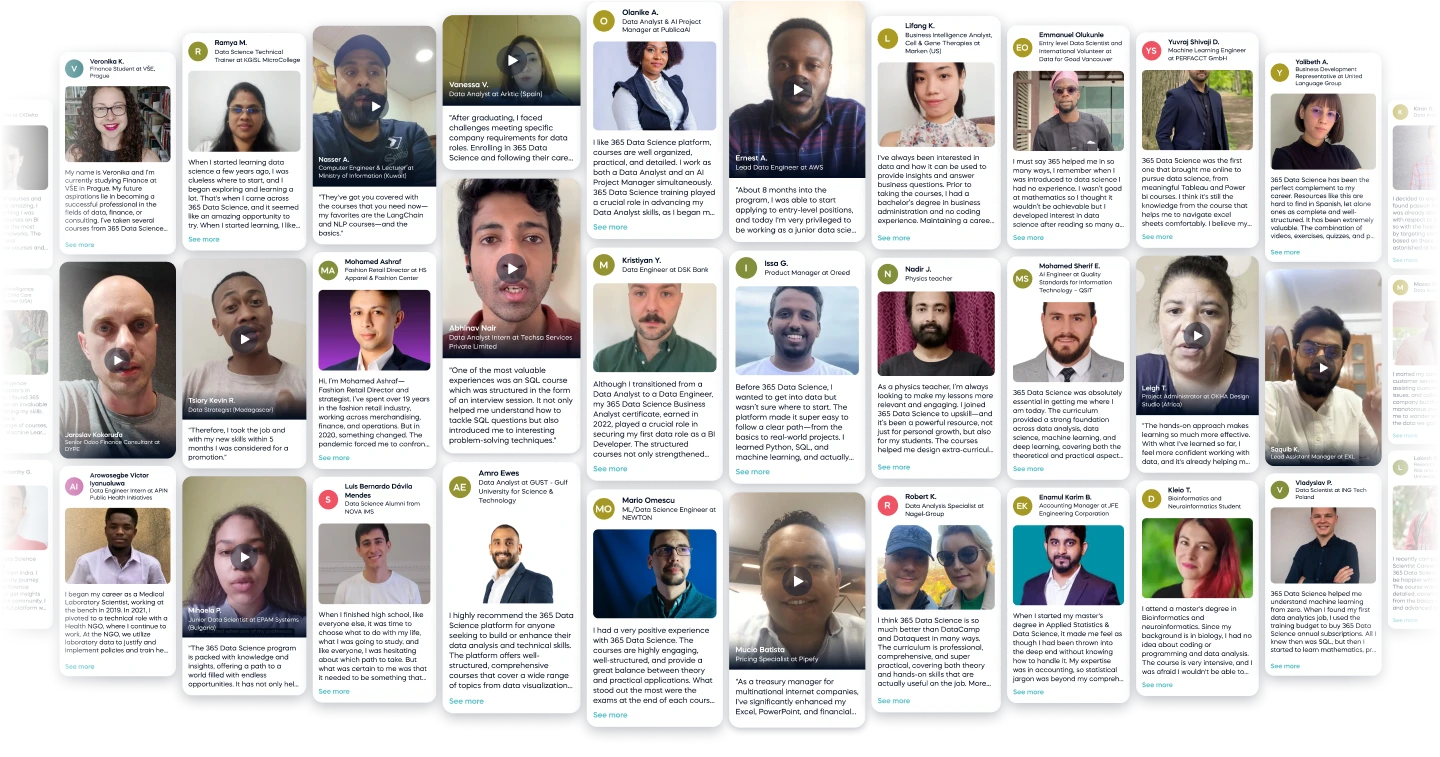
A collage of student testimonials from 365 Data Science learners, featuring profile photos, names, job titles, and quotes or video play icons, showcasing diverse backgrounds and successful career transitions into AI and data science roles.