Online Course
Introduction to MLflow

This course provides a hands-on introduction to MLflow, a powerful open-source platform for managing the end-to-end machine learning lifecycle. You’ll learn how to track experiments, package and deploy models, and integrate MLflow into production workflows—all without needing advanced MLOps experience.

4.8

862 reviews on
43 students already enrolled
  • Institute of Analytics
  • The Association of Data Scientists
  • E-Learning Quality Network
  • European Agency for Higher Education and Accreditation
  • Global Association of Online Trainers and Examiners

Skill level:

Advanced

Duration:

1 hour
  • Lessons (2 hours)

CPE credits:

4
CPE stands for Continuing Professional Education and represents the mandatory credits a wide range of professionals must earn to maintain their licenses and stay current with regulations and best practices. One CPE credit typically equals 50 minutes of learning. For more details, visit NASBA's official website: www.nasbaregistry.org

Accredited

certificate

What you learn

  • Understand the core concepts of MLflow and its role in the ML lifecycle.
  • Track experiments by logging parameters and metrics using the MLflow Python SDK.
  • Organize experiments effectively with named experiments, run names, and tags.
  • Package code into reproducible MLflow Projects with environment definitions.
  • Log, save, and load models across multiple ML frameworks using built-in flavors.
  • Serve models locally as REST APIs and prepare for deployment in production.
  • Use the MLflow Model Registry to version models throughout their lifecycle.
  • Load models dynamically from the registry using stage-based URIs.
  • Apply best practices to avoid tracking mistakes and ensure reproducibility.

Topics & tools

MLOps conceptsMLOpsAIMachine and Deep LearningPython

Your instructor

Course OVERVIEW

Description

CPE Credits: 4 Field of Study: Computer Software & App
Delivery Method: QAS Self Study

MLflow is one of the most widely adopted tools for managing machine learning projects, offering experiment tracking, model packaging, deployment, and lifecycle management—all in one platform. This course is designed for data scientists, ML engineers, and developers who want to bring order, structure, and automation into their ML workflows.

Starting from first principles, you’ll learn how to:

  • Track experiments and compare model performance using the MLflow Tracking API and UI
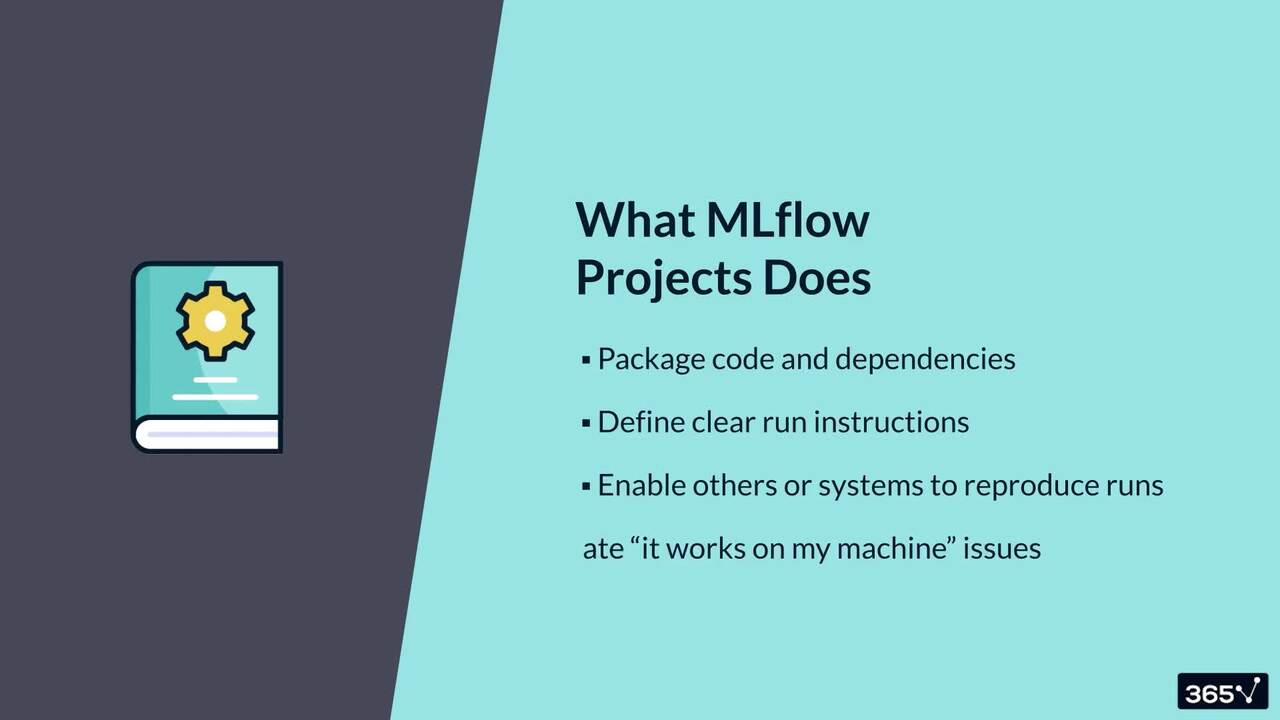
  • Package your training code and environments into reproducible MLflow Projects
  • Save and serve models locally and in the cloud using MLflow Models
  • Register, version, and promote models using the Model Registry
  • Integrate MLflow into CI/CD pipelines and extend it with tools like DVC, Optuna, and SageMaker

Through guided lessons, case-based exercises, and practical examples, you’ll move from simple tracking tasks to building a foundation for production-ready machine learning pipelines.

Whether you're managing a personal ML project or scaling a team-wide workflow, this course equips you with the skills and best practices to make MLflow your go-to tool for operationalizing machine learning.

Prerequisites

  • Basic Understanding of Python
  • Enthusiasm for Learning

Advanced preparation

  • None

Curriculum

31 lessons 26 exercises 1 exam
  • 1. Welcome to the 365 Course Builder
    3 min
    3 min
    Hello! Free
    Course Introduction: Welcome to MLflow Free
  • 2. MLOps Fundamentals and MLflow Overview
    13 min
    13 min
    Understanding MLOps and Its Importance Free
    The Machine Learning Lifecycle and Challenges Free
    Introduction to MLflow Free
    MLflow Components at a Glance Free
    Exercise Free
  • 3. Getting Started with MLflow
    12 min
    12 min
    Installing MLflow and Setting Up the Environment
    Running the MLflow Tracking Server (UI)
    Exercise
    Your First MLflow Experiment (Hello World)
    Exercise
  • 4. Experiment Tracking in Depth
    16 min
    16 min
    Logging Parameters, Metrics, and Artifacts
    Organizing Experiments and Runs
    Exercise
    Using MLflow Autologging
    Exercise
    Viewing and Comparing Results (Advanced)
    Exercise
  • 5. MLflow Projects – Packaging for Reproducibility
    11 min
    11 min
    What Are MLflow Projects?
    Creating and Running an MLflow Project
    Reproducibility and Version Control
    Exercise
  • 6. MLflow Models – Packaging and Deploying Models
    11 min
    11 min
    Saving and Loading Models with MLflow
    Serving and Deploying MLflow Models
    Practical Example – Deploying a Model Locally
    Exercise
  • 7. MLflow Model Registry – Managing the Model Lifecycle
    20 min
    20 min
    Introduction to the Model Registry
    Registering a Model
    Managing Model Versions and Stages
    Hands-On: Publishing a Model to the Registry
    Exercise
  • 8. Integrating MLflow into Automated MLOps Pipelines
    8 min
    8 min
    MLflow in the Context of a CI/CD Pipeline
    Triggering Deployments from the Model Registry
    Exercise
  • 9. Best Practices and Tips for MLflow in MLOps
    12 min
    12 min
    Experiment Tracking Best Practices
    Model Management Best Practices
    Integrating MLflow with Other Tools
    Common Pitfalls and How to Avoid Them
    Exercise
  • 10. Conclusion and Next Steps
    2 min
    2 min
    Course Wrap-Up: Final Thoughts & Next Steps
    Thanks for watching!
  • 11. Course exam
    30 min
    30 min
    Course exam

Free lessons

Hello!

1.1 Hello!

1 min

Course Introduction: Welcome to MLflow

1.2 Course Introduction: Welcome to MLflow

2 min
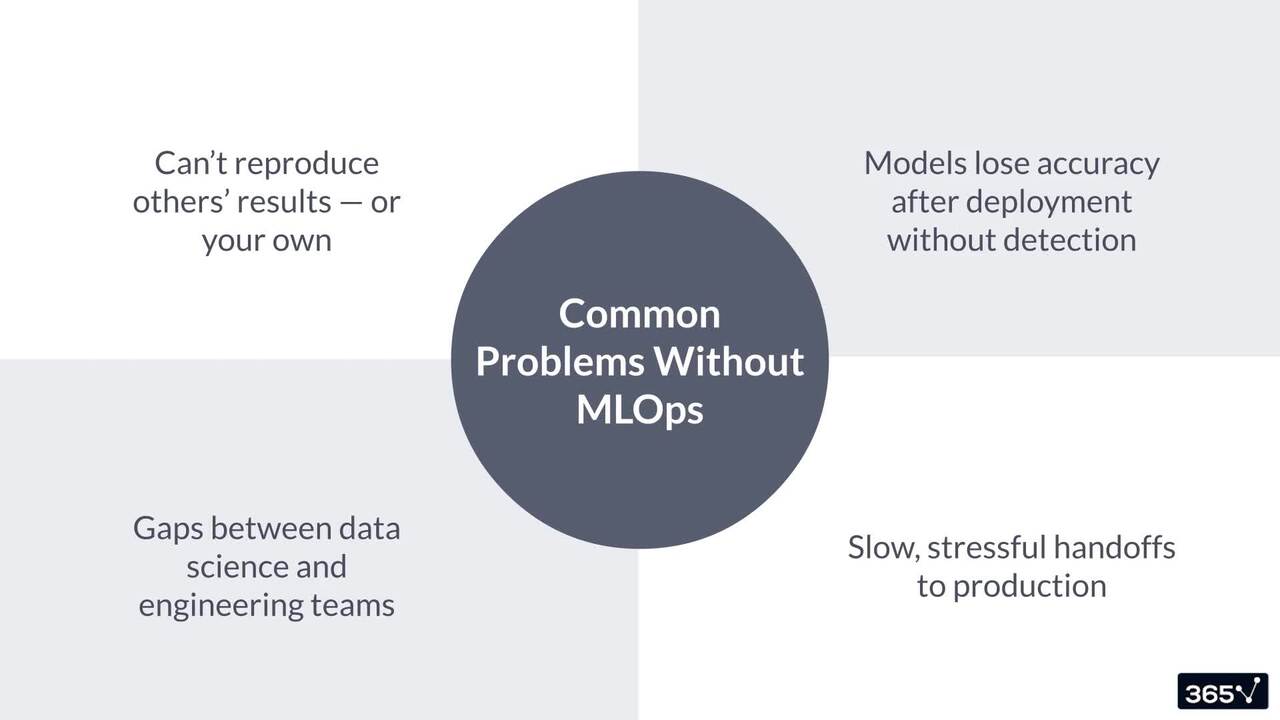
Understanding MLOps and Its Importance

2.1 Understanding MLOps and Its Importance

4 min
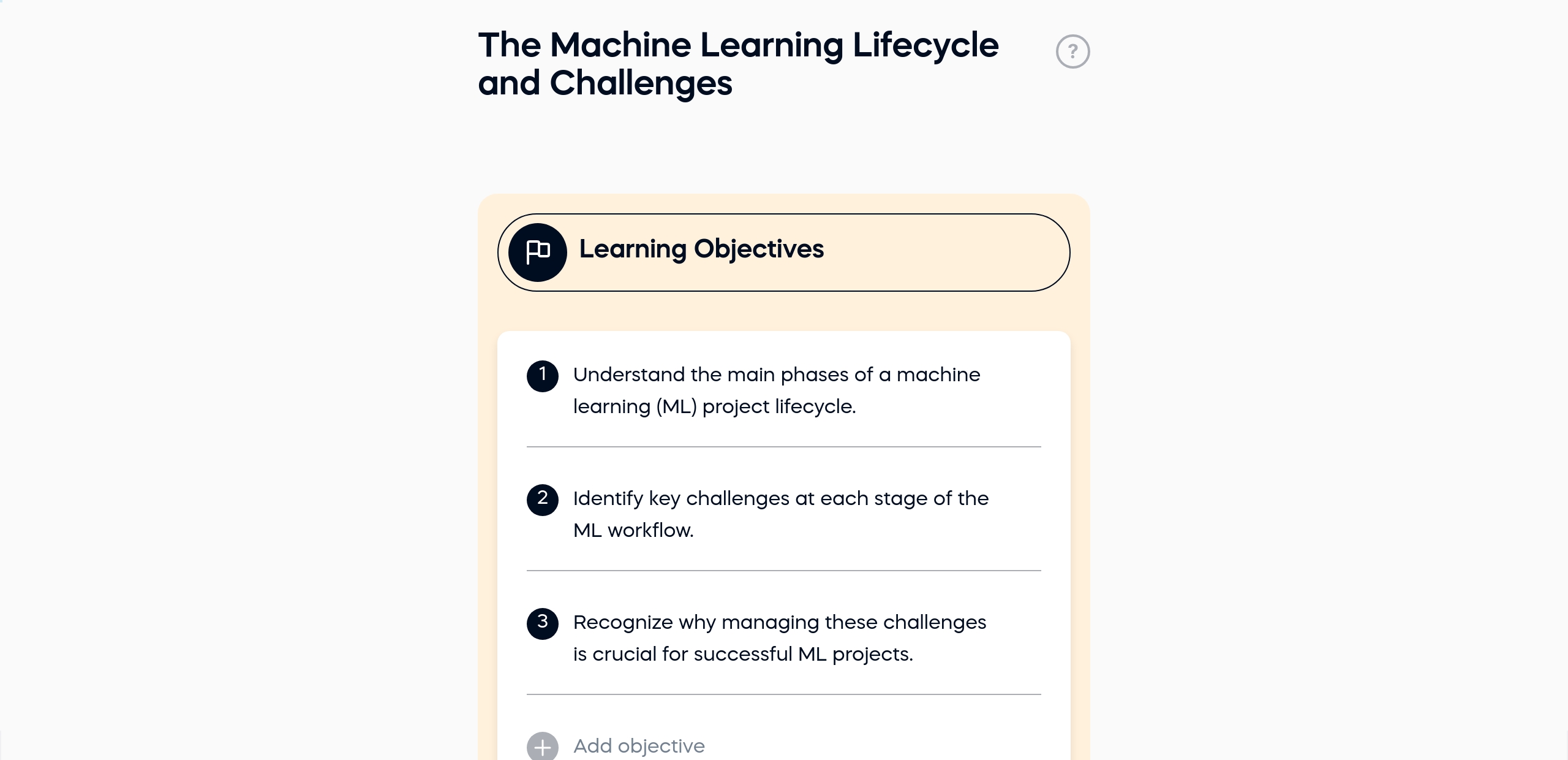
The Machine Learning Lifecycle and Challenges

2.2 The Machine Learning Lifecycle and Challenges

4 min
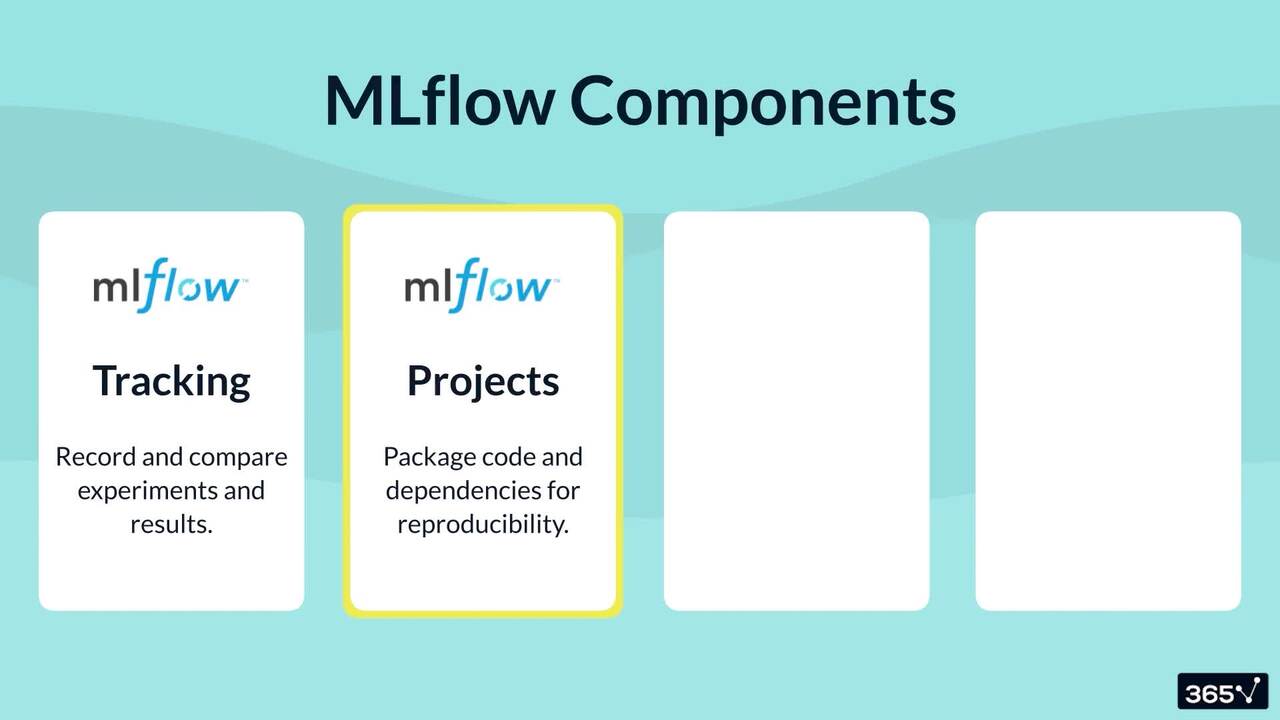
Introduction to MLflow

2.3 Introduction to MLflow

2 min

MLflow Components at a Glance

2.4 MLflow Components at a Glance

3 min

Start for free

96%

of our students recommend

365 Data Science.

9 in 10

of our graduates landed a new AI & data job

after enrollment

$29,000

average salary increase

after moving to an AI and data science career

ACCREDITED certificates

Craft a resume and LinkedIn profile you’re proud of—featuring certificates recognized by leading global institutions.

Earn CPE-accredited credentials that showcase your dedication, growth, and essential skills—the qualities employers value most.

  • Institute of Analytics
  • The Association of Data Scientists
  • E-Learning Quality Network
  • European Agency for Higher Education and Accreditation
  • Global Association of Online Trainers and Examiners

Certificates are included with the Self-study learning plan.
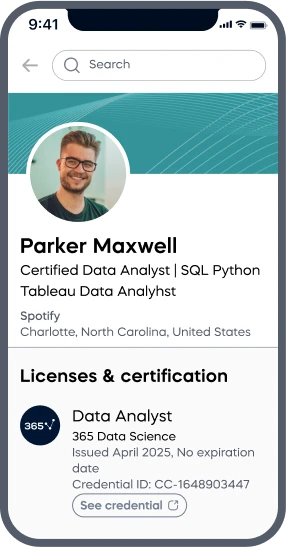
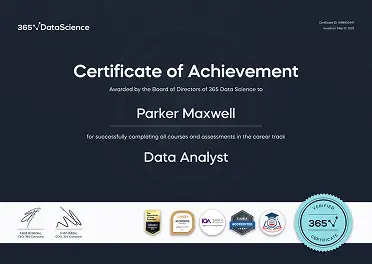
A LinkedIn profile mockup on a mobile screen showing Parker Maxwell, a Certified Data Analyst, with credentials from 365 Data Science listed under Licenses & Certification. A 365 Data Science Certificate of Achievement awarded to Parker Maxwell for completing the Data Analyst career track, featuring accreditation badges and a gold “Verified Certificate” seal.

How it WORKS

  • Lessons
  • Exercises
  • Projects
  • Practice exams
  • AI mock interviews

Lessons

Learn through short, simple lessons—no prior experience in AI or data science needed.

Try for free

Exercises

Reinforce your learning with mini recaps, hands-on coding, flashcards, fill-in-the-blank activities, and other engaging exercises.

Try for free

Projects

Tackle real-world AI and data science projects—just like those faced by industry professionals every day.

Try for free

Practice exams

Track your progress and solidify your knowledge with regular practice exams.

Try for free

AI mock interviews

Prep for interviews with real-world tasks, popular questions, and real-time feedback.

Try for free

Student REVIEWS

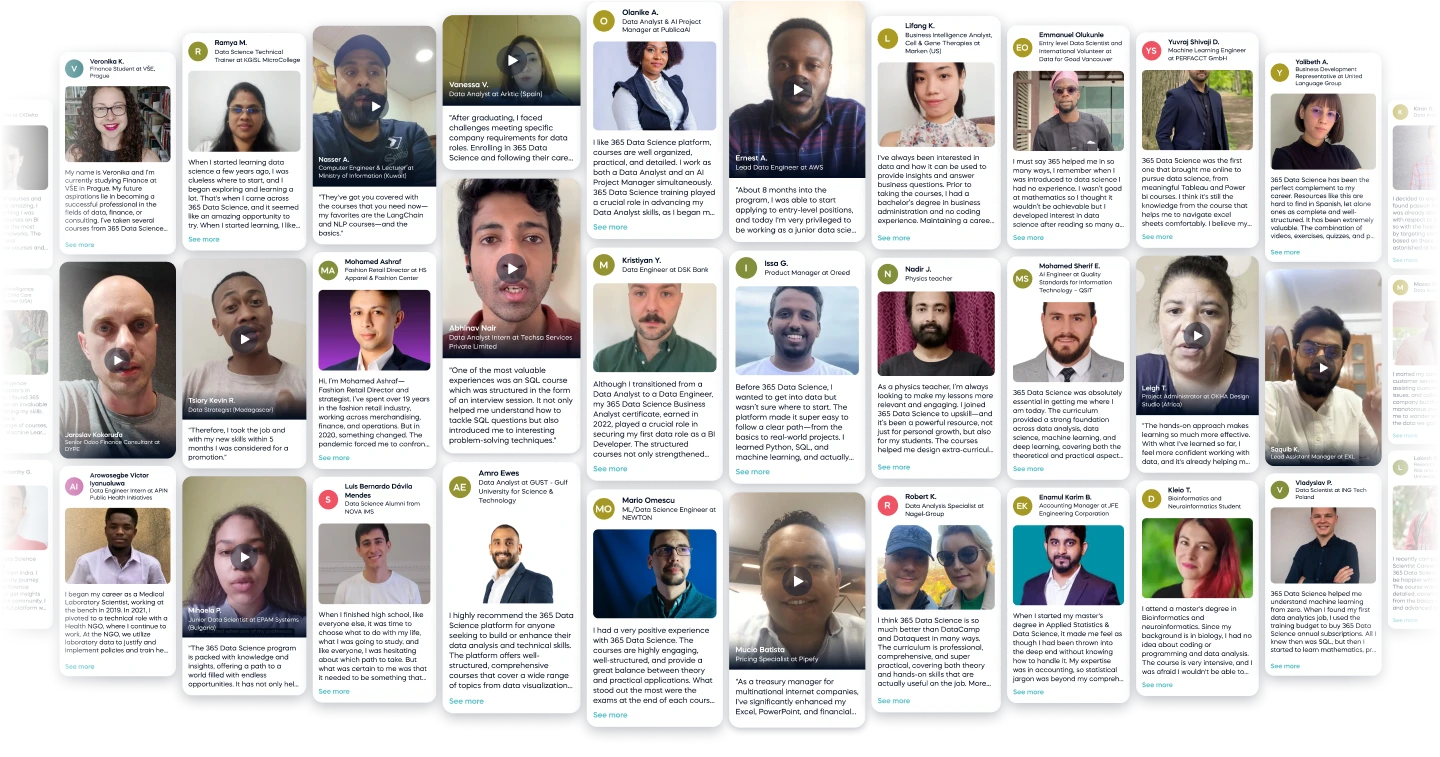
A collage of student testimonials from 365 Data Science learners, featuring profile photos, names, job titles, and quotes or video play icons, showcasing diverse backgrounds and successful career transitions into AI and data science roles.