Shruti P.
After 365:
Sr. Business Intelligence Engineer | Child Care Resource Center (USA)
See all reviews
Are you new to programming or curious about Python? This beginner-friendly course introduces you to the world of Python with a hands-on, step-by-step approach. No prior experience is needed—just bring your curiosity and learn how to code for beginners.
Skill level:
Duration:
CPE credits:
Accredited

Bringing real-world expertise from leading global companies
Master's degree, Theoretical and Mathematical Physics

Description
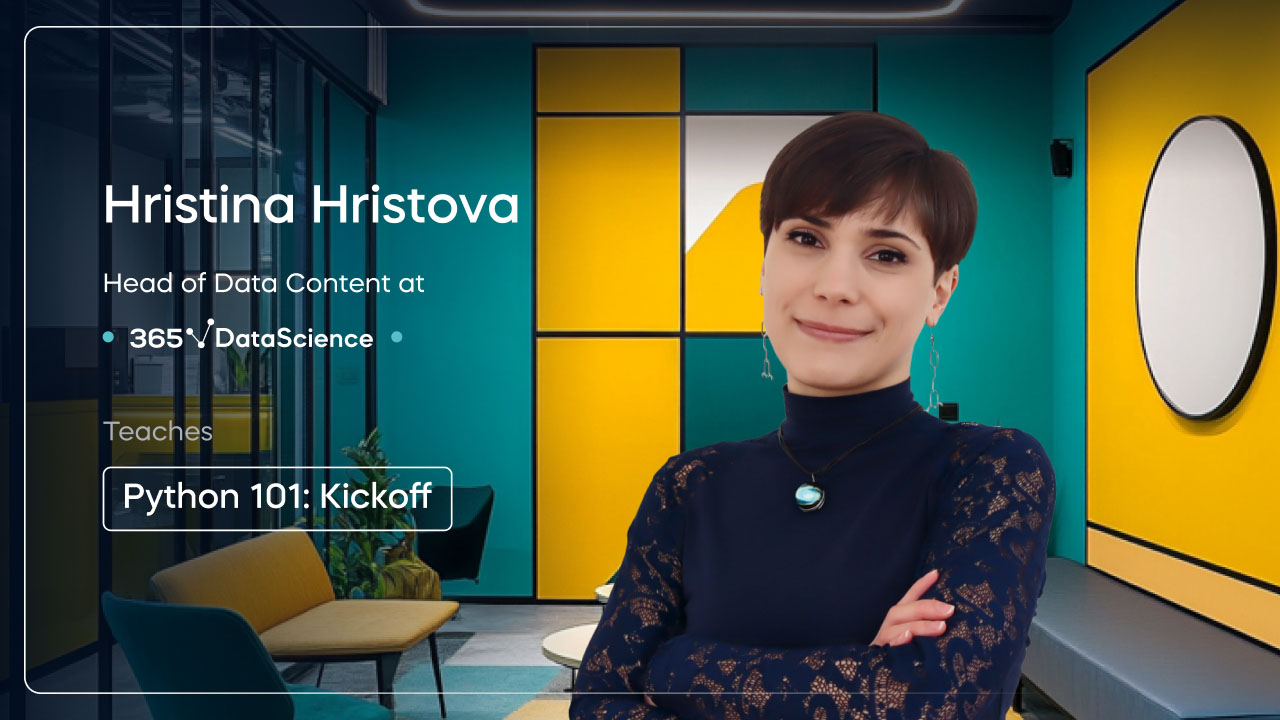
Are you curious about coding? Want to build a solid foundation in Python—the most popular programming language in the world today? Whether you’re a beginner or looking to strengthen the basics, Python 101: Kickoff is the perfect place to start your programming journey and learn Python.
This hands-on course introduces you to Python’s core building blocks in a beginner-friendly and engaging way. Learn how to code for beginners as you write your first program, navigate common coding errors, work with numbers and text, and understand how variables and logic combine to make code work.
What’s included in the curriculum?
1. Foundations of Python Programming:
Start strong with an overview of Python’s popularity, real-world uses, and what you’ll learn in the course.
2. Print, Errors, and Comments:
Get your first taste of code by printing text, handling errors, and writing clean, well-documented code with comments.
3. Data Types and Operators:
Explore numeric data types (integers and floats) and arithmetic operations, and understand how operator precedence and associativity affect calculations.
4. Booleans and Logic:
Learn how to work with true/false values, comparison operators, and logical expressions—essential for controlling your code’s behavior.
5. Working with Strings:
Dive into text manipulation, escape characters, type casting, and string operations to bring dynamic output to your programs.
6. Variables and Assignments:
Utilize assignment operators to store data inside variables and change their values. Utilize string interpolation for more precise, readable code.
7. Final Thoughts:
Wrap up the course with guidance on where to go next in your learning journey—like our follow-up course, Python 102: Power-Up.
Kick off your coding journey today with Python 101—because every expert coder was once a beginner!
Curriculum
Write your first lines of code using the print() function and see how easy it is to start coding in Python. Learn how to read and understand common error messages. Discover how comments help make your code readable and collaborative.
Write your first lines of code using the print() function and see how easy it is to start coding in Python. Learn how to read and understand common error messages. Discover how comments help make your code readable and collaborative.
This section builds your foundation in working with numbers and expressions. Explore Python’s built-in numeric types, like integers and floats, and how they work in calculations. Learn to use arithmetic operators and understand how Python handles the order of operations.
This section builds your foundation in working with numbers and expressions. Explore Python’s built-in numeric types, like integers and floats, and how they work in calculations. Learn to use arithmetic operators and understand how Python handles the order of operations.
Explore true/false values and use them to make decisions in your code. Learn how to compare values and combine conditions using logical operators. Mastering Boolean logic is key to writing dynamic, intelligent programs.
Explore true/false values and use them to make decisions in your code. Learn how to compare values and combine conditions using logical operators. Mastering Boolean logic is key to writing dynamic, intelligent programs.
Work with text using Python strings—one of the most versatile data types. Learn how to manipulate strings, use escape characters, and convert between types. These skills are essential for handling user input and displaying information.
Work with text using Python strings—one of the most versatile data types. Learn how to manipulate strings, use escape characters, and convert between types. These skills are essential for handling user input and displaying information.
Understand how to store and update data using variables. Learn about assignment operators, variable naming rules, and Python’s behavior with references. You’ll also learn about string interpolation using powerful f-strings.
Understand how to store and update data using variables. Learn about assignment operators, variable naming rules, and Python’s behavior with references. You’ll also learn about string interpolation using powerful f-strings.
Wrap up your learning with a look back at what you’ve accomplished. Get tips on where to go next, including the follow-up course that builds on your new Python skills. You’ve started strong—keep the momentum going!
Wrap up your learning with a look back at what you’ve accomplished. Get tips on where to go next, including the follow-up course that builds on your new Python skills. You’ve started strong—keep the momentum going!
Free lessons
1.1 Welcome to the Course!
2 min
1.2 Why Python?
4 min
1.3 What Does the Course Cover?
3 min
2.1 Hello, World!
3 min
2.3 Encountering Exceptions
6 min
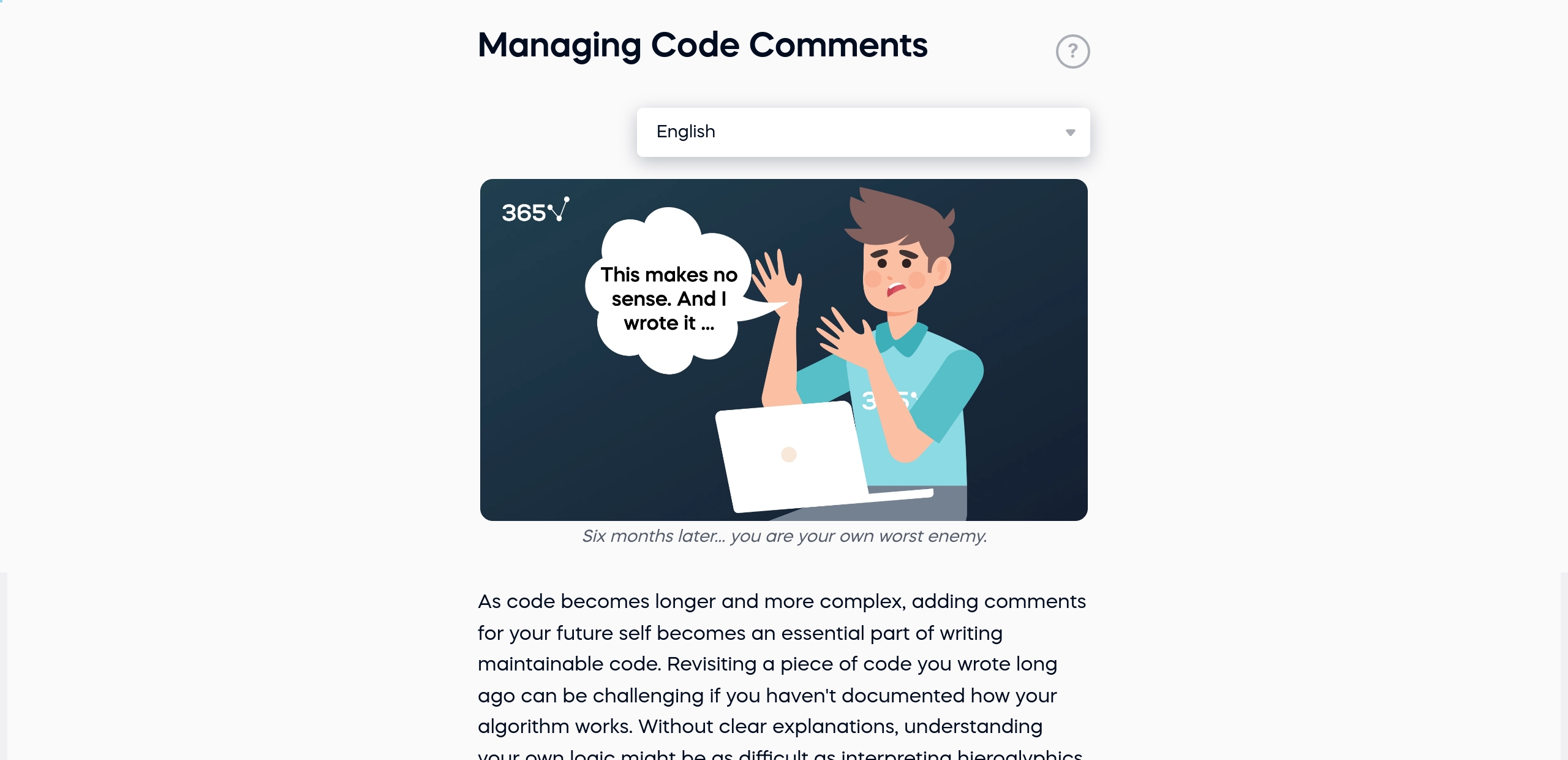
2.6 Managing Code Comments
6 min
94%
of AI and data science graduates
successfully change
#1 most reviewed
9 in 10
people walk away career-ready
ACCREDITED certificates
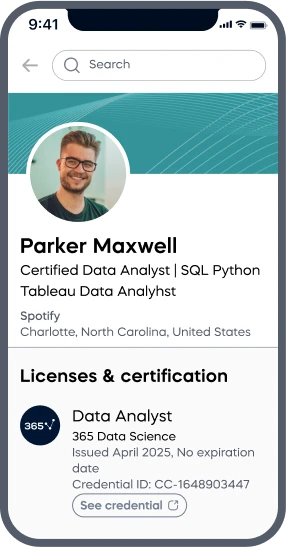
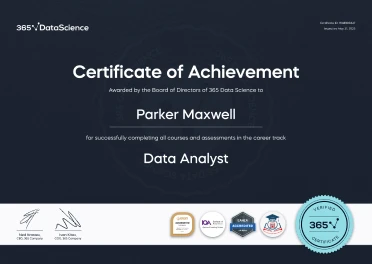
Craft a resume and LinkedIn profile you’re proud of—featuring certificates recognized by leading global
institutions.
Earn CPE-accredited credentials that showcase your dedication, growth, and essential skills—the qualities
employers value most.
Certificates are included with the Self-study learning plan.
How it WORKS
Student REVIEWS