Online Course
Data Cleaning and Preprocessing with pandas

Master Python’s quintessential pandas library and its core data structures – Series and DataFrame objects. Elevate your data analysis skills for real-world challenges

4.8

862 reviews on
21,589 students already enrolled
  • Institute of Analytics
  • The Association of Data Scientists
  • E-Learning Quality Network
  • European Agency for Higher Education and Accreditation
  • Global Association of Online Trainers and Examiners

Skill level:

Intermediate

Duration:

3 hours
  • Lessons (3 hours)
  • Practice exams (30 minutes)

CPE credits:

5
CPE stands for Continuing Professional Education and represents the mandatory credits a wide range of professionals must earn to maintain their licenses and stay current with regulations and best practices. One CPE credit typically equals 50 minutes of learning. For more details, visit NASBA's official website: www.nasbaregistry.org

Accredited

certificate

What you learn

  • Add the pandas library to your data analysis toolkit.
  • Learn how to install and import Python packages.
  • Gain proficiency with pandas Series and DataFrame objects.
  • Explore methods to clean and preprocess data using pandas.
  • Solve real-world data preprocessing problems using pandas.

Topics & tools

PythonData AnalysisProgrammingData PreprocessingPandas

Your instructor

Course OVERVIEW

Description

CPE Credits: 5 Field of Study: Information Technology
Delivery Method: QAS Self Study
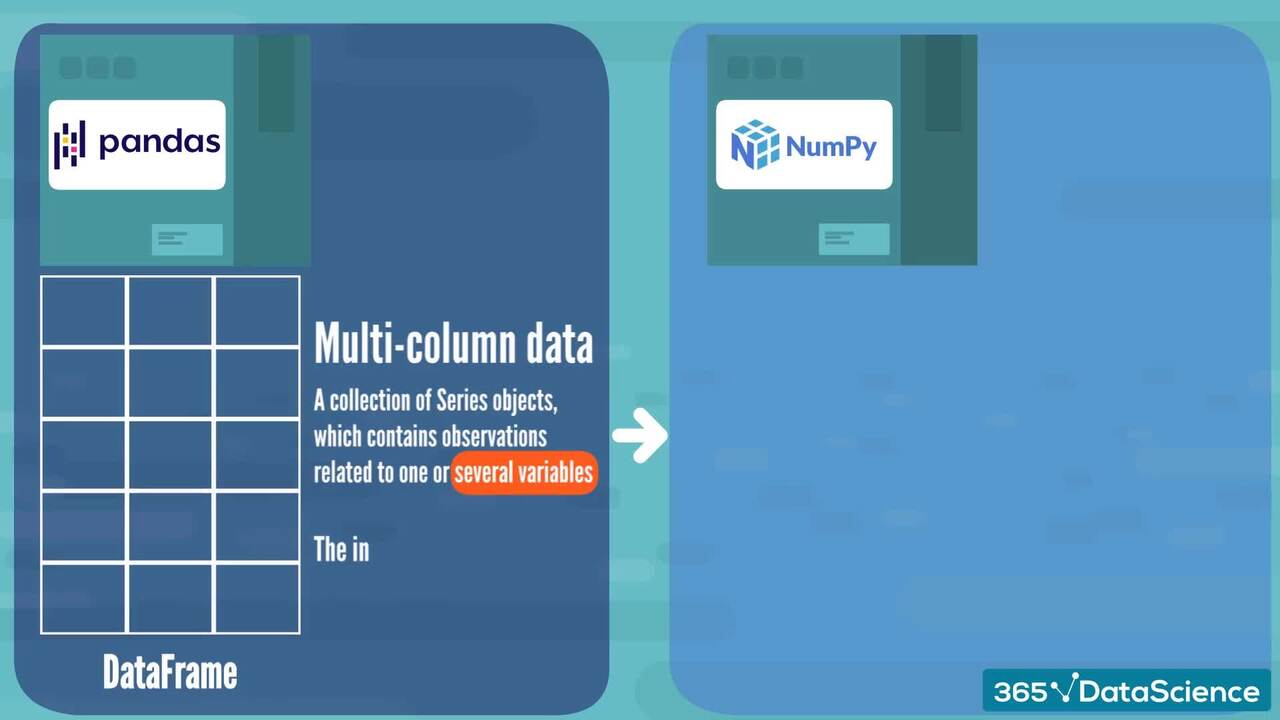
pandas is one of today’s most celebrated data analysis libraries. A favorite of many, its versatile functionalities can be leveraged for manipulation of many types of data - numeric, text, Boolean, and more. That’s one of the features that make pandas the go-to choice for analysts, especially during the data cleaning and preprocessing stages. pandas is built on NumPy and takes advantage of its computational power and abilities. But what sets pandas apart is its ability to operate with data in an easy-to-use way, allowing you to focus almost entirely on your analytic task. In this course, you will learn how to work with this powerful Python library and its core data structures – the pandas Series and DataFrames.

Prerequisites

  • Python (version 3.8 or later), pandas library, and a code editor or IDE (e.g., Jupyter Notebook, Spyder, or VS Code)
  • Completion of an introductory Python course is required.
  • Familiarity with NumPy is helpful but not mandatory.

Curriculum

29 lessons 32 exercises 4 exams
  • 1. pandas - Basics
    82 min
    In this section, you will develop a basic understanding of the pandas library and practice with fundamental programming tools such as methods, parameters, arguments, attributes, and index values. You will also learn how to work with the pandas Series and DataFrame objects. In the end, we will present the pandas documentation and will show how you can navigate through it.
    82 min
    In this section, you will develop a basic understanding of the pandas library and practice with fundamental programming tools such as methods, parameters, arguments, attributes, and index values. You will also learn how to work with the pandas Series and DataFrame objects. In the end, we will present the pandas documentation and will show how you can navigate through it.
    Introduction to the pandas Library Free
    Exercise
    Installing and Running pandas Free
    Introduction to pandas Series Free
    Exercise
    Coding exercise
    Working with Attributes in Python Free
    Coding exercise
    Exercise
    Using an Index in pandas Free
    Coding exercise
    Exercise
    Label-based vs Position-based Indexing Free
    More on Working with Indices in Python Free
    Coding exercise
    Using Methods in Python - Part I Free
    Using Methods in Python - Part II Free
    Exercise
    Parameters vs Arguments Free
    Exercise
    Coding exercise
    The pandas Documentation Free
    Introduction to pandas DataFrames Free
    Exercise
    Creating DataFrames from Scratch - Part I
    Creating DataFrames from Scratch - Part II
    Coding exercise
    Exercise
    Additional Notes on Using DataFrames
  • 2. Data Cleaning and Data Preprocessing
    5 min
    Only about 20% of the work of a data analytics or science team goes to statistical analysis, making visualization or predictive models. The bulk of the time is consumed by collecting, cleaning, and preprocessing data. That is why in this section, we’ve provided a single lecture that aims at clarifying the meaning of and difference between the data cleaning and data preprocessing stages.
    5 min
    Only about 20% of the work of a data analytics or science team goes to statistical analysis, making visualization or predictive models. The bulk of the time is consumed by collecting, cleaning, and preprocessing data. That is why in this section, we’ve provided a single lecture that aims at clarifying the meaning of and difference between the data cleaning and data preprocessing stages.
    Data Cleaning and Data Preprocessing
    Exercise
  • 3. pandas Series
    21 min
    Here, we will introduce you to working with one of the two core data structures of pandas – the pandas Series object. You will also discover several common methods and learn how to apply them to a pandas Series.
    21 min
    Here, we will introduce you to working with one of the two core data structures of pandas – the pandas Series object. You will also discover several common methods and learn how to apply them to a pandas Series.
    .unique(), .nunique()
    Exercise
    Coding exercise
    Converting Series into Arrays
    .sort_values()
    Attribute and Method Chaining
    Coding exercise
    Exercise
    .sort_index()
    Coding exercise
    Practice exam
  • 4. pandas DataFrames
    44 min
    This section focuses on the other fundamental object in pandas - the DataFrame. The DataFrame is universally known as the most important structure in this library. Here, we will revise its characteristics as well as comment on several popular related methods. In addition, we will show you how to deal with various techniques for data selection in a DataFrame.
    44 min
    This section focuses on the other fundamental object in pandas - the DataFrame. The DataFrame is universally known as the most important structure in this library. Here, we will revise its characteristics as well as comment on several popular related methods. In addition, we will show you how to deal with various techniques for data selection in a DataFrame.
    A Revision to pandas DataFrames
    A Note on Working with the Anaconda Assistant
    Using the Anaconda Assistant: Importing Data with pandas
    Common Attributes for Working with DataFrames
    Exercise
    Data Selection in pandas DataFrames
    Practice exam
    Data Selection - Indexing Data with .iloc[]
    Data Selection - Indexing Data with .loc[]
    Practice exam
    A Few Comments on Using .loc[] and .iloc[]
  • 5. Course exam
    45 min
    45 min
    Course exam

Free lessons

Introduction to the pandas Library

1.1 Introduction to the pandas Library

6 min
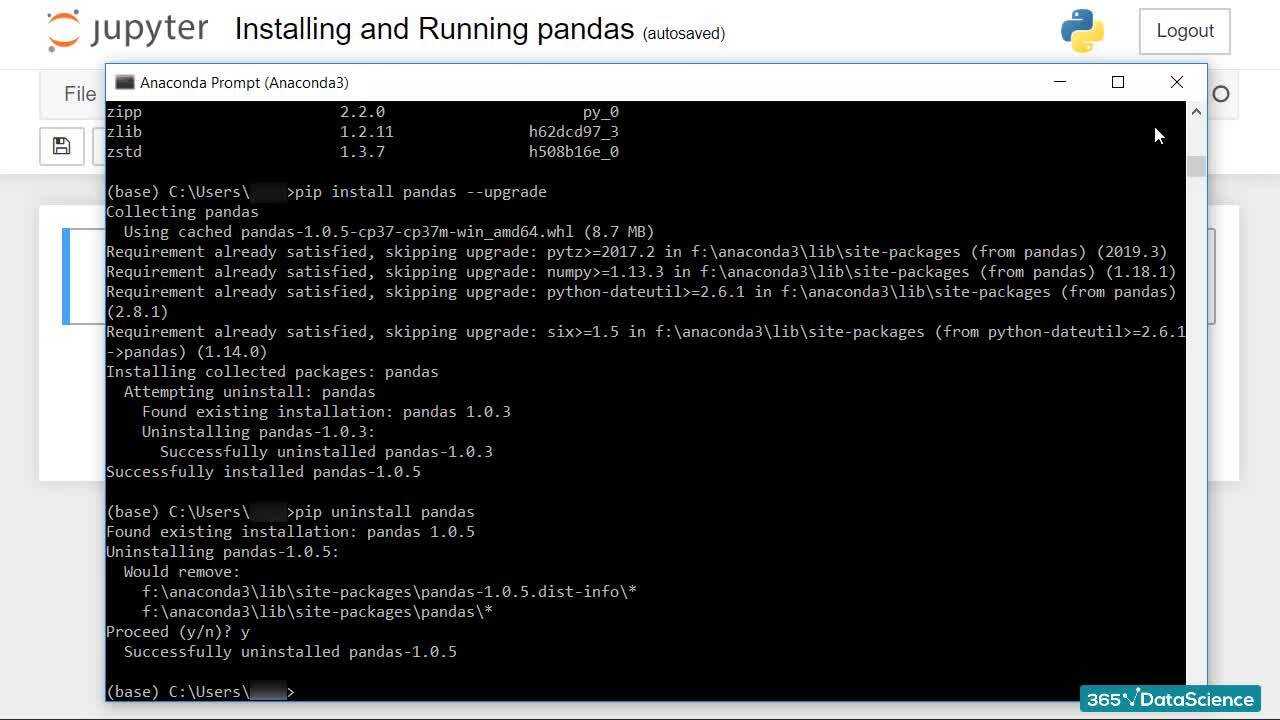
Installing and Running pandas

1.3 Installing and Running pandas

6 min
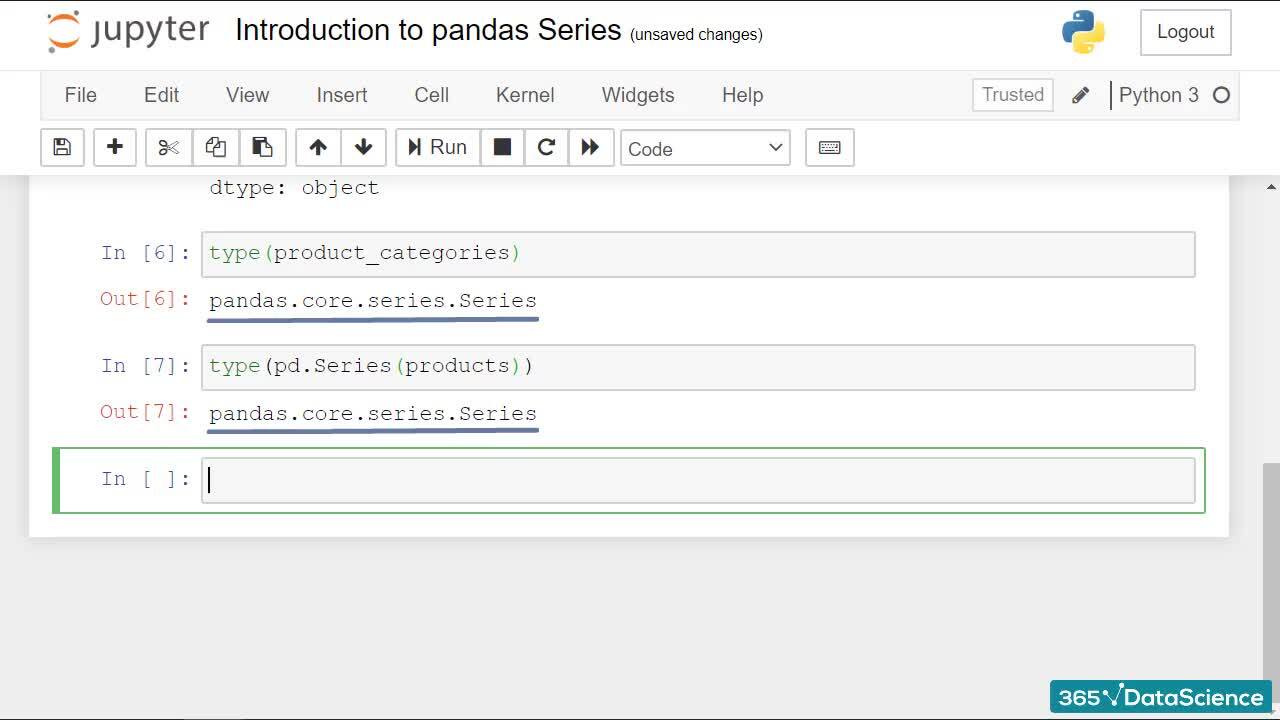
Introduction to pandas Series

1.4 Introduction to pandas Series

9 min
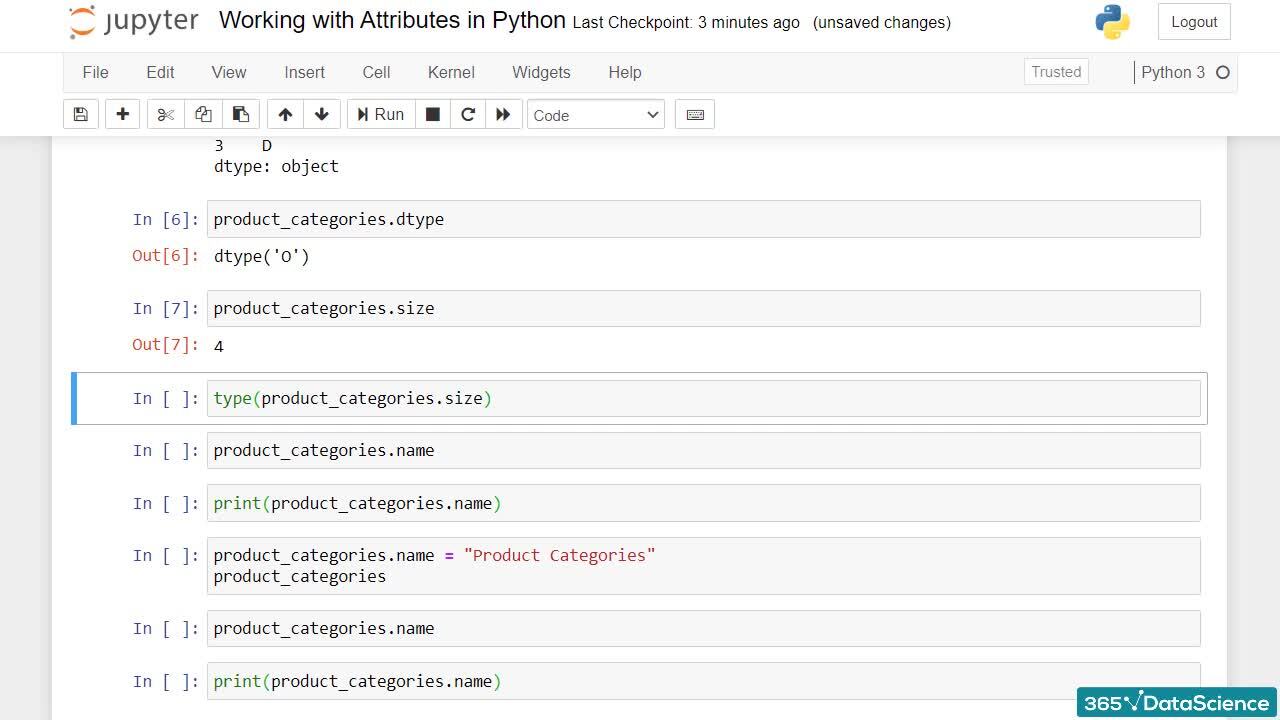
Working with Attributes in Python

1.7 Working with Attributes in Python

5 min
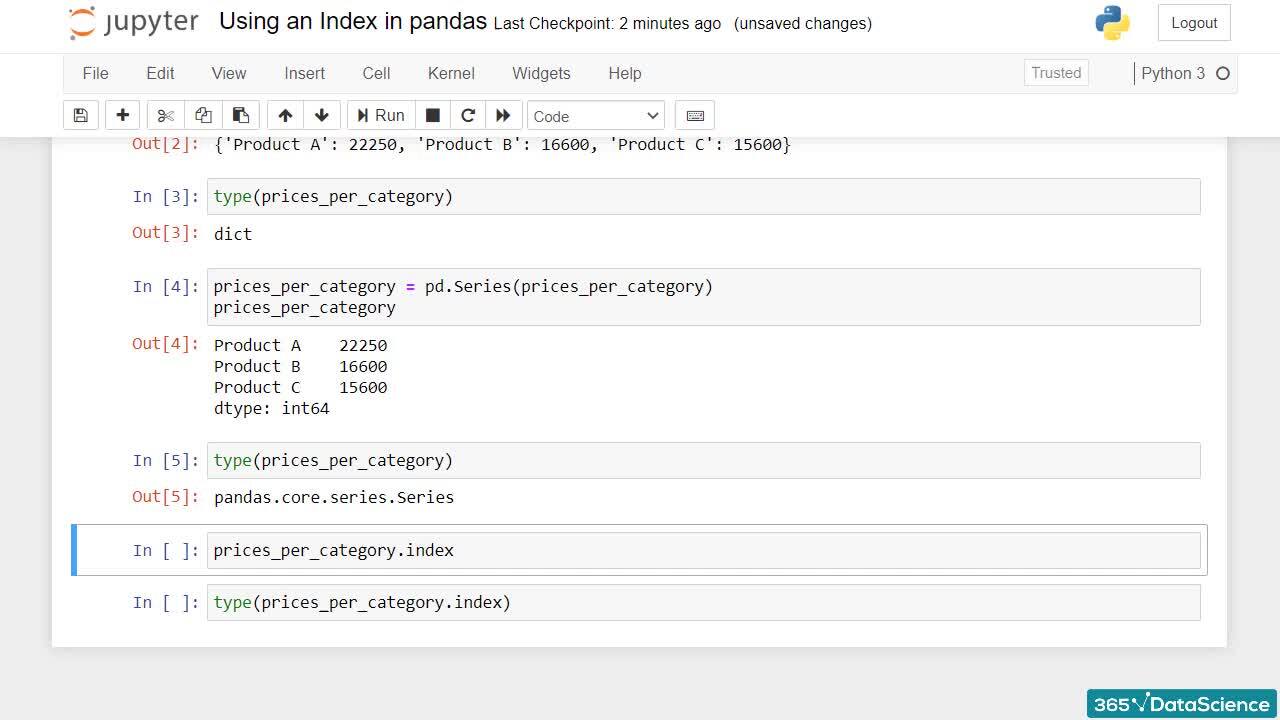
Using an Index in pandas

1.10 Using an Index in pandas

4 min

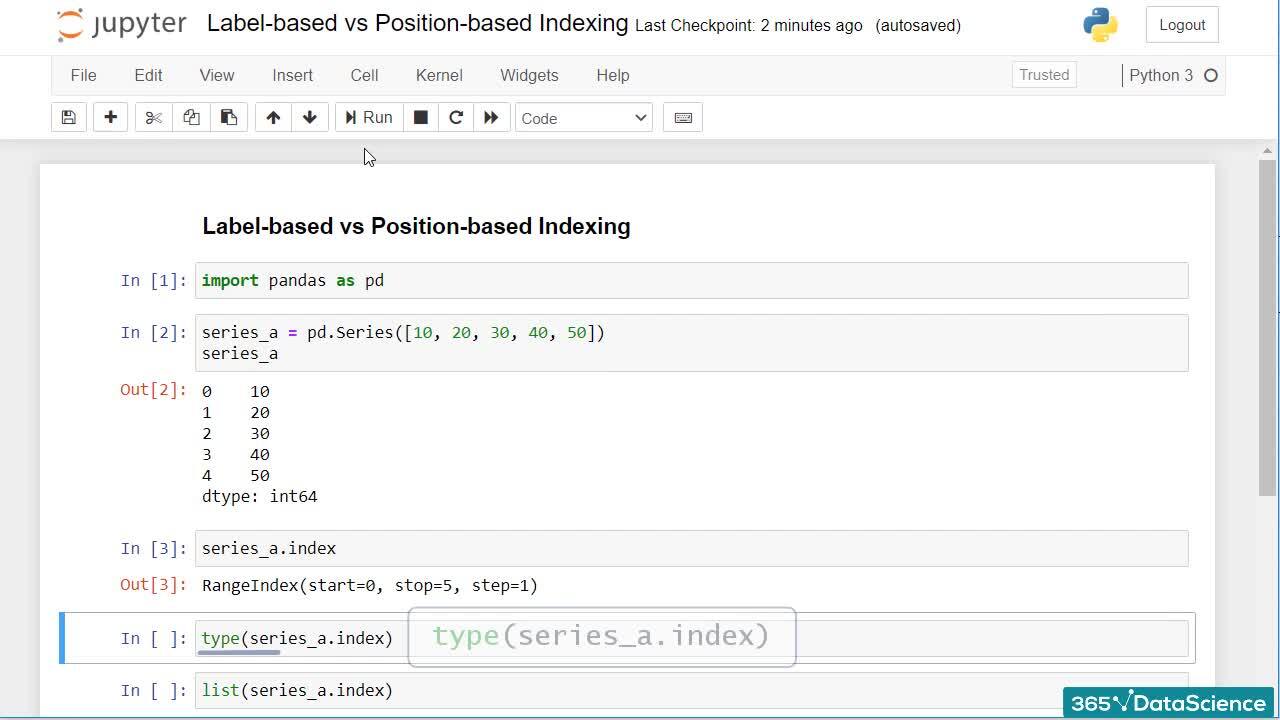
Label-based vs Position-based Indexing

1.13 Label-based vs Position-based Indexing

5 min

Start for free

ACCREDITED certificates

Craft a resume and LinkedIn profile you’re proud of—featuring certificates recognized by leading global institutions.

Earn CPE-accredited credentials that showcase your dedication, growth, and essential skills—the qualities employers value most.

  • Institute of Analytics
  • The Association of Data Scientists
  • E-Learning Quality Network
  • European Agency for Higher Education and Accreditation
  • Global Association of Online Trainers and Examiners

Certificates are included with the Self-study learning plan.
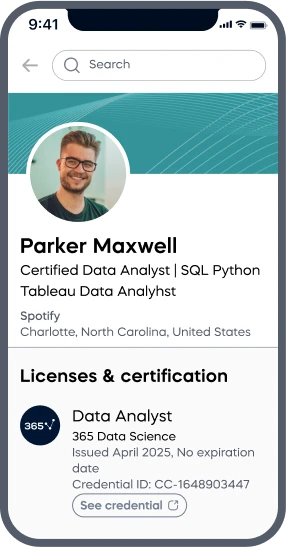
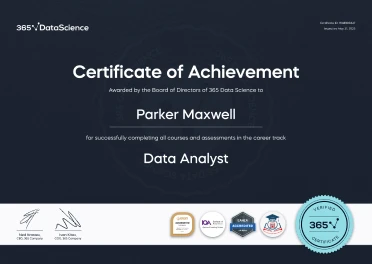
A LinkedIn profile mockup on a mobile screen showing Parker Maxwell, a Certified Data Analyst, with credentials from 365 Data Science listed under Licenses & Certification. A 365 Data Science Certificate of Achievement awarded to Parker Maxwell for completing the Data Analyst career track, featuring accreditation badges and a gold “Verified Certificate” seal.

How it WORKS

  • Lessons
  • Exercises
  • Projects
  • Practice exams
  • AI mock interviews

Lessons

Learn through short, simple lessons—no prior experience in AI or data science needed.

Try for free

Exercises

Reinforce your learning with mini recaps, hands-on coding, flashcards, fill-in-the-blank activities, and other engaging exercises.

Try for free

Projects

Tackle real-world AI and data science projects—just like those faced by industry professionals every day.

Try for free

Practice exams

Track your progress and solidify your knowledge with regular practice exams.

Try for free

AI mock interviews

Prep for interviews with real-world tasks, popular questions, and real-time feedback.

Try for free

Student REVIEWS

A collage of student testimonials from 365 Data Science learners, featuring profile photos, names, job titles, and quotes or video play icons, showcasing diverse backgrounds and successful career transitions into AI and data science roles.