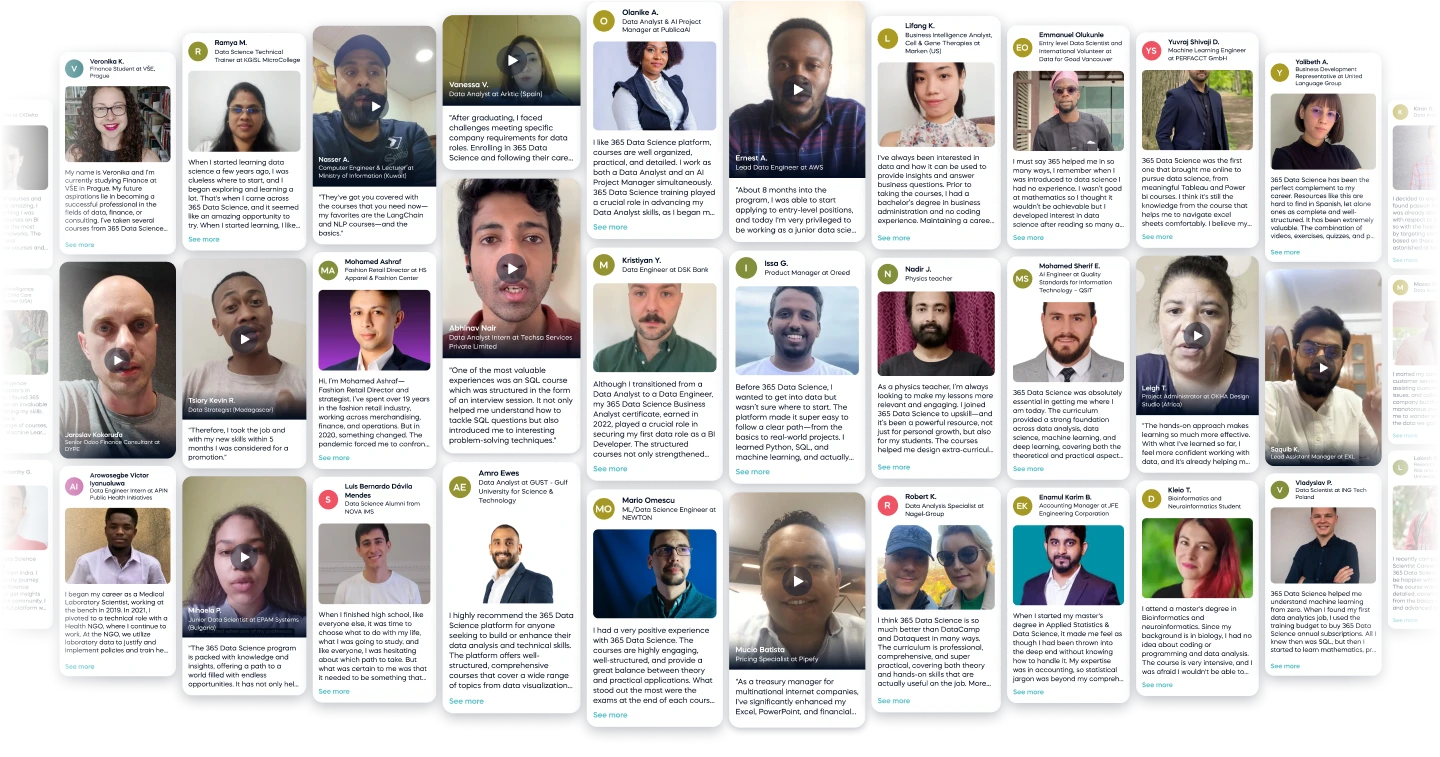
Mohamed Sherif E.
Before 365:
Data Science Intern
After 365:
AI Engineer at Quality Standards | Information Technology – QSIT
See all reviews
Explore core programming concepts with this Python for beginners follow-up course. Ideal for those with basic skills, this course will strengthen your foundation and advance you towards confident Python development.
Skill level:
Duration:
CPE credits:
Accredited

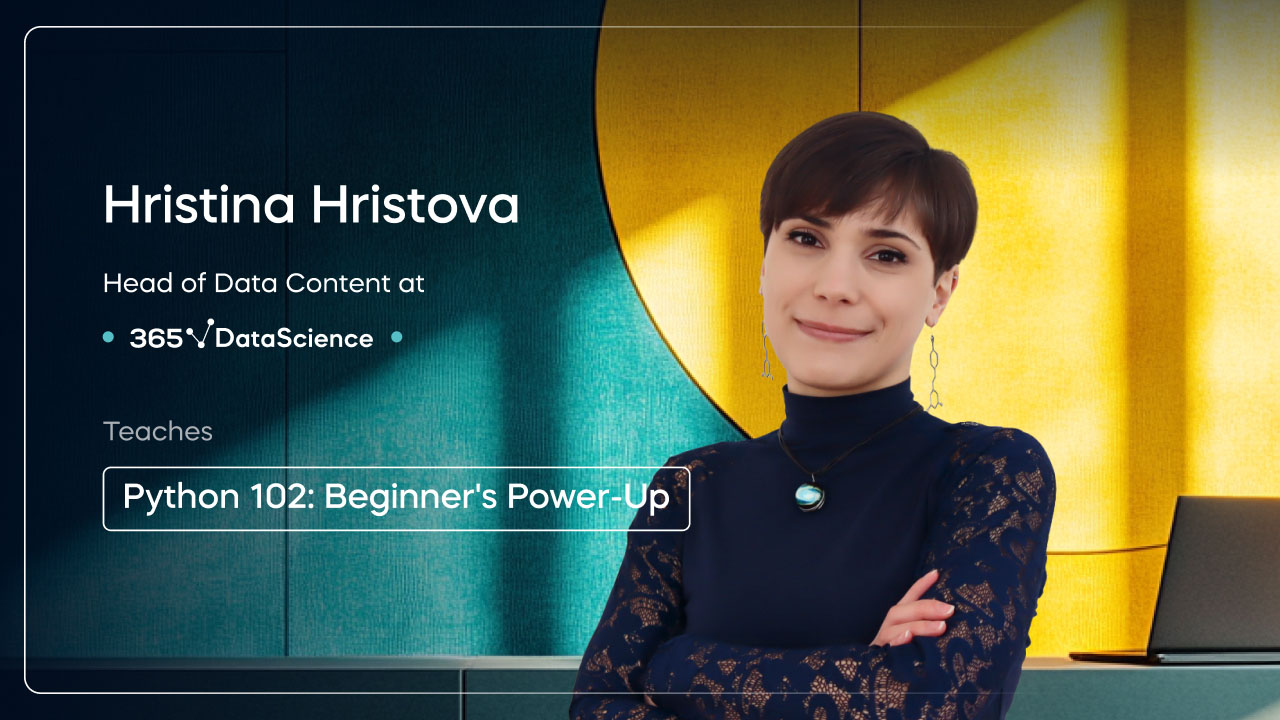
Bringing real-world expertise from leading global companies

Master's degree, Theoretical and Mathematical Physics

Description
Already familiar with Python basics? Ready to craft smarter, cleaner, more efficient code?
In this Python 102: Beginner's Power-Up course, we'll build on your foundational knowledge and take your Python skills to the next level. Designed for learners who arrive from the Python 101: Kickoff course or those already learning Python and understand the fundamentals, this course explores core programming structures and techniques essential for writing real-world Python programs.
Throughout this Python for beginners course, you'll learn and practice Python's most used sequence types (lists, tuples, and ranges) and how to manipulate them effectively using slicing, indexing, and built-in methods.
But this course goes beyond data structures. We'll sharpen your control flow skills with in-depth coverage of conditional logic—exploring if-else structures, standalone if statements, and how to effectively nest conditionals. Then, we'll dive deep into looping structures—from for loops to while loops—and explore how to combine them with conditional logic. You'll also learn how to break or continue the flow of your loops.
By the end of Python 102: Beginner's Power-Up, you'll have:
What's included in the curriculum?
1. Welcome to the Course
Meet your instructor and get a quick overview of what you'll learn.
2. Mastering Sequence Types
Explore lists, tuples, and ranges—understanding their mechanisms and distinctions.
3. Making Decisions with Conditionals
Learn to use if-else statements to write logic-driven programs.
4. Loop Like a Pro
Master for and while loops by combining, nesting, and controlling them with break and continue.
Whether you're preparing for more advanced Python topics or just want to level up your skills for personal projects or technical interviews, Python 102 is your next step.
Power up your Python journey!
Curriculum
Lists are one of Python's most versatile data types. In this section, you'll learn how to create, access, and modify lists using indexing, slicing, and built-in methods. We’ll also explore nested lists and how to work with them.
Lists are one of Python's most versatile data types. In this section, you'll learn how to create, access, and modify lists using indexing, slicing, and built-in methods. We’ll also explore nested lists and how to work with them.
Tuples are like lists—but with a key twist: they're immutable. This section explores how and when to use tuples, their benefits, and how they compare to other sequence types. You'll also explore mutability and how Python handles objects behind the scenes.
Tuples are like lists—but with a key twist: they're immutable. This section explores how and when to use tuples, their benefits, and how they compare to other sequence types. You'll also explore mutability and how Python handles objects behind the scenes.
Ranges are a compact way to work with sequences of numbers in Python. You'll learn to create and use ranges and understand their key properties.
Ranges are a compact way to work with sequences of numbers in Python. You'll learn to create and use ranges and understand their key properties.
Decision-making is essential in programming, and if statements are your tool for logic. This section covers simple and complex conditional structures—including if, if-else, and nested if statements. By the end, you'll know how to build logic-driven programs that respond to different conditions.
Decision-making is essential in programming, and if statements are your tool for logic. This section covers simple and complex conditional structures—including if, if-else, and nested if statements. By the end, you'll know how to build logic-driven programs that respond to different conditions.
Loops let you repeat actions efficiently. In this section, you'll master for loops, learn to combine them with if statements and explore advanced patterns like nested loops. You'll also obtain hands-on with break and continue to fine-tune loop behavior.
Loops let you repeat actions efficiently. In this section, you'll master for loops, learn to combine them with if statements and explore advanced patterns like nested loops. You'll also obtain hands-on with break and continue to fine-tune loop behavior.
Unlike for loops, while loops run based on conditions rather than sequences. Here, you'll learn when to use while loops and how to structure them effectively. You'll also explore how to combine while and for loops to solve more complex tasks.
Unlike for loops, while loops run based on conditions rather than sequences. Here, you'll learn when to use while loops and how to structure them effectively. You'll also explore how to combine while and for loops to solve more complex tasks.
Let's wrap things up! This final section reviews what you've learned in your Python for beginners course and highlights how to apply your new skills in real projects. You're now equipped to write more powerful, efficient Python code.
Let's wrap things up! This final section reviews what you've learned in your Python for beginners course and highlights how to apply your new skills in real projects. You're now equipped to write more powerful, efficient Python code.
Free lessons
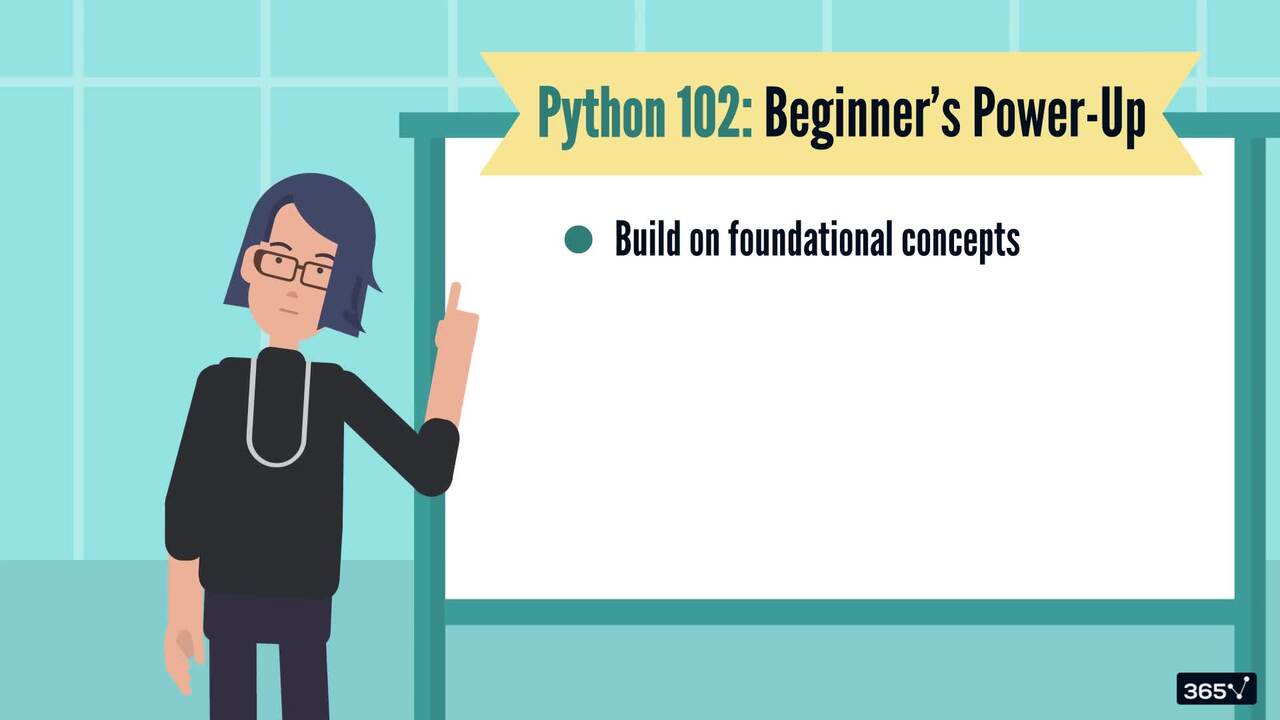
1.1 Welcome to the Course!
2 min

1.2 What Does the Course Cover?
3 min
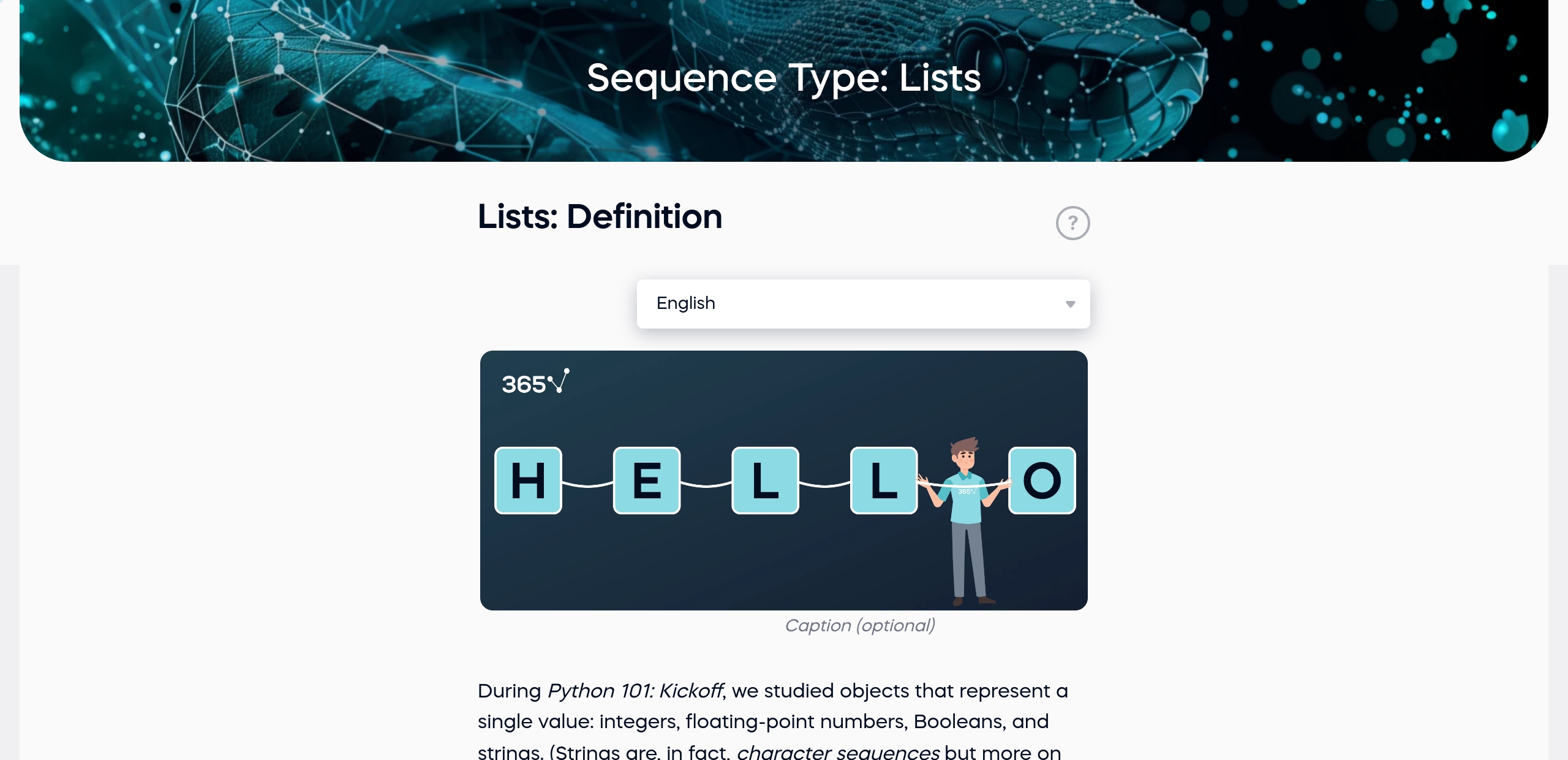
2.1 Lists: Definition
2 min
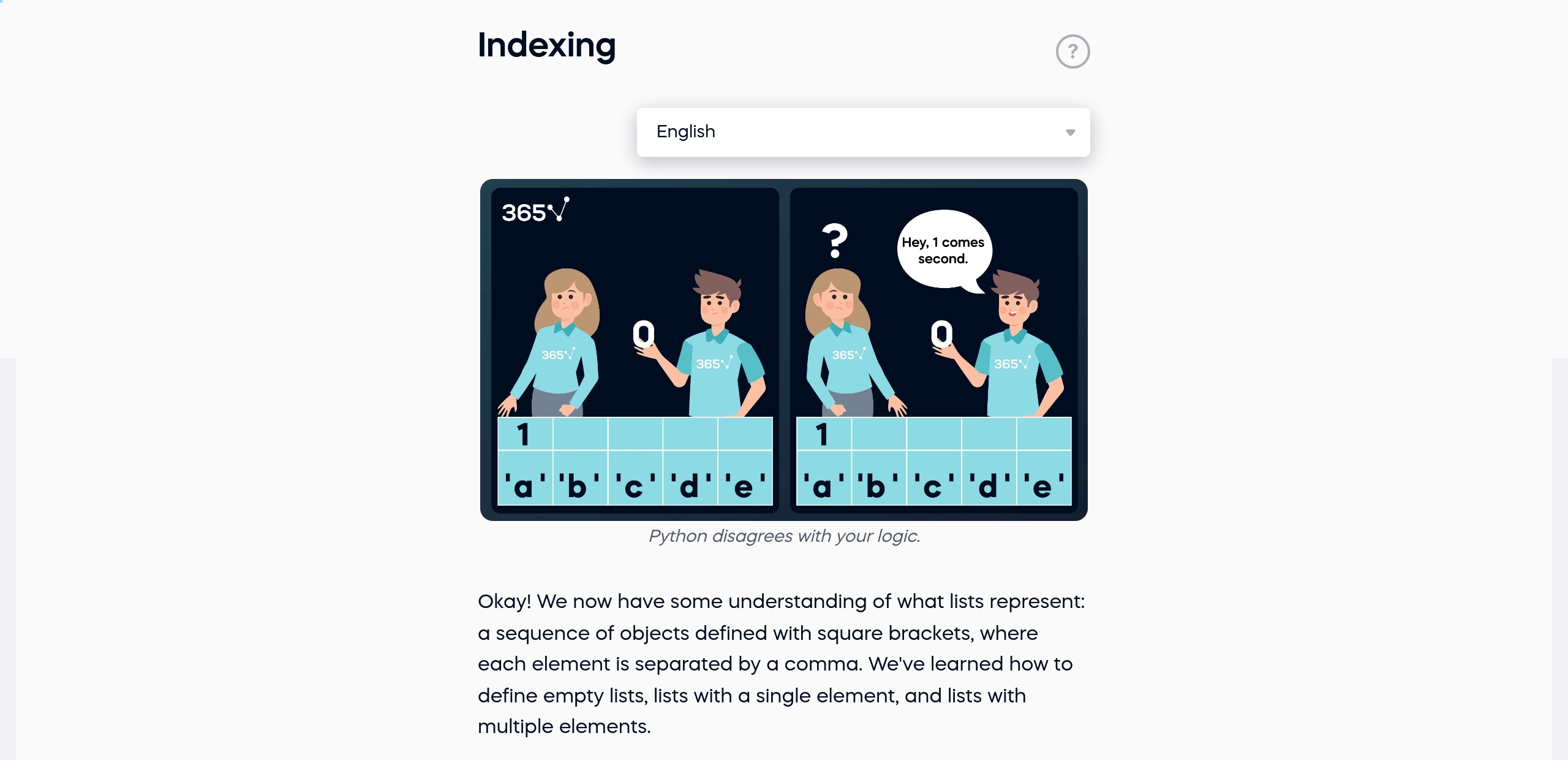
2.2 Indexing
3 min
$29,000
average salary increase
9 in 10
people walk away career-ready
94%
of AI and data science graduates
successfully change
ACCREDITED certificates
Craft a resume and LinkedIn profile you’re proud of—featuring certificates recognized by leading global
institutions.
Earn CPE-accredited credentials that showcase your dedication, growth, and essential skills—the qualities
employers value most.
Certificates are included with the Self-study learning plan.
How it WORKS
Student REVIEWS