Online Course
AI Applications for Business Success

Leverage AI for business success: enhance supply chain efficiency and solve critical challenges
4.8

863 reviews on
4,896 students already enrolled
  • Institute of Analytics
  • The Association of Data Scientists
  • E-Learning Quality Network
  • European Agency for Higher Education and Accreditation
  • Global Association of Online Trainers and Examiners

Skill level:

Advanced

Duration:

2 hours
  • Lessons (2 hours)
  • Practice exams (12 minutes)

CPE credits:

3.5
CPE stands for Continuing Professional Education and represents the mandatory credits a wide range of professionals must earn to maintain their licenses and stay current with regulations and best practices. One CPE credit typically equals 50 minutes of learning. For more details, visit NASBA's official website: www.nasbaregistry.org

Accredited

certificate

What you learn

  • Master the SMART goals framework to define measurable business objectives.
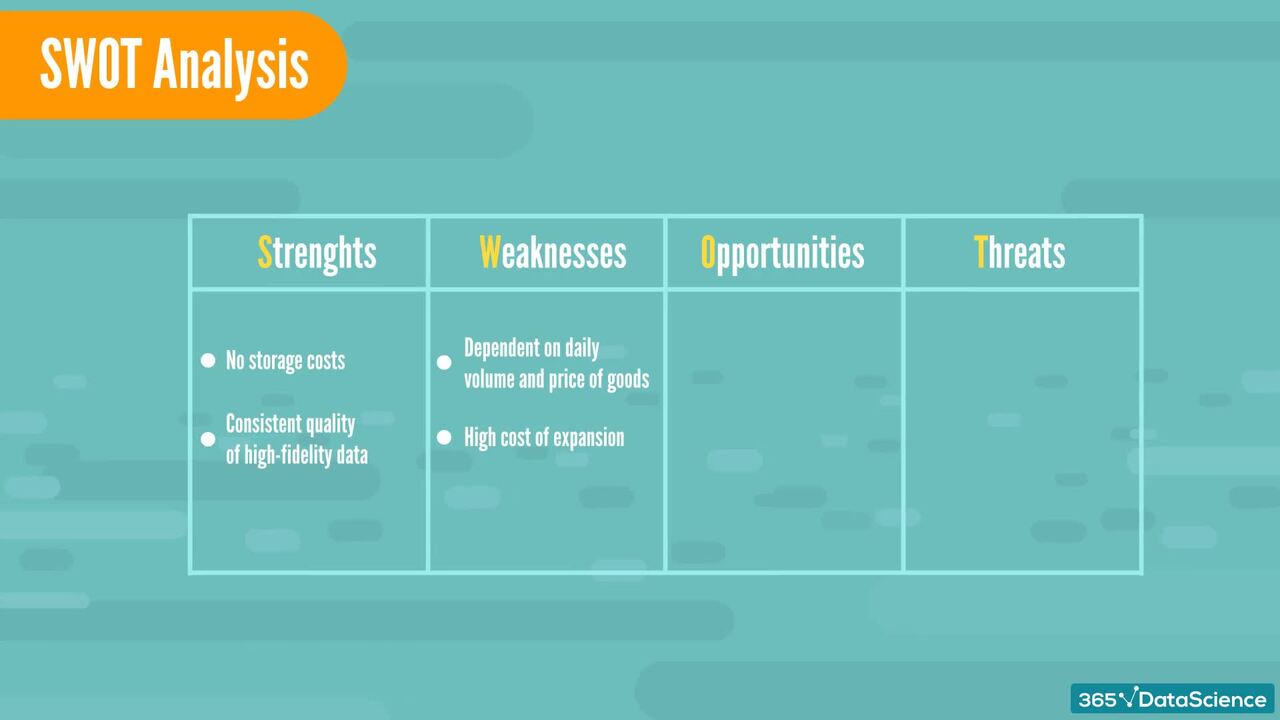
  • Perform SWOT analysis to uncover business challenges and design solutions.
  • Discover advanced AI techniques to infer causation in business analytics.
  • Understand supply chain processes and key value drivers.
  • Master hybrid experiments to evaluate whether AI solutions drive value.

Topics & tools

TheoryPythonCareer DevelopmentBusiness AnalyticsMachine LearningData AnalysisAIBusiness Skills

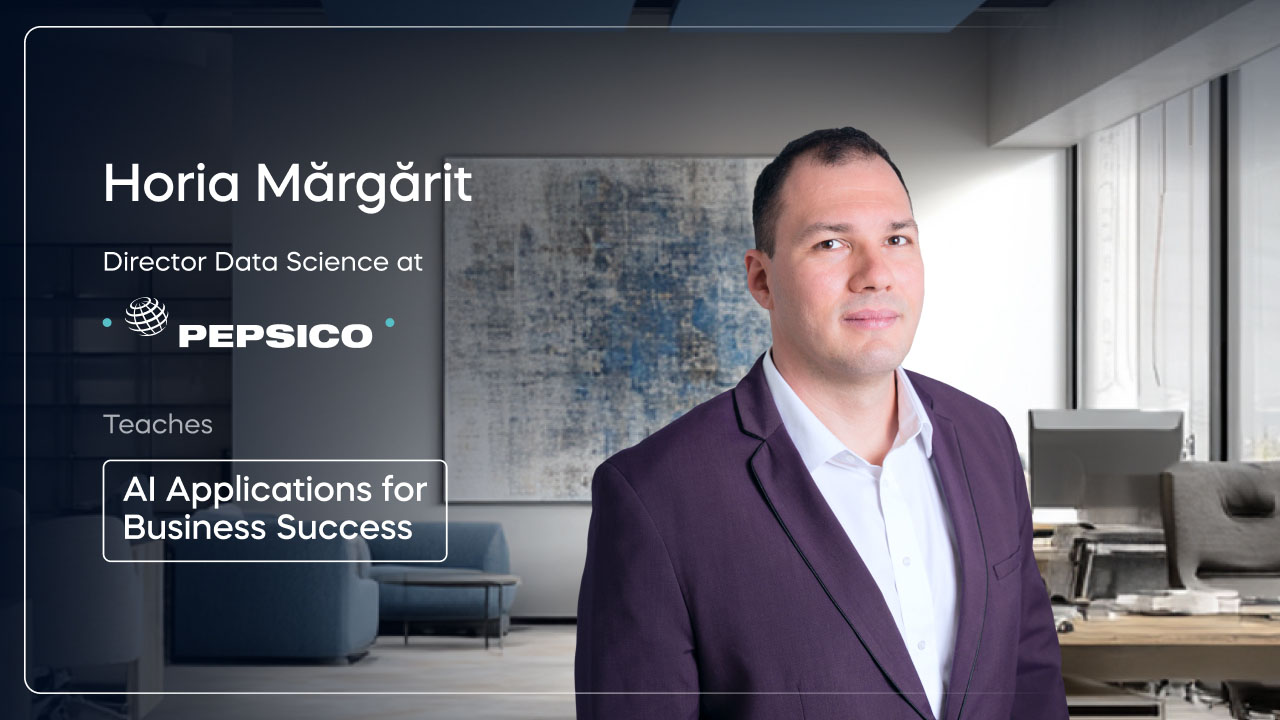
Your instructor

Course OVERVIEW

Description

CPE Credits: 3.5 Field of Study: Specialized Knowledge
Delivery Method: QAS Self Study
AI isn’t just a fancy concept that powers self-driving vehicles, robots, and high-tech companies. Most organizations – regardless of their size and industry – can benefit from the application of artificial intelligence. In this course, you’ll get an overview of business analytics and find out how to define SMART goals and conduct SWOT analysis. You’ll go through the challenges and opportunities of supply chain analytics to then determine the business problem we’ll tackle throughout the course.

Prerequisites

  • Python (version 3.8 or later), pandas library, and a code editor or IDE (e.g., Jupyter Notebook, Spyder, or VS Code)
  • Intermediate Python skills are required.
  • Familiarity with basic statistics and linear algebra is helpful but not mandatory.

Curriculum

27 lessons 2 exams
  • 1. Introduction
    6 min
    This is the intro to the course. We give you a taste of what you’ll learn throughout the course, as well as a step by step of what’s to follow in each of the following sections.
    6 min
    This is the intro to the course. We give you a taste of what you’ll learn throughout the course, as well as a step by step of what’s to follow in each of the following sections.
    What Does the Course Cover Free
    Course Resources Free
  • 2. Business Goals
    25 min
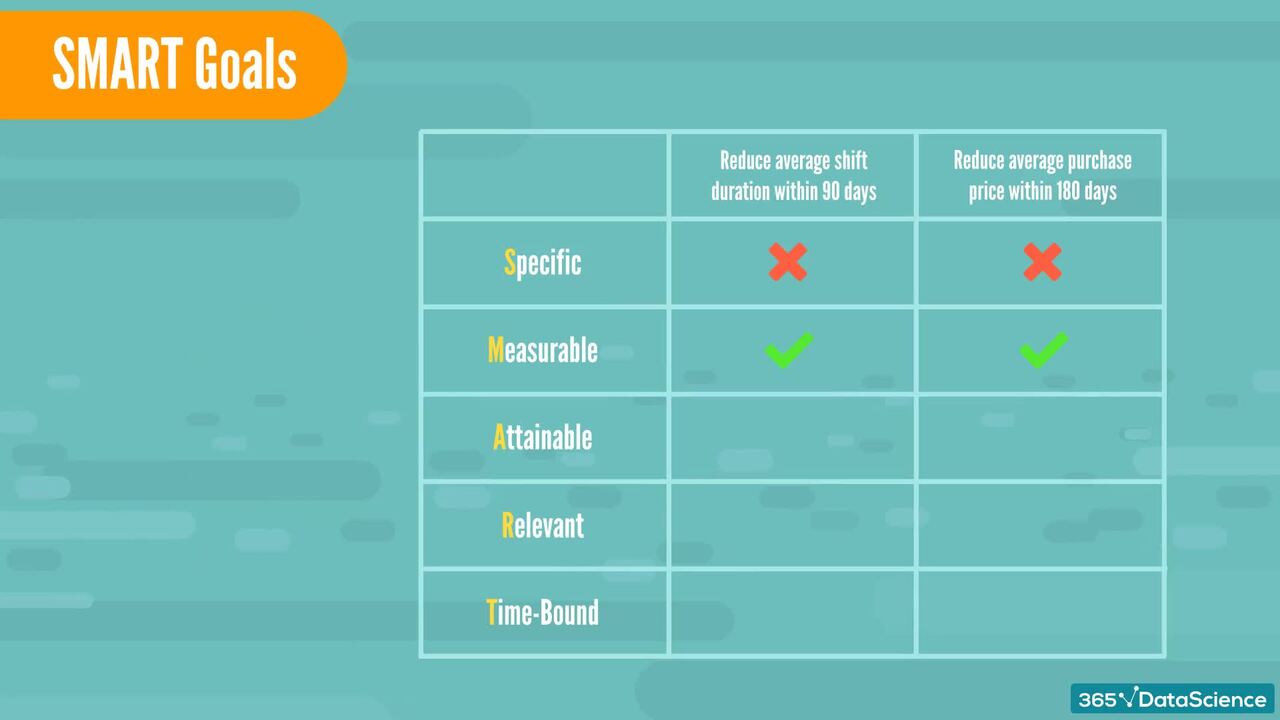
    Here we introduce the case study we’ll follow throughout the course and define our business goal, or SMART goal. We also do a SWOT analysis and discuss main problems in Business Analytics.
    25 min
    Here we introduce the case study we’ll follow throughout the course and define our business goal, or SMART goal. We also do a SWOT analysis and discuss main problems in Business Analytics.
    Introduction to the business case Free
    SWOT Analysis Free
    SMART Goals Free
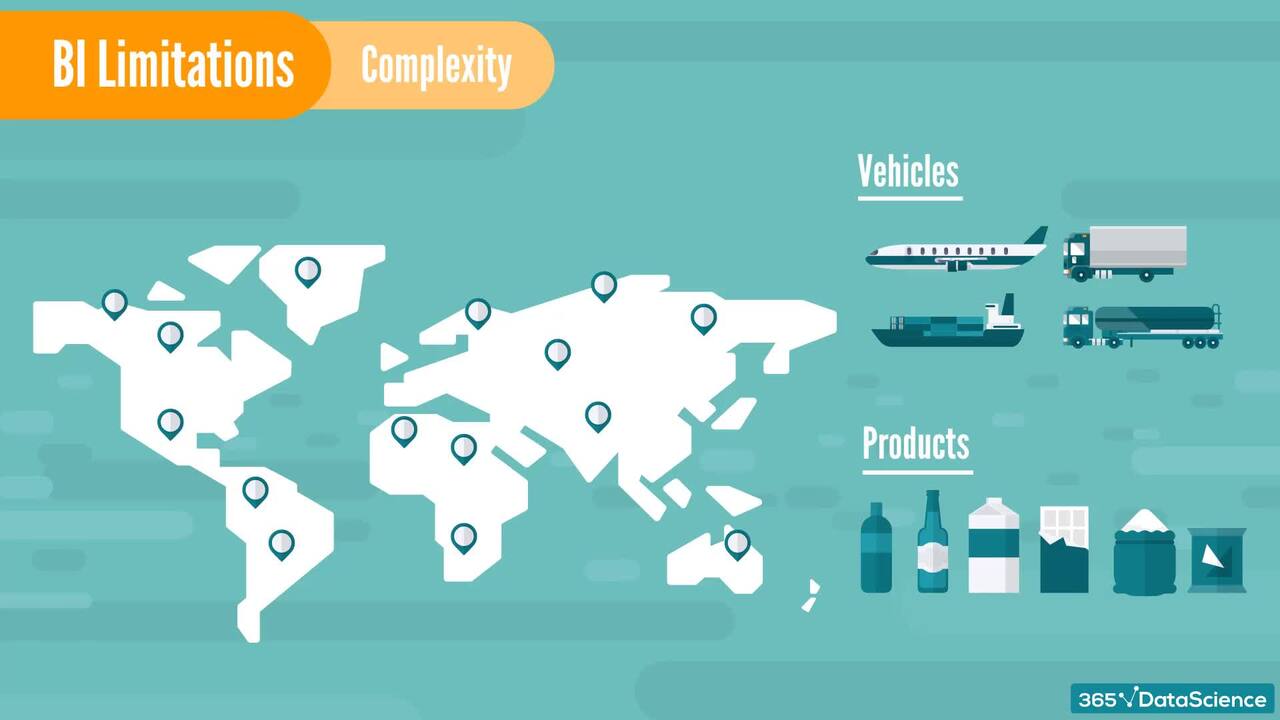
    Limitations of the BI Approach Free
    Correlation vs. Causation Free
    Making Recommendations with Descriptive Statistics Free
  • 3. Approaches to solving the business objective
    15 min
    Here we take a look at how a Business Intelligence analyst might tackle the problem, and see the limitation of the BI approach. We’ll also start discussing shadow manifolds and Taken’s theorem.
    15 min
    Here we take a look at how a Business Intelligence analyst might tackle the problem, and see the limitation of the BI approach. We’ll also start discussing shadow manifolds and Taken’s theorem.
    Introduction to the approaches
    The BI Approach
    State Space and Takens' Theorem
    Shadow Manifolds and K-Nearest Neighbors
  • 4. Artificial Intelligence in Business
    78 min
    This is the main body of the course. Here, we delve into topics starting from Attainability, then, we go through techniques Convergent Cross Mapping – which is where the power of AI to infer causality lies. We also dedicate time to SHAP values and LIME to evaluate the performance of a model.
    78 min
    This is the main body of the course. Here, we delve into topics starting from Attainability, then, we go through techniques Convergent Cross Mapping – which is where the power of AI to infer causality lies. We also dedicate time to SHAP values and LIME to evaluate the performance of a model.
    Quantifying Attainability
    Gradient Boosted Machines: Part 1
    Gradient Boosted Machines: Part 2
    Gradient Boosted Machines: Part 3
    SHAP Values
    Friedman's H-Statistic
    LIME
    Waterfall Charts 1
    Waterfall Charts 2
    Causation: Traditional Statistical Methods
    Causation: Advanced Statistical Methods
    Time Series Forecasting with Takens' Theorem
  • 5. Artificial Intelligence Recommends Metrics
    12 min
    In this section, we devote time to parametric tests and designing a hybrid experiment. In other words, we discuss how we can show if the recommended metrics by our AI model, have actually generated the change we see in metrics.
    12 min
    In this section, we devote time to parametric tests and designing a hybrid experiment. In other words, we discuss how we can show if the recommended metrics by our AI model, have actually generated the change we see in metrics.
    Introduction
    The Hybrid Experiment
    Quantile Difference Tests
    Practice exam
  • 6. Course exam
    45 min
    45 min
    Course exam

Free lessons

What Does the Course Cover

1.1 What Does the Course Cover

5 min

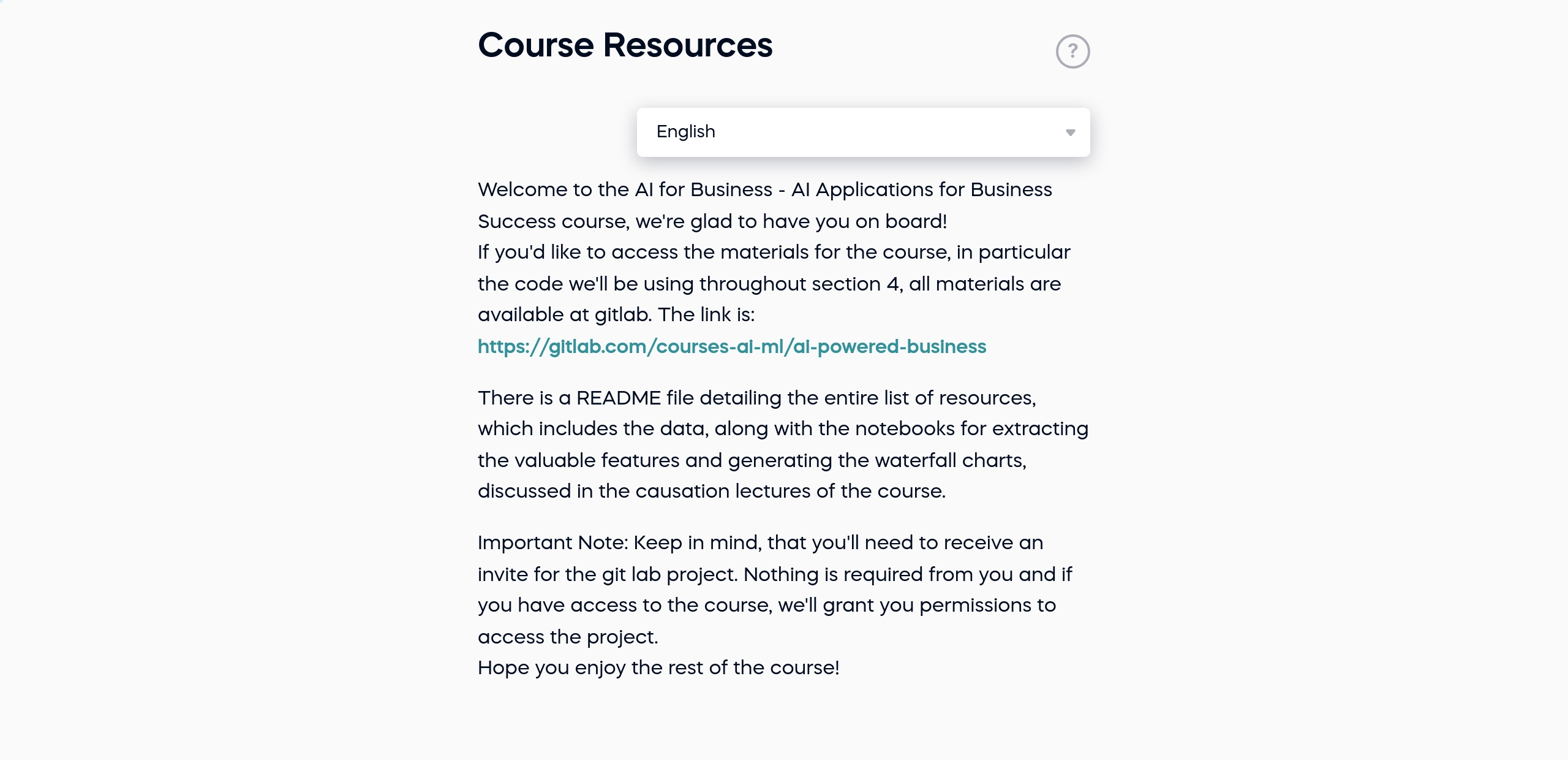
Course Resources

1.2 Course Resources

1 min

Introduction to the business case

2.1 Introduction to the business case

2 min
SWOT Analysis

2.2 SWOT Analysis

5 min

SMART Goals

2.3 SMART Goals

7 min

Limitations of the BI Approach

2.4 Limitations of the BI Approach

4 min

Start for free

9 in 10

of our graduates landed a new AI & data job

after enrollment

94%

of AI and data science graduates

successfully change

or advance their careers.

9 in 10

people walk away career-ready

with practical data and AI skills.

ACCREDITED certificates

Craft a resume and LinkedIn profile you’re proud of—featuring certificates recognized by leading global institutions.

Earn CPE-accredited credentials that showcase your dedication, growth, and essential skills—the qualities employers value most.

  • Institute of Analytics
  • The Association of Data Scientists
  • E-Learning Quality Network
  • European Agency for Higher Education and Accreditation
  • Global Association of Online Trainers and Examiners

Certificates are included with the Self-study learning plan.
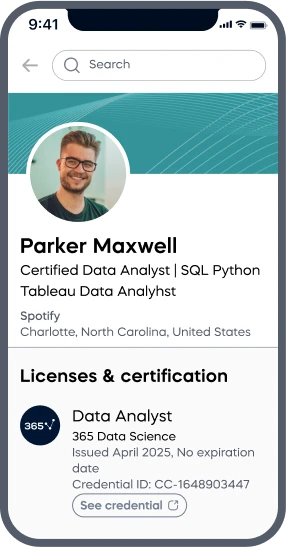
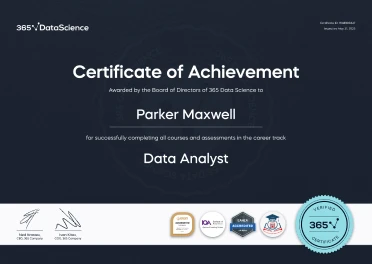
A LinkedIn profile mockup on a mobile screen showing Parker Maxwell, a Certified Data Analyst, with credentials from 365 Data Science listed under Licenses & Certification. A 365 Data Science Certificate of Achievement awarded to Parker Maxwell for completing the Data Analyst career track, featuring accreditation badges and a gold “Verified Certificate” seal.

How it WORKS

  • Lessons
  • Exercises
  • Projects
  • Practice exams
  • AI mock interviews

Lessons

Learn through short, simple lessons—no prior experience in AI or data science needed.

Try for free

Exercises

Reinforce your learning with mini recaps, hands-on coding, flashcards, fill-in-the-blank activities, and other engaging exercises.

Try for free

Projects

Tackle real-world AI and data science projects—just like those faced by industry professionals every day.

Try for free

Practice exams

Track your progress and solidify your knowledge with regular practice exams.

Try for free

AI mock interviews

Prep for interviews with real-world tasks, popular questions, and real-time feedback.

Try for free

Student REVIEWS

A collage of student testimonials from 365 Data Science learners, featuring profile photos, names, job titles, and quotes or video play icons, showcasing diverse backgrounds and successful career transitions into AI and data science roles.