Online Course free
Deep Learning with TensorFlow 2

Master deep learning in Python with TensorFlow 2: Apply neural networks to solve real-world data science challenges


4.8

865 reviews on
18,506 students already enrolled
  • Institute of Analytics
  • The Association of Data Scientists
  • E-Learning Quality Network
  • European Agency for Higher Education and Accreditation
  • Global Association of Online Trainers and Examiners

Skill level:

Advanced

Duration:

5 hours
  • Lessons (5 hours)
  • Practice exams (16 minutes)

CPE credits:

11.5
CPE stands for Continuing Professional Education and represents the mandatory credits a wide range of professionals must earn to maintain their licenses and stay current with regulations and best practices. One CPE credit typically equals 50 minutes of learning. For more details, visit NASBA's official website: www.nasbaregistry.org

Accredited

certificate

What you learn

  • Master the math behind deep learning algorithms.
  • Build and customize machine learning algorithms from scratch.
  • Understand key deep learning concepts to optimize neural networks.
  • Prevent overfitting with early stopping and improve generalizability.
  • Solve complex real-world problems using TensorFlow 2.

Topics & tools

PythonTheoryMachine LearningProgrammingMathematicsDeep LearningTensorflowNeural NetworksMachine and Deep Learning

Your instructor

Course OVERVIEW

Description

CPE Credits: 11.5 Field of Study: Information Technology
Delivery Method: QAS Self Study
Machine and deep learning are some of those quantitative analysis skills that differentiate the data scientist from the other members of the team. Not to mention that the field of machine learning is the driving force of artificial intelligence. This course will teach you how to leverage deep learning and neural networks for the purposes of data science. The technology we employ is TensorFlow 2.0, which is the state-of-the-art deep learning framework.

Prerequisites

  • Python (version 3.8 or later), TensorFlow 2 library, and a code editor or IDE (e.g., Jupyter Notebook, VS Code, or Google Colab)
  • Intermediate Python and machine learning knowledge is required.
  • Familiarity with NumPy and neural network fundamentals is recommended.

Curriculum

93 lessons 122 exercises 4 exams
  • 1. Introduction
    7 min
    In this introductory part of the course, we will discuss why you will need machine learning when working as a data scientist, what you will see in the following chapters of this training, and what the best way to take the course is.
    7 min
    In this introductory part of the course, we will discuss why you will need machine learning when working as a data scientist, what you will see in the following chapters of this training, and what the best way to take the course is.
    Why machine learning Free
    Exercise Free
  • 2. Neural networks Intro
    42 min
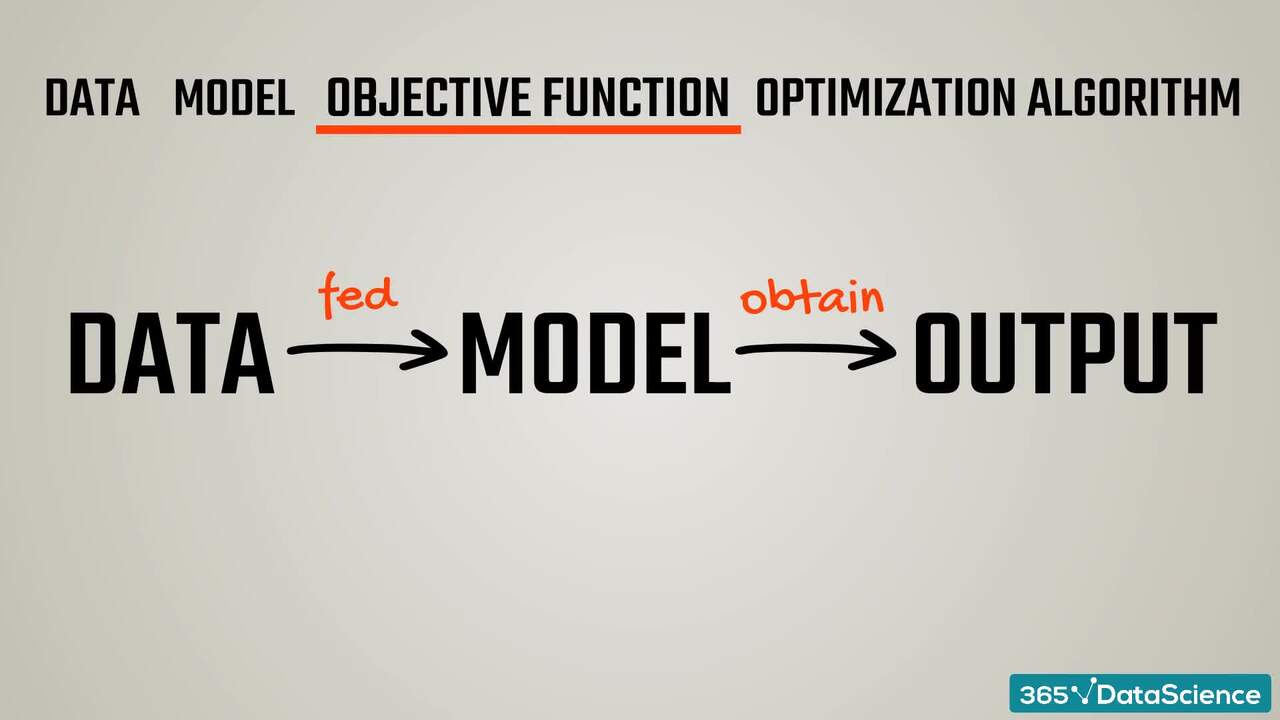
    The basic logic behind training an algorithm involves four ingredients: data, model, objective function, and an optimization algorithm. In this part of the course, we describe each of them and build a solid foundation that allows you to understand the idea behind using neural networks. After completing this chapter, you will know what the various types of machine learning are, how to train a machine learning model, and understand terms like objective function, L2-norm loss, cross-entropy loss, one gradient descent, and n-parameter gradient descent.
    42 min
    The basic logic behind training an algorithm involves four ingredients: data, model, objective function, and an optimization algorithm. In this part of the course, we describe each of them and build a solid foundation that allows you to understand the idea behind using neural networks. After completing this chapter, you will know what the various types of machine learning are, how to train a machine learning model, and understand terms like objective function, L2-norm loss, cross-entropy loss, one gradient descent, and n-parameter gradient descent.
    Introduction to neural networks Free
    Exercise Free
    Training the model theory Free
    Exercise Free
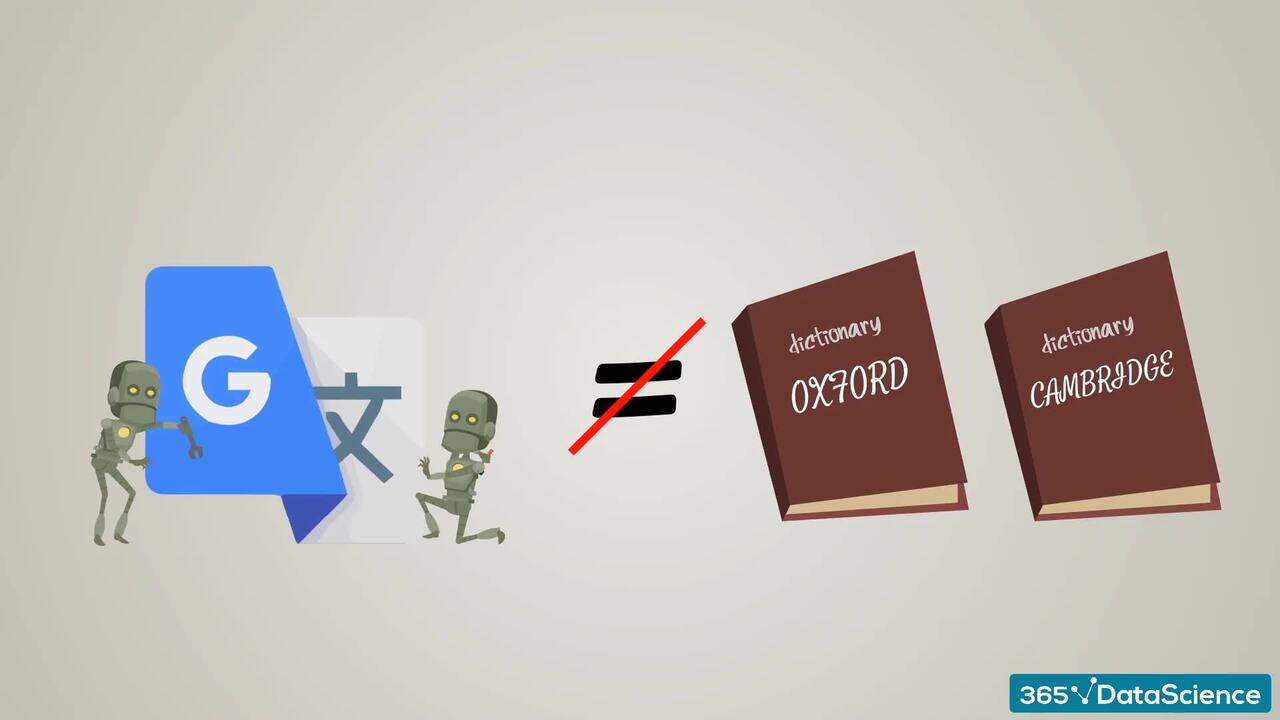
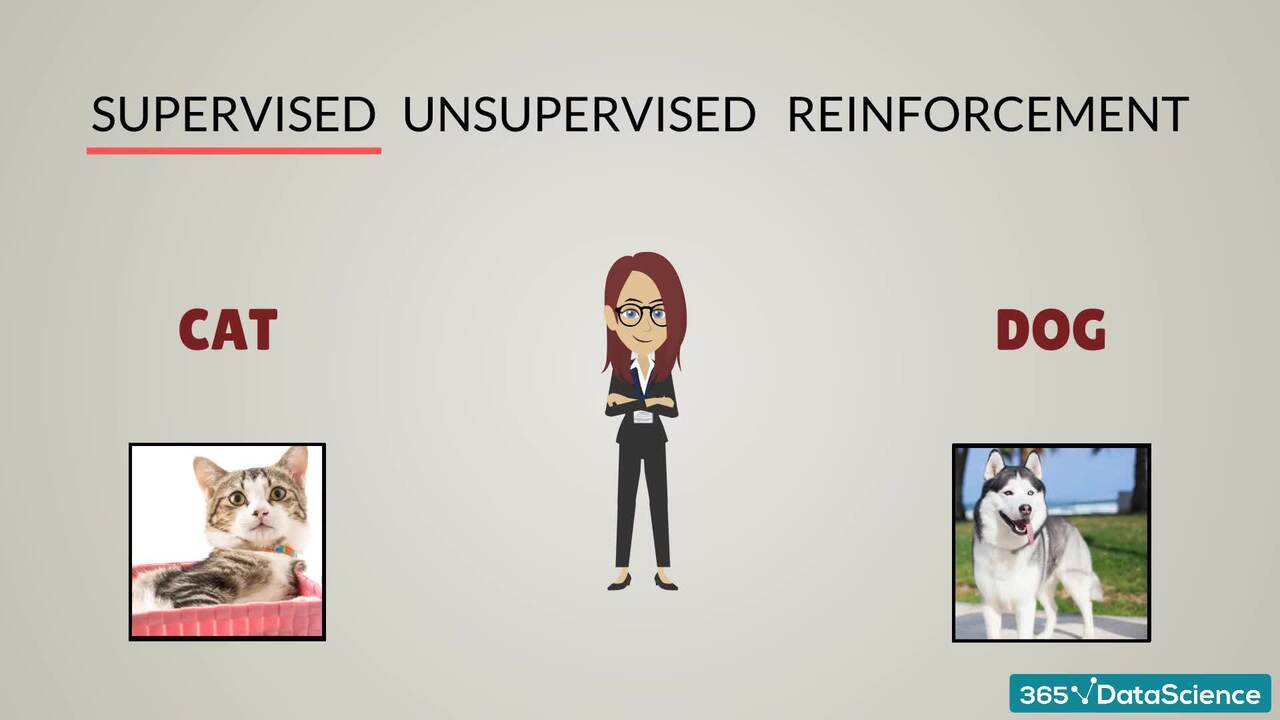
    Types of machine learning Free
    Exercise Free
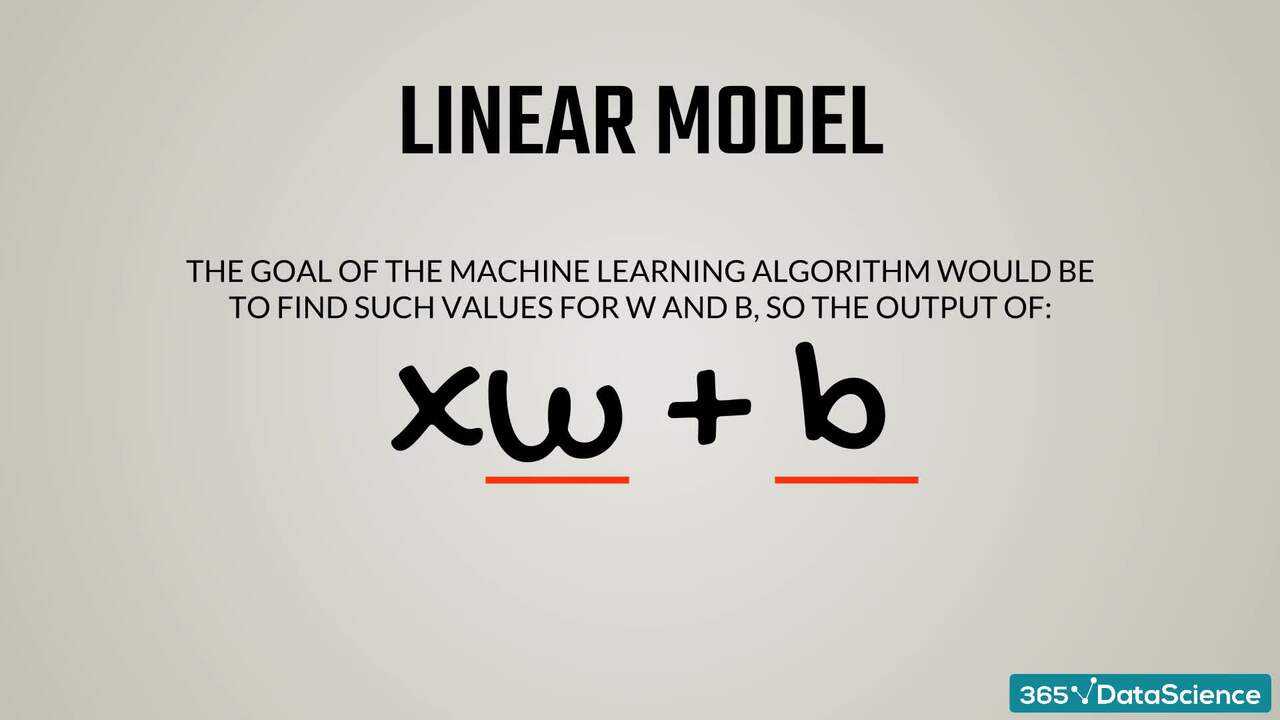
    The linear model Free
    Exercise Free
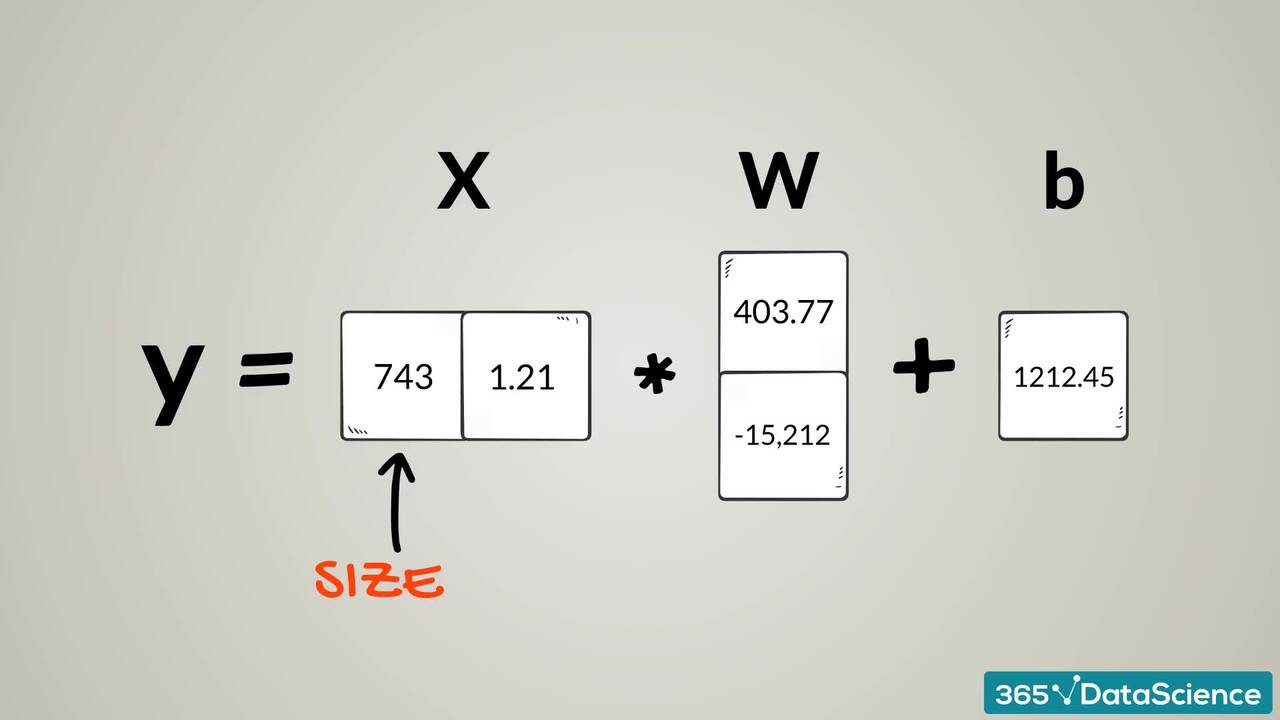
    The linear model. Multiple inputs. Free
    Exercise Free
    The linear model. Multiple inputs and multiple outputs Free
    Exercise Free
    Graphical representation Free
    Exercise Free
    The objective function Free
    Exercise Free
    L2-norm loss Free
    Exercise Free
    Cross-entropy loss Free
    Exercise Free
    One-parameter gradient descent Free
    Exercise Free
    N-parameter gradient descent Free
    Exercise Free
  • 3. Setting up the environment
    24 min
    Here, we will show you how to install the Jupyter Notebook (the environment we will use to code in Python) and how to import the relevant libraries. Because this course is based in Python, we will be working with several popular libraries: NumPy, SciPy, scikit-learn and TensorFlow.
    24 min
    Here, we will show you how to install the Jupyter Notebook (the environment we will use to code in Python) and how to import the relevant libraries. Because this course is based in Python, we will be working with several popular libraries: NumPy, SciPy, scikit-learn and TensorFlow.
    Setting up the environment - Do not skip, please! Free
    Why Python and why Jupyter Free
    Exercise Free
    Installing Anaconda Free
    Jupyter Dashboard - Part 1 Free
    Jupyter Dashboard - Part 2 Free
    Exercise Free
    Installing the TensorFlow package Free
    Installing the packages Free
  • 4. Minimal example
    20 min
    It is time to build your first machine learning algorithm. We will show you how to import the relevant libraries, how to generate random input data for the model to train on, how to create the targets the model will aim at, and how to plot the training data. The mechanics of this model exemplify how all regressions you’ve run in different packages (scikit-learn) or software (Excel) work. This is an iterative method aiming to find the best-fitting line.
    20 min
    It is time to build your first machine learning algorithm. We will show you how to import the relevant libraries, how to generate random input data for the model to train on, how to create the targets the model will aim at, and how to plot the training data. The mechanics of this model exemplify how all regressions you’ve run in different packages (scikit-learn) or software (Excel) work. This is an iterative method aiming to find the best-fitting line.
    Outline Free
    Generating the data (optional) Free
    Exercise Free
    Initializing the variables Free
    Training the model Free
    Exercise Free
    Minimal Example - Exercises.txt Free
  • 5. Introduction to TensorFlow 2
    24 min
    Having created the simple net, we 'translate' it to TensorFlow. This is our way of taking a simple, well-understood problem to introduce the syntax and logic of TensorFlow.
    24 min
    Having created the simple net, we 'translate' it to TensorFlow. This is our way of taking a simple, well-understood problem to introduce the syntax and logic of TensorFlow.
    TensorFlow Outline Free
    TensorFlow 2 Intro Free
    Exercise Free
    A note on coding in TensorFlow Free
    Types of file formats in Tensorflow and data handling Free
    Exercise Free
    Model layout - inputs, outputs, targets, weights, bias, optimizer, and loss Free
    Exercise Free
    Interpreting the result and extracting the weights and bias Free
    Exercise Free
    Customizing your model Free
    Introduction to TensorFlow - Exercises Free
    Practice exam Free
  • 6. Deep nets overview
    25 min
    From this section on, we will explore deep neural networks. Most real-life dependencies cannot be modelled with a simple linear combination (as we have done so far). And because we want to be better forecasters, we need better models. Most of the time, this means working with a model that is more sophisticated than a liner model. In this section, we will talk about concepts like deep nets, non-linearities, activation functions, softmax activation, and backpropagation. Sounds a bit complex, but we have made it easy for you!
    25 min
    From this section on, we will explore deep neural networks. Most real-life dependencies cannot be modelled with a simple linear combination (as we have done so far). And because we want to be better forecasters, we need better models. Most of the time, this means working with a model that is more sophisticated than a liner model. In this section, we will talk about concepts like deep nets, non-linearities, activation functions, softmax activation, and backpropagation. Sounds a bit complex, but we have made it easy for you!
    The layer Free
    Exercise Free
    What is a deep net Free
    Exercise Free
    Really understand deep nets Free
    Exercise Free
    Why do we need non-linearities Free
    Exercise Free
    Activation functions Free
    Exercise Free
    Softmax activation Free
    Exercise Free
    Backpropagation Free
    Backpropagation - intuition Free
    Exercise Free
  • 7. Backpropagation (optional)
    1 min
    Тo get a truly deep understanding of deep neural networks, one will have to look at the mathematics of it. As backpropagation is at the core of the optimization process, we wanted to introduce you to it. This is not a necessary part of the course, as in TensorFlow, sklearn, or any other machine learning package (as opposed to simply NumPy), will have backpropagation methods incorporated.
    1 min
    Тo get a truly deep understanding of deep neural networks, one will have to look at the mathematics of it. As backpropagation is at the core of the optimization process, we wanted to introduce you to it. This is not a necessary part of the course, as in TensorFlow, sklearn, or any other machine learning package (as opposed to simply NumPy), will have backpropagation methods incorporated.
    Backpropagation mathematics Free
  • 8. Overfitting
    20 min
    Some of the most common pitfalls you can have when creating predictive models, and especially in deep learning, is to either underfit or overfit your data. This means to either take less advantage of the machine learning algorithm than you could have due to insufficient training (underfitting), or alternatively create a model that fits the training data too much (overtrain the model) which makes it unsuitable for a different sample (overfitting).
    20 min
    Some of the most common pitfalls you can have when creating predictive models, and especially in deep learning, is to either underfit or overfit your data. This means to either take less advantage of the machine learning algorithm than you could have due to insufficient training (underfitting), or alternatively create a model that fits the training data too much (overtrain the model) which makes it unsuitable for a different sample (overfitting).
    Underfitting and overfitting. A regression example Free
    Underfitting and overfitting. A classification example Free
    Exercise Free
    Train vs validation Free
    Exercise Free
    Train vs validation vs test Free
    Exercise Free
    N-fold cross validation Free
    Exercise Free
    Early stopping - motivation and types Free
    Exercise Free
  • 9. Initialization
    9 min
    Initialization is the process in which we set the initial values of weights, and it's an important aspect of building a machine learning model. In this section, you will learn how to initialize the weights of your model and how to apply Xavier initialization.
    9 min
    Initialization is the process in which we set the initial values of weights, and it's an important aspect of building a machine learning model. In this section, you will learn how to initialize the weights of your model and how to apply Xavier initialization.
    Initialization Free
    Exercise Free
    Types of simple initializations Free
    Exercise Free
    Xavier's initialization Free
    Exercise Free
    Practice exam Free
  • 10. Optimizers
    21 min
    The gradient descent iterates the whole training set before updating the weights. Every iteration updates the weights in a relatively small way. Here, you will learn common pitfalls related to this method and how to boost them, using stochastic gradient descent, momentum, learning rate schedules, and adaptive learning rates.
    21 min
    The gradient descent iterates the whole training set before updating the weights. Every iteration updates the weights in a relatively small way. Here, you will learn common pitfalls related to this method and how to boost them, using stochastic gradient descent, momentum, learning rate schedules, and adaptive learning rates.
    SGD&Batching Free
    Exercise Free
    Local minima pitfalls Free
    Exercise Free
    Momentum Free
    Exercise Free
    Learning rate schedules Free
    Exercise Free
    Learning rate schedules. A picture Free
    Adaptive learning schedules Free
    Adaptive moment estimation Free
    Exercise Free
  • 11. Preprocessing
    15 min
    A large part of the effort data scientists make when creating a new model is related to preprocessing. This process refers to any manipulation we apply to the dataset before running it and training the model. Learning how to preprocess data is fundamental for anyone who wants to be able to create machine learning models, as no meaningful framework can simply take raw data and provide an answer. In this part of the course, we will show you how to prepare your data for analysis and modeling.
    15 min
    A large part of the effort data scientists make when creating a new model is related to preprocessing. This process refers to any manipulation we apply to the dataset before running it and training the model. Learning how to preprocess data is fundamental for anyone who wants to be able to create machine learning models, as no meaningful framework can simply take raw data and provide an answer. In this part of the course, we will show you how to prepare your data for analysis and modeling.
    Preprocessing Free
    Exercise Free
    Basic preprocessing Free
    Exercise Free
    Standardization Free
    Exercise Free
    Dealing with categorical data Free
    One hot vs binary Free
    Exercise Free
  • 12. Deeper example
    40 min
    Once we have learned all the relevant theory, we are ready to jump into deep waters. We explore the 'Hello world' of deep learning - the MNIST dataset, where we classify 60,000 images into 10 classes (the 10 digits: 0, 1, 2, 3, 4, 5, 6, 7, 8, 9, 10).
    40 min
    Once we have learned all the relevant theory, we are ready to jump into deep waters. We explore the 'Hello world' of deep learning - the MNIST dataset, where we classify 60,000 images into 10 classes (the 10 digits: 0, 1, 2, 3, 4, 5, 6, 7, 8, 9, 10).
    MNIST dataset Free
    How to tackle the MNIST dataset Free
    MNIST - Importing libraries and data Free
    Preprocess the data - create a validation dataset and scale the data Free
    Preprocess the data - scale the test data Free
    Preprocess the data - shuffle and batch Free
    Preprocess the data - shuffle and batch Exercise Free
    Outline the model Free
    Select the loss and the optimizer Free
    Learning Free
    MNIST - Exercises Free
    Testing the model Free
    Practice exam Free
  • 13. Business case
    43 min
    Data science without an application is nothing but research. Since we at 365 believe that the skills you acquire should be relevant for your work, we finish the course with a business case, where we implement all the deep learning knowledge you've acquired.
    43 min
    Data science without an application is nothing but research. Since we at 365 believe that the skills you acquire should be relevant for your work, we finish the course with a business case, where we implement all the deep learning knowledge you've acquired.
    Exploring the dataset and identifying predictors Free
    Outlining the business case solution Free
    Balancing a dataset Free
    Preprocessing the data Free
    Preprocessing Exercise Free
    Load the preprocessed data Free
    Load the preprocessed data Exercise Free
    Learning and interpreting the result Free
    Setting an early stopping mechanism Free
    Setting an early stopping mechanism Exercise Free
    Testing the business model Free
    Homework Free
  • 14. Conclusion
    19 min
    This section is designed to help you continue your specialization and data science journey. In this section, we discuss what is further out there in the machine learning world, how Google’s DeepMind uses machine learning, what are RNNs, and what non-NN approaches are there.
    19 min
    This section is designed to help you continue your specialization and data science journey. In this section, we discuss what is further out there in the machine learning world, how Google’s DeepMind uses machine learning, what are RNNs, and what non-NN approaches are there.
    Summary Free
    What's more out there Free
    An overview of CNNs Free
    How DeepMind uses deep learning Free
    An overview of RNNs Free
    Non-NN approaches Free
  • 15. Course exam
    20 min
    20 min
    Course exam Free

Free lessons

Why machine learning

1.1 Why machine learning

7 min

Introduction to neural networks

2.1 Introduction to neural networks

4 min

Training the model theory

2.3 Training the model theory

3 min

Types of machine learning

2.5 Types of machine learning

4 min

The linear model

2.7 The linear model

3 min

The linear model. Multiple inputs.

2.9 The linear model. Multiple inputs.

2 min

Start for free

4.8

Based on 865 reviews

#1 most reviewed

AI and data learning platform on Trustpilot.

$29,000

average salary increase

after moving to an AI and data science career

9 in 10

of our graduates landed a new AI & data job

after enrollment

ACCREDITED certificates

Craft a resume and LinkedIn profile you’re proud of—featuring certificates recognized by leading global institutions.

Earn CPE-accredited credentials that showcase your dedication, growth, and essential skills—the qualities employers value most.

  • Institute of Analytics
  • The Association of Data Scientists
  • E-Learning Quality Network
  • European Agency for Higher Education and Accreditation
  • Global Association of Online Trainers and Examiners
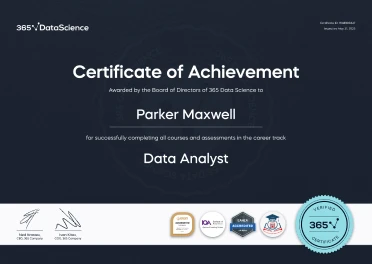
A LinkedIn profile mockup on a mobile screen showing Parker Maxwell, a Certified Data Analyst, with credentials from 365 Data Science listed under Licenses & Certification. A 365 Data Science Certificate of Achievement awarded to Parker Maxwell for completing the Data Analyst career track, featuring accreditation badges and a gold “Verified Certificate” seal.

How it WORKS

  • Lessons
  • Exercises
  • Projects
  • Practice exams
  • AI mock interviews

Lessons

Learn through short, simple lessons—no prior experience in AI or data science needed.

Try for free

Exercises

Reinforce your learning with mini recaps, hands-on coding, flashcards, fill-in-the-blank activities, and other engaging exercises.

Try for free

Projects

Tackle real-world AI and data science projects—just like those faced by industry professionals every day.

Try for free

Practice exams

Track your progress and solidify your knowledge with regular practice exams.

Try for free

AI mock interviews

Prep for interviews with real-world tasks, popular questions, and real-time feedback.

Try for free

Student REVIEWS

A collage of student testimonials from 365 Data Science learners, featuring profile photos, names, job titles, and quotes or video play icons, showcasing diverse backgrounds and successful career transitions into AI and data science roles.