Online Course bestseller
Statistics

Start your data analysis journey by laying a solid foundation: learn statistics and harness the power of data-driven decision-making

4.8

862 reviews on
111,201 students already enrolled
  • Institute of Analytics
  • The Association of Data Scientists
  • E-Learning Quality Network
  • European Agency for Higher Education and Accreditation
  • Global Association of Online Trainers and Examiners

Skill level:

Basic

Duration:

5 hours
  • Lessons (3 hours)
  • Practice exams (1.5 hours)
  • Projects (2 hours)

CPE credits:

9.5
CPE stands for Continuing Professional Education and represents the mandatory credits a wide range of professionals must earn to maintain their licenses and stay current with regulations and best practices. One CPE credit typically equals 50 minutes of learning. For more details, visit NASBA's official website: www.nasbaregistry.org

Accredited

certificate

What you learn

  • Understand the fundamentals of statistics.
  • Gain strong quantitative skills that will help you master advanced concepts.
  • Distinguish between the diverse data types and levels of measurement.
  • Calculate confidence intervals to make informed decisions.
  • Use hypothesis testing to answer business questions.

Topics & tools

TheoryData AnalysisExcelMath & Statistics

Your instructor

Course OVERVIEW

Description

CPE Credits: 9.5 Field of Study: Specialized Knowledge
Delivery Method: QAS Self Study
Statistics puts the “scientist” in data scientist. It is the driving force in any quantitative career, providing the foundational skills necessary for data analysis. This is the perfect statistics course that will help you understand how to design statistical tests and analyse data using modern software packages and programming languages. We start from the very basics and gradually build your statistical thinking. This foundational knowledge prepares you to tackle increasingly complex topics as you advance in your data journey. Don’t spend hundreds of hours reading textbooks and trying to learn statistics on your own. It doesn’t get any better if you rely on statistics tutorials from YouTube. Our course is the perfect tool to acquire invaluable knowledge that will make statistics easy for you. The step-by-step tutorials we have prepared alongside interactive exercises with statistical formulas and symbols will help you master statistics in several hours. This Statistics course stands out because it gives easy to understand practical examples and allows you to test what you have learned after each lesson. This formula has proven extremely successful as hundreds of thousands of users around the world have chosen this course to learn statistics and have expressed their satisfaction. This statistics course is suitable for university students who need statistics for their studies. It is also highly recommended for graduates and young professionals who want to improve their quantitative skills. Even if you lack any quantitative skills and haven’t learned statistics before, don’t worry. This intro to statistics course is designed to guide you from the ground up. There are hundreds of Statistics courses on the internet, but this is one of the most popular ones. The course instructor Iliya Valchanov teaches statistics for data science and business in a friendly way that is easy to understand and the interactive exercises throughout the course allow you to reinforce what you have learned. At the end of all major sections of the Statistics course, the author will solve a practical case study alongside you, helping you understand how to apply in practice the concepts you have just learned in the lessons. Join us on a journey that will introduce you to the different types of data, the measures of central tendency, and data variability. Gain the quant skills to use inferential statistics and work with the normal distribution. Calculate confidence intervals and perform hypothesis tests to get an introduction to the core principles of data-driven decision-making. How is this online Statistics course different than the rest? 1. Content quality Experience structured learning with a step-by-step approach. Our key strength lies in making complex topics accessible and easy to understand. It can’t be overstated how important is to make the course lectures and your entire learning journey fun and exciting. The instructor does not simply introduce you to statistics theory and rules, they effectively demonstrate how to apply statistics in practical scenarios. By leveraging compelling storytelling and drawing on real-world experiences, they ensure that you gain a solid understanding of the subject. 2. One of the most popular Statistics courses online This statistics training is a definite bestseller in the field and has been taken by hundreds of thousands of students around the world. This means that if you choose to learn with us, you will be in good hands. 3. Downloadable materials Gain access to valuable statistics templates you can use as a reference at any point of your career. In addition, the course comes with a full set of downloadable materials – complete statistics course notes, flashcards with key terms, practice exercises, course exams – everything is included inside. 4. Certificate of achievement If you compete the Statistics course and pass successfully its course exam, you will be awarded a verifiable certificate of achievement, which is a testament to your dedication and hard work. Click the ‘Buy now’ button and start this amazing learning journey today! Make an investment to acquire quant skills that could change your entire career.

Prerequisites

  • Microsoft Excel (any recent version, such as Excel 2019, 2021, or Microsoft 365)
  • No prior knowledge of statistics is required.

Advanced preparation

Curriculum

44 lessons 96 exercises 1 project 5 exams
  • 1. Introduction
    7 min
    In this part of the course, we will discuss why you need to learn statistics, and which are the key skills you will acquire by taking the course.
    7 min
    In this part of the course, we will discuss why you need to learn statistics, and which are the key skills you will acquire by taking the course.
    What does the course cover Free
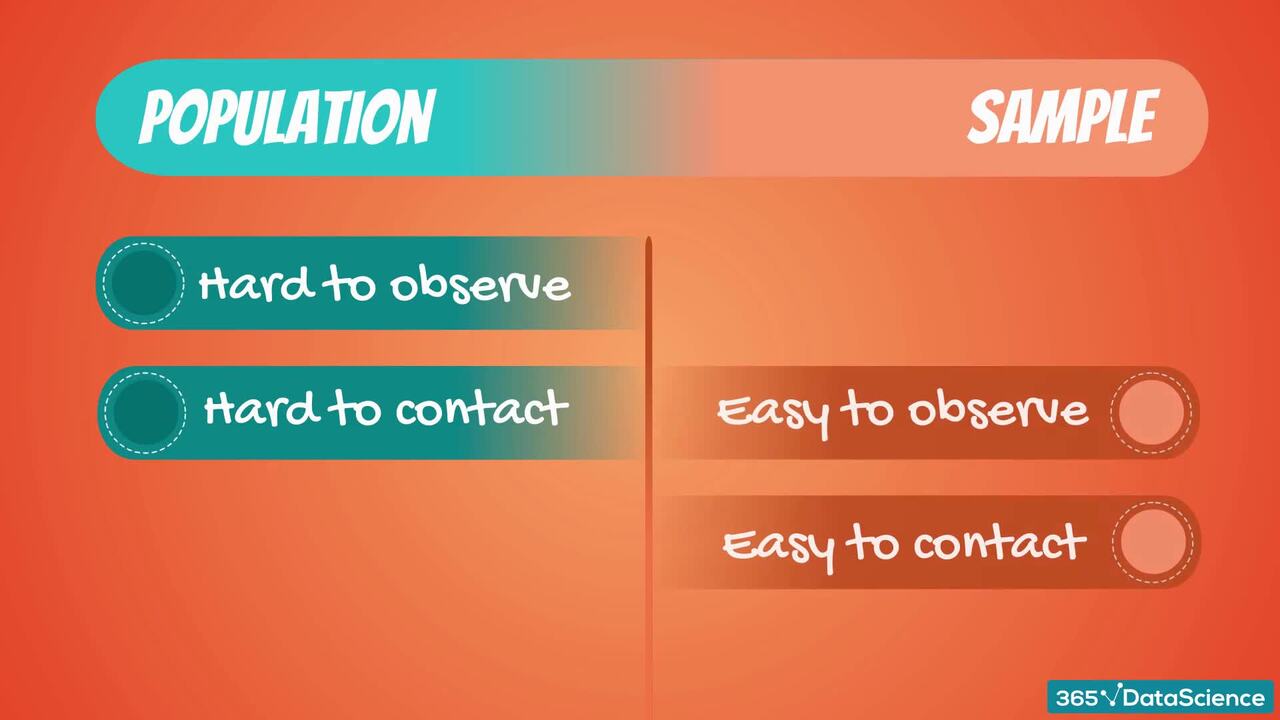
    Population vs sample Free
    Exercise Free
  • 2. Descriptive Statistics Fundamentals
    64 min
    Here, you will learn how to distinguish between the different types of data and levels of measurement. This will help you when calculating the measures of central tendency (mean, median, and mode) and dispersion indicators such as variance and standard deviation, as well as measures of the relationship between variables like covariance and correlation. To reinforce what you have learned, we will wrap up this section with a hands-on practical example.
    64 min
    Here, you will learn how to distinguish between the different types of data and levels of measurement. This will help you when calculating the measures of central tendency (mean, median, and mode) and dispersion indicators such as variance and standard deviation, as well as measures of the relationship between variables like covariance and correlation. To reinforce what you have learned, we will wrap up this section with a hands-on practical example.
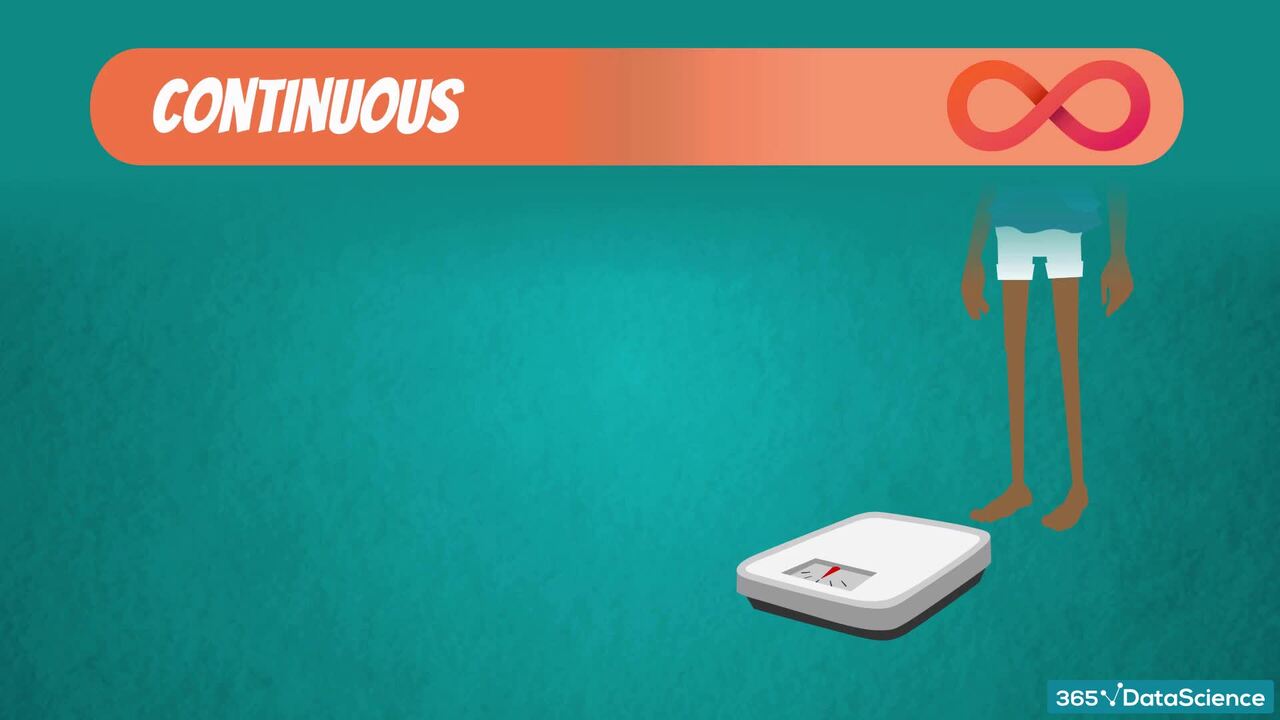
    Types of data and levels of measurement Free
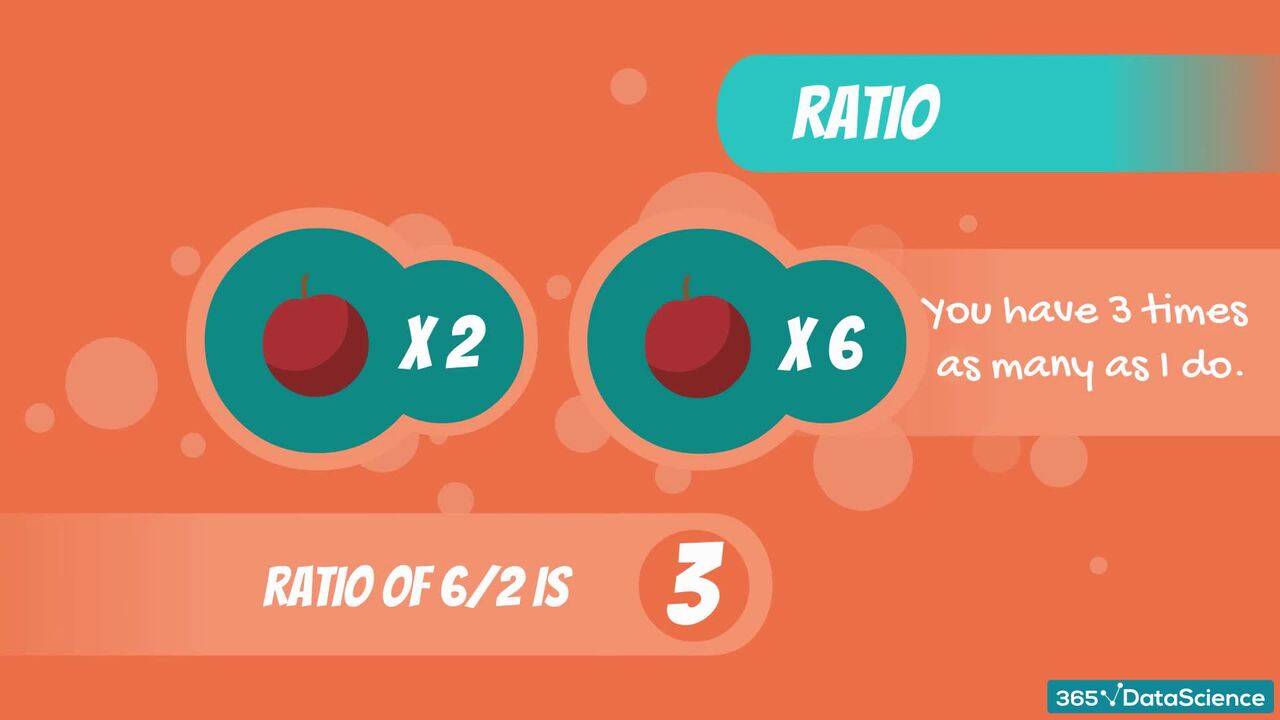
    Levels of measurement Free
    Exercise Free
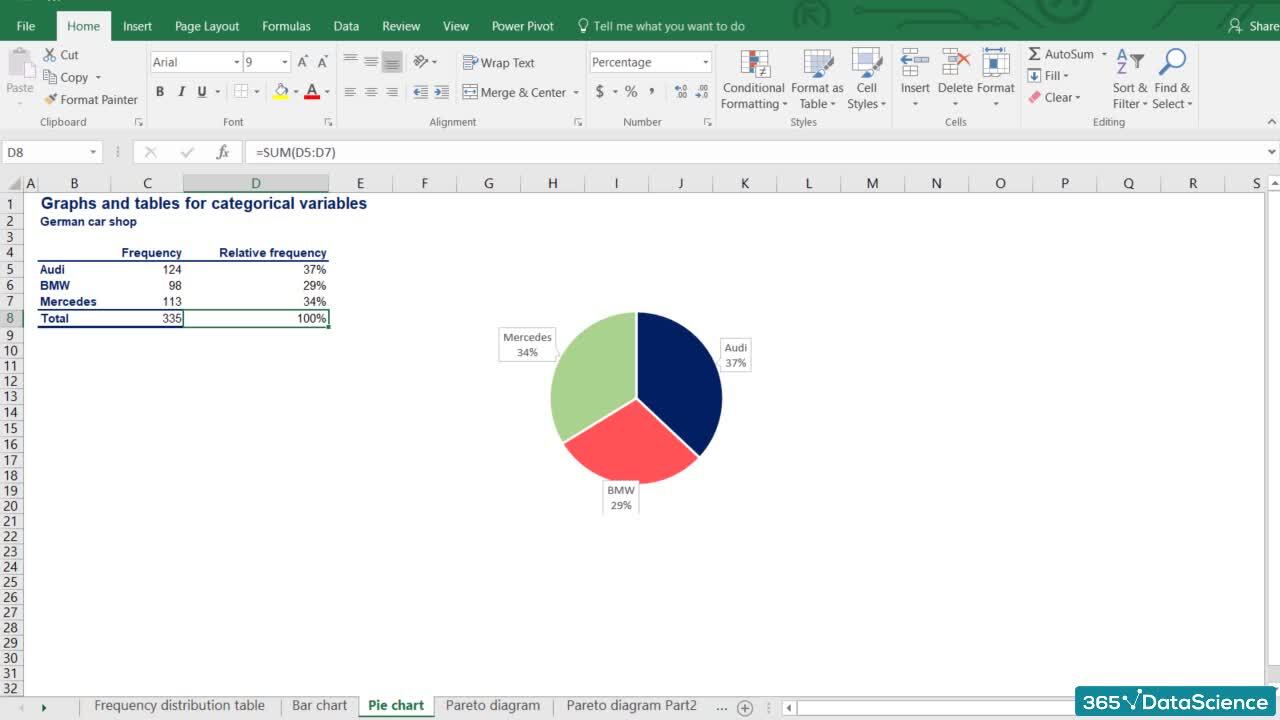
    Categorical Variables. Visualization techniques Free
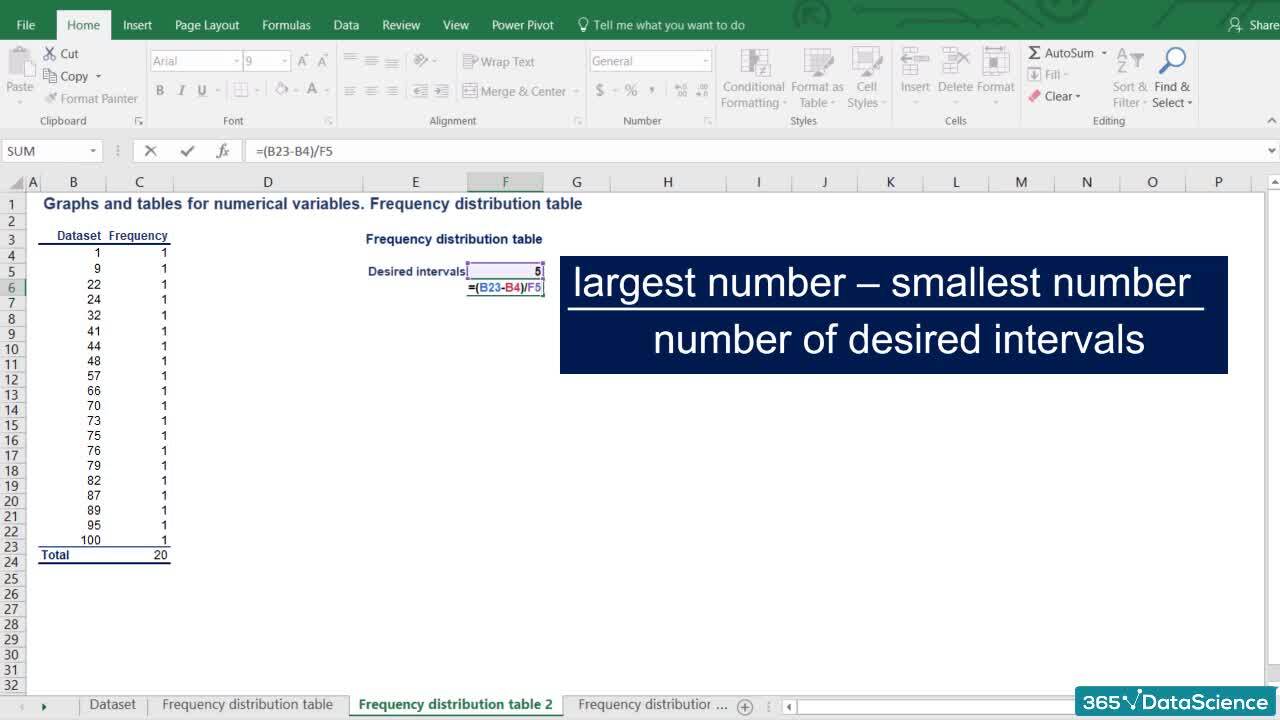
    Numerical Variables. Frequency distribution table Free
    Exercise Free
    The histogram Free
    Cross table and scatter plot Free
    Exercise Free
    Mean, median, mode Free
    Skewness Free
    Exercise Free
    Variance Free
    Standard deviation and coefficient of variation Free
    Exercise Free
    Covariance Free
    Correlation Free
    Exercise Free
    Practical Example - Descriptive Statistics Free
    Practice exam Free
  • 3. Inferential Statistics Fundamentals
    22 min
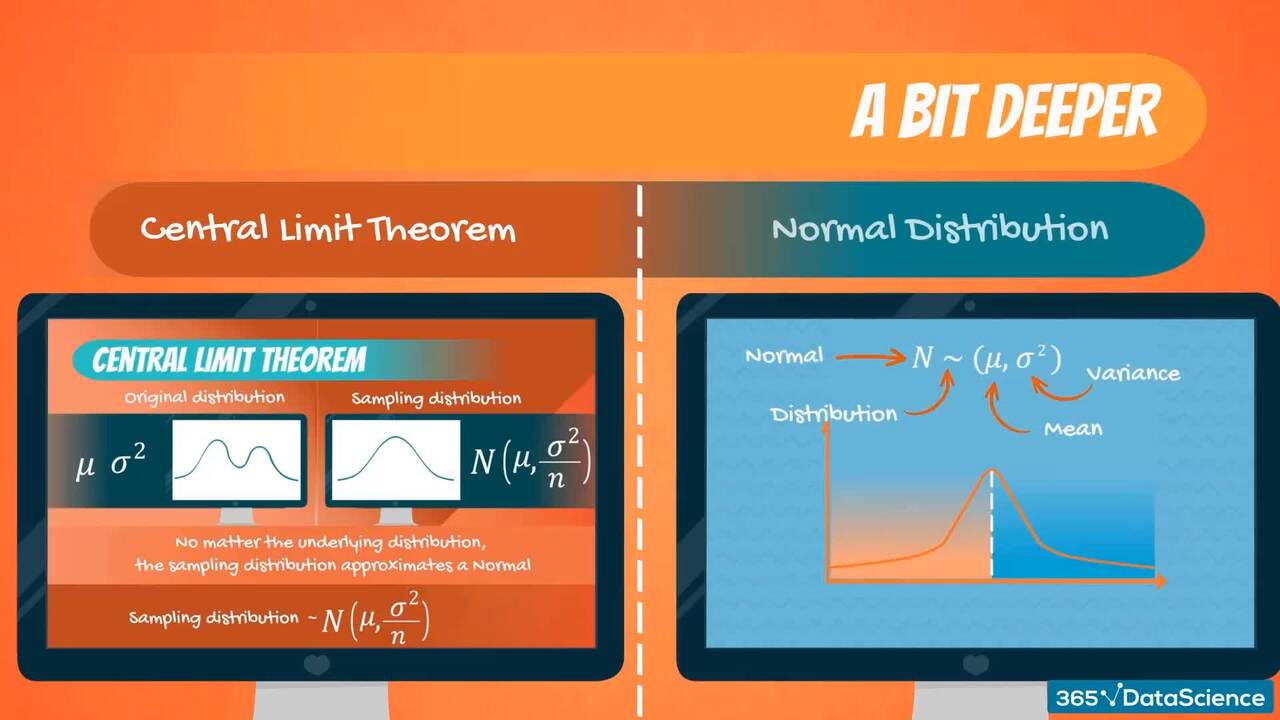
    In this section, you will learn what a distribution is and what characterizes the normal distribution. We will introduce you to the central limit theorem and to the concept of standard error.
    22 min
    In this section, you will learn what a distribution is and what characterizes the normal distribution. We will introduce you to the central limit theorem and to the concept of standard error.
    Introduction
    What is a distribution
    Exercise
    The Normal Distribution
    Exercise
    The Standard Normal Distribution
    Central limit theorem
    Exercise
    Standard error
    Estimators and estimates
    Exercise
    Practice exam
  • 4. Confidence Intervals
    55 min
    Here, you will learn how to calculate confidence intervals with known population and variance. We will introduce the Student T distribution, and you will learn how to work with smaller samples, as well as differences between two means (with dependent and independent samples). These tools are fundamental later on when we start applying each of these concepts to large datasets and use coding languages like Python and R. To reinforce what you have learned, we will wrap up this section with an easy-to-understand practical example.
    55 min
    Here, you will learn how to calculate confidence intervals with known population and variance. We will introduce the Student T distribution, and you will learn how to work with smaller samples, as well as differences between two means (with dependent and independent samples). These tools are fundamental later on when we start applying each of these concepts to large datasets and use coding languages like Python and R. To reinforce what you have learned, we will wrap up this section with an easy-to-understand practical example.
    Definition of confidence intervals
    Exercise
    Population variance known, z-score
    Confidence Interval Clarifications
    Student's T Distribution
    Exercise
    Population variance unknown, t-score
    Margin of error
    Exercise
    Confidence intervals. Two means. Dependent samples
    Exercise
    Confidence intervals. Two means. Independent samples (Part1)
    Confidence intervals. Two means. Independent samples (Part2)
    Confidence intervals. Two means. Independent Samples (Part 3)
    Exercise
    Practical Example - Confidence Intervals
    Practice exam
  • 5. Hypothesis testing
    55 min
    In this section, you will learn how to perform hypothesis testing, as well as the difference between a null and alternative hypothesis. We will discuss rejection and significance levels, and type I and type II errors. The lessons will teach you how to test for the mean when the population variance is known and unknown, as well as how to test for the mean when you are dealing with dependent and independent samples. You will also become familiar with the p-value. To consolidate the new knowledge, we will conclude with a practical example.
    55 min
    In this section, you will learn how to perform hypothesis testing, as well as the difference between a null and alternative hypothesis. We will discuss rejection and significance levels, and type I and type II errors. The lessons will teach you how to test for the mean when the population variance is known and unknown, as well as how to test for the mean when you are dealing with dependent and independent samples. You will also become familiar with the p-value. To consolidate the new knowledge, we will conclude with a practical example.
    Null vs Alternative
    Exercise
    Further Reading on Null and Alternative Hypothesis
    Rejection region and significance level
    Type I error vs type II error
    Exercise
    Test for the mean. Population variance known
    p-value
    Exercise
    Test for the mean. Population variance unknown
    Test for the mean. Dependent samples
    Test for the mean. Independent Samples (Part 1)
    Test for the mean. Independent Samples (Part 2)
    Practice exam
    Practical Example - Hypothesis Testing
    Exercise
  • 6. Course project and exam
    205 min
    205 min
    Customer Engagement Analysis in Excel Project Free
    Course exam

Free lessons

What does the course cover

1.1 What does the course cover

3 min

Population vs sample

1.2 Population vs sample

4 min

Types of data and levels of measurement

2.1 Types of data and levels of measurement

5 min

Levels of measurement

2.2 Levels of measurement

4 min

Categorical Variables. Visualization techniques

2.4 Categorical Variables. Visualization techniques

5 min

Numerical Variables. Frequency distribution table

2.5 Numerical Variables. Frequency distribution table

3 min

Start for free

4.8

Based on 862 reviews

#1 most reviewed

AI and data learning platform on Trustpilot.

9 in 10

people walk away career-ready

with practical data and AI skills.

9 in 10

of our graduates landed a new AI & data job

after enrollment

ACCREDITED certificates

Craft a resume and LinkedIn profile you’re proud of—featuring certificates recognized by leading global institutions.

Earn CPE-accredited credentials that showcase your dedication, growth, and essential skills—the qualities employers value most.

  • Institute of Analytics
  • The Association of Data Scientists
  • E-Learning Quality Network
  • European Agency for Higher Education and Accreditation
  • Global Association of Online Trainers and Examiners

Certificates are included with the Self-study learning plan.

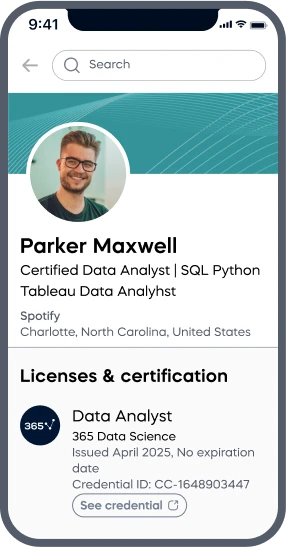
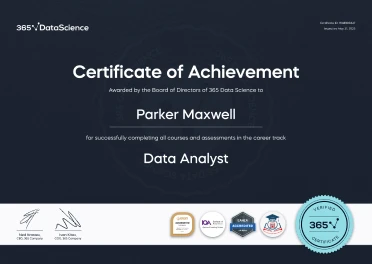
A LinkedIn profile mockup on a mobile screen showing Parker Maxwell, a Certified Data Analyst, with credentials from 365 Data Science listed under Licenses & Certification. A 365 Data Science Certificate of Achievement awarded to Parker Maxwell for completing the Data Analyst career track, featuring accreditation badges and a gold “Verified Certificate” seal.

How it WORKS

  • Lessons
  • Exercises
  • Projects
  • Practice exams
  • AI mock interviews

Lessons

Learn through short, simple lessons—no prior experience in AI or data science needed.

Try for free

Exercises

Reinforce your learning with mini recaps, hands-on coding, flashcards, fill-in-the-blank activities, and other engaging exercises.

Try for free

Projects

Tackle real-world AI and data science projects—just like those faced by industry professionals every day.

Try for free

Practice exams

Track your progress and solidify your knowledge with regular practice exams.

Try for free

AI mock interviews

Prep for interviews with real-world tasks, popular questions, and real-time feedback.

Try for free

Student REVIEWS

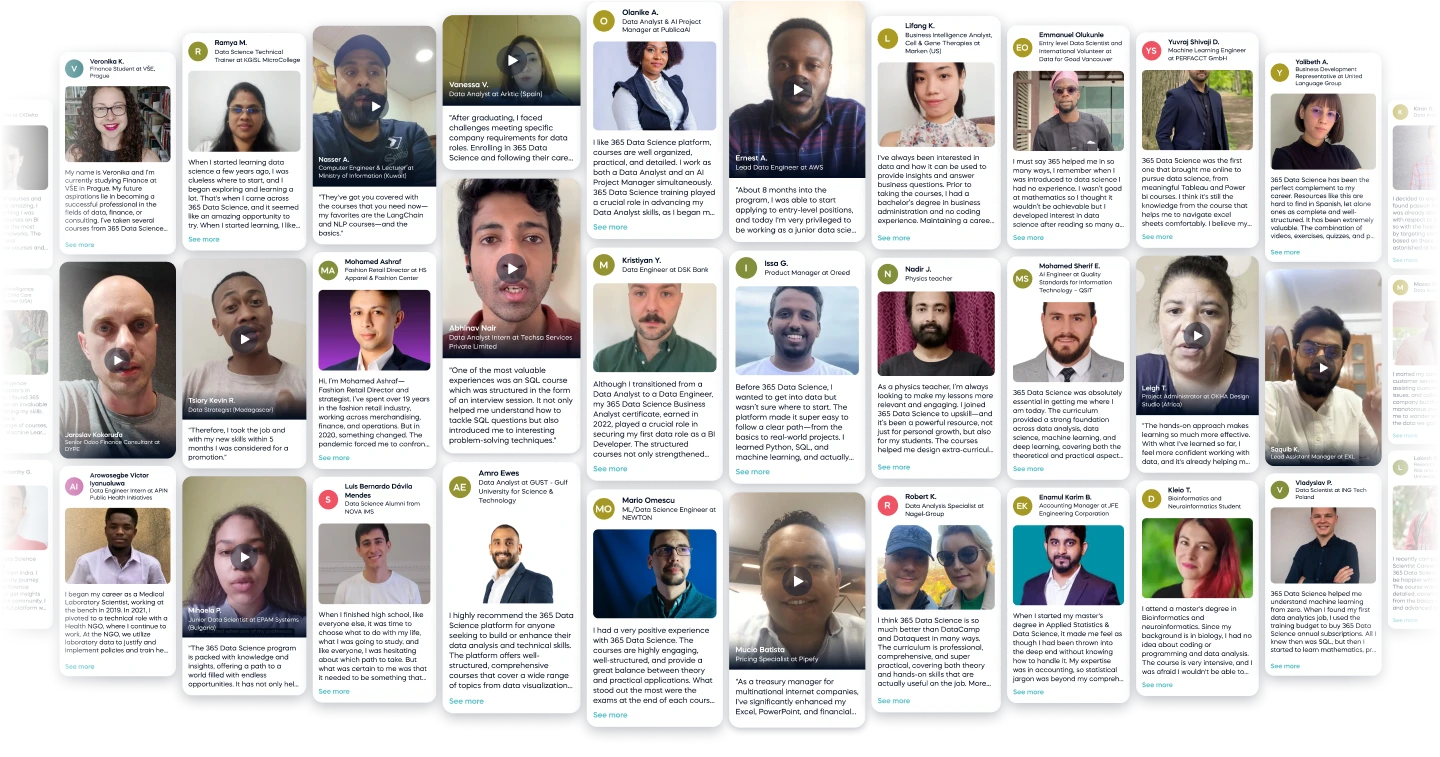
A collage of student testimonials from 365 Data Science learners, featuring profile photos, names, job titles, and quotes or video play icons, showcasing diverse backgrounds and successful career transitions into AI and data science roles.