
If you’re looking for DataCamp alternatives, chances are you’ve already tried a few lessons, hit a plateau, or started wondering: “Is there something better out there?”
“Is DataCamp worth it” is usually the question hiding underneath that—and honestly, it’s a fair one. And that depends on what you’re after: a logo on a certificate, quick skills, or a real path to a job.
If you’ve been digging through DataCamp reviews and trying to map out the real competitors, this list should save you a bunch of time.
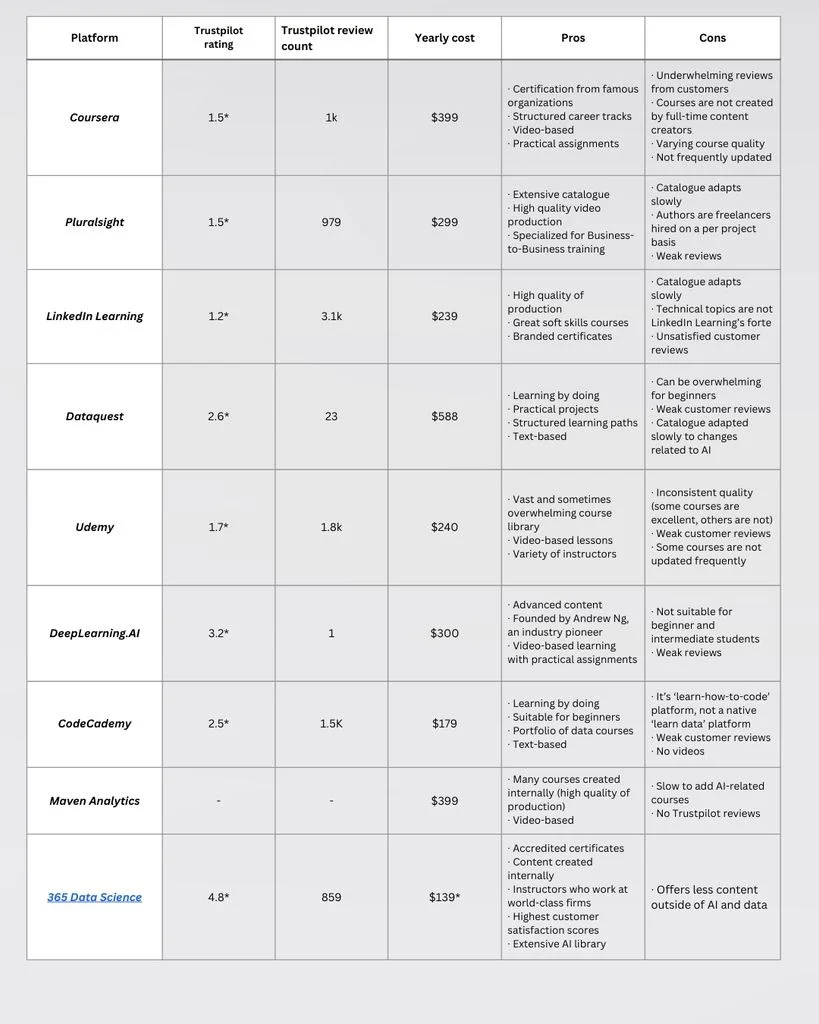
Author’s take: If you’ve been bouncing between DataCamp reviews and lists of DataCamp competitors, here’s my take: the “best” platform is the one you’ll stick with long enough to build proof of what you know!
Coursera
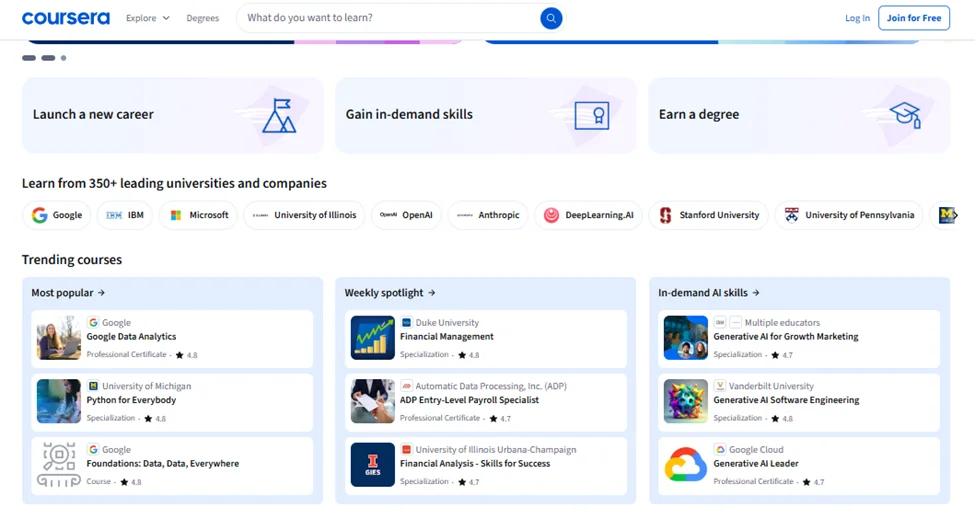
Coursera offers specializations from world-renowned organizations such as Google, IBM, and Meta. They also work with top tier universities such as University of Illinois, Stanford University, and University of Pennsylvania.
In the past, many students were tempted by the opportunity to earn a Coursera certificate with the logo of one of these organizations. Today, these certificates are frequently seen by HR as ‘nice signal of interest’ rather than a completion certificate.
Recruiters are looking for candidates who have worked on projects and taken challenging exams. Coursera lacks a library with projects you can work on, once you complete their courses. And they don’t have career services for their learners.
Many organizations offer courses on Coursera. They are typically created by people who are not full-time content creators. This means that courses will have a different look and family and will have a varying quality.
Author’s take: This is a side project for individuals in firms like Google and IBM. Once they move on to the next stage of their careers, the course often stops evolving. Updates become rare, Q&A opportunities are not available, and the content can gradually feel out of date—especially in fast-moving fields like AI and data.
Pricing
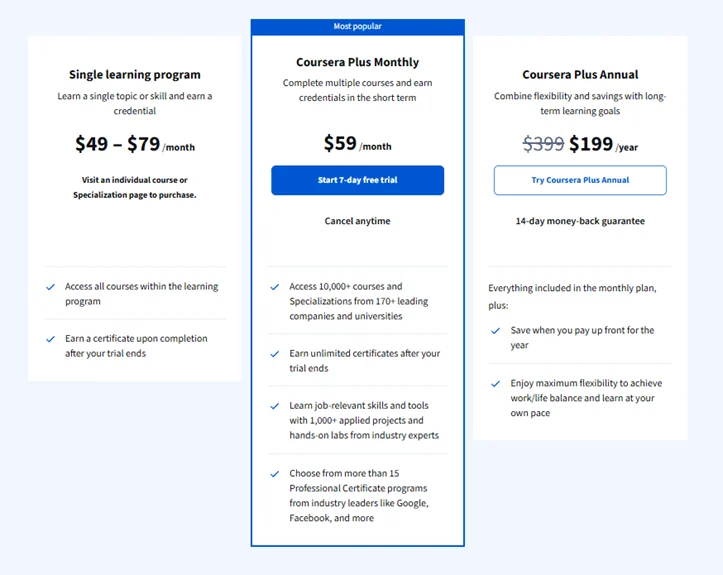
Coursera is a “pick your path” pricing setup. If you only want one specialization, you’ll usually pay per program (often monthly until you finish). If you want to roam across multiple topics, the plan most people compare is the annual Coursera Plus (~$399/year).Simple way to decide:
• Doing 1 program start-to-finish → pay-per-program usually makes more sense
• Doing multiple programs across the year → annual plan is usually the better deal
Author’s take: One thing to keep in mind is that the price is mostly for access + certificates—not for a built-in career workflow.
Pros
- Brand-name providers and universities
- Lots of structured programs/specializations
- Solid for “broad exposure” and credentials
Cons
- Course quality varies a lot by provider
- Limited “portfolio-first” project ecosystem vs career platforms
- Updates/support can be inconsistent
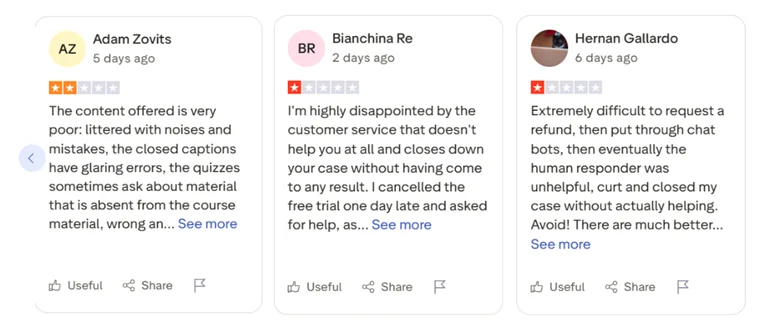
Common reviews on Trustpilot include billing/refund frustration and overall value concerns.
Key takeaway
If you’re weighing DataCamp vs Coursera, the real difference is this: Coursera wins on brand logos, whereas DataCamp gives you this practice-first momentum. But in 2026, hiring teams care more about projects, assessments, and proof you can apply skills.
Coursera is hit-or-miss here. Course quality varies, updates can be slow, and there’s limited career support.
Good if: you want university-style learning and recognized brands
Not ideal if: you want a tight, job-focused path
Author's take: This is the very reason the DataCamp vs Coursera debate usually comes down to “credential vibes” vs “hands-on proof.”
Pluralsight
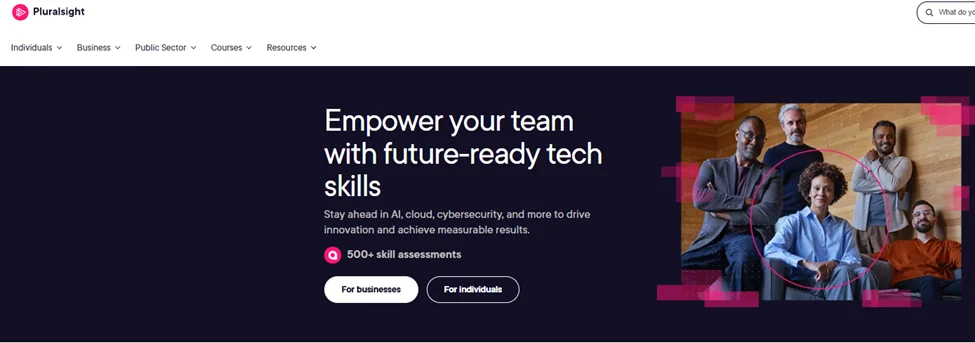
Historically, Pluralsight established itself as the go-to tech content catalogue for Business-to-Business clients. This is before Udemy surpassed them and started taking significant market share from them.
In recent years, the company has struggled financially, and this led to lenders taking over the firm, because equity owners defaulted on their debt payments. Yet, Pluralsight continues to operate and add new titles to their catalogue.
You will find a video-based content catalogue created by freelance content creators. For this reason, different courses may overlap in terms of content and there are fewer opportunities to experience a structured learning journey.
Several years ago, Pluralsight were one of the first companies to introduce assessment tests for their students, but today this is a feature reserved for B2B clients. Video quality production is good because authors have standards they need to adhere to. There are fewer opportunities for project-based work though.
Pricing
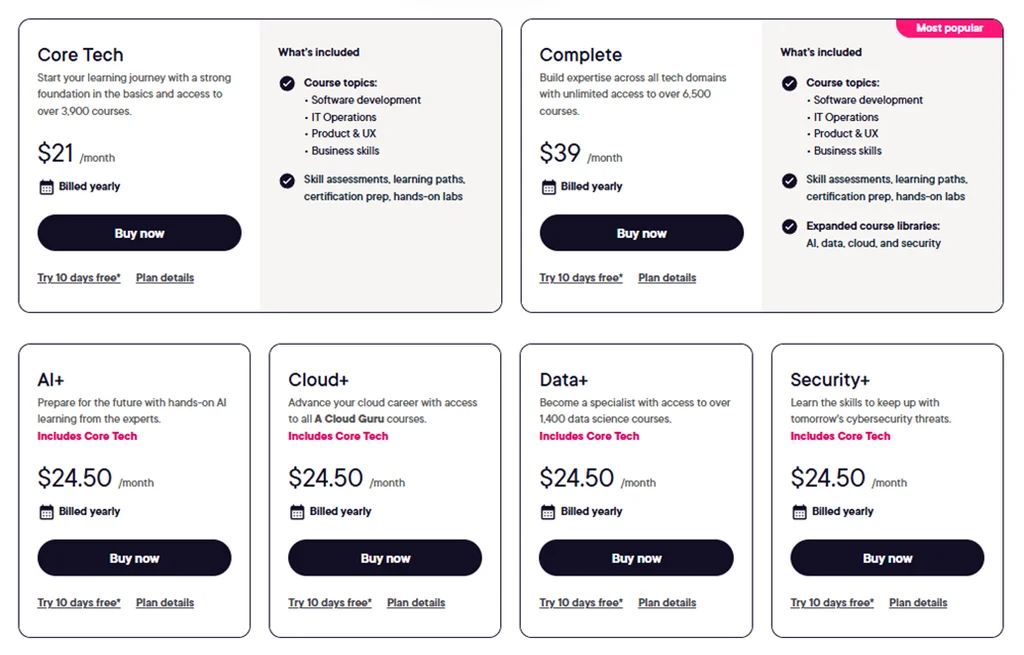
Pluralsight is basically “all-you-can-watch tech training” at ~$299/year. You’re paying for catalog access more than a guided career path. It brings good value if you already know what you need (e.g., Azure basics, Python refresh, DevOps tools).
Author’s take: If you want a step-by-step roadmap + projects that stack into a portfolio, you’ll probably feel like you need extra structure elsewhere.
Pros
• Extensive catalogue
• High-quality video production
• Strong for B2B upskilling
Cons
• Content can overlap between courses
• Less structured for a full learning journey
• Limited project-based learning for individuals
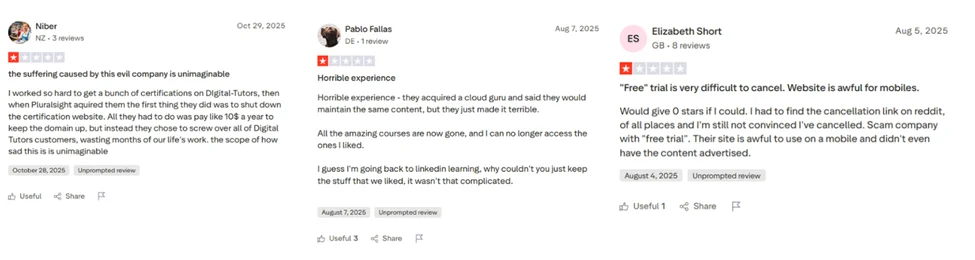
Some users mention frustrating subscription logistics, and a few also report content access issues after platform changes (e.g., courses they liked being moved or no longer available).
Key takeaway
Pluralsight has strong video production and a big catalog for B2B training. For individual learners, it can feel a little scattered.
Courses overlap, progression isn’t always clear, and project work is limited. If you’re trying to move from “learning” to “hire me,” you’ll probably need extra structure elsewhere.
Pluralsight is a big, polished video library that works best for corporate-style learning. But if you want a structured path and a project-heavy experience, it can feel a bit “choose your own adventure.”
Good if: you want a broad tech catalogue and like video-based learning
Not ideal if: you need a clearly guided career path with lots of projects
LinkedIn Learning
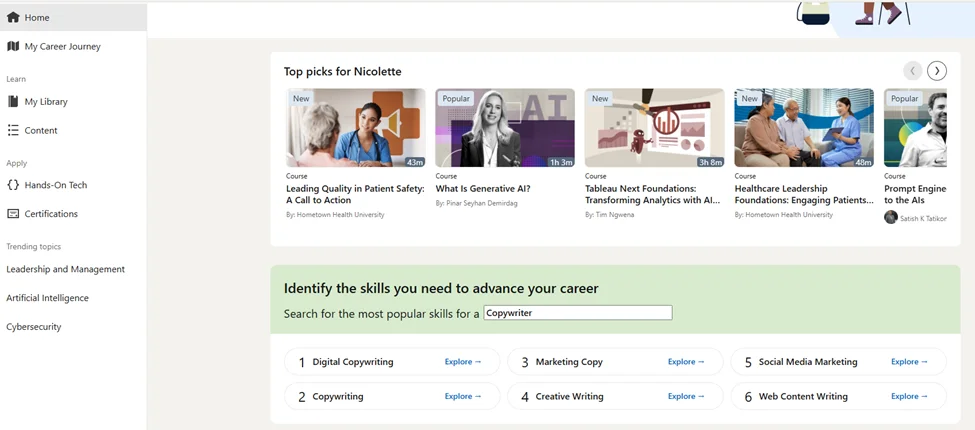
LinkedIn Learning came into existence when LinkedIn purchased Lynda.com in 2015. Lynda was a company known for high quality video production standards. The acquisition did not change this aspect.
To this day LinkedIn Learning continues to create high quality video content.
They frequently hire the same authors for a series of interrelated courses, which makes for an enjoyable experience if you want a structured learning journey rather than taking a single course.
The high-touch approach LinkedIn Learning has and the vast array of topics they want to cover makes them slower at adapting to emerging topics.
Autor’s take: The lack of project-based learning and relatively slow adaptation to AI-related content make LinkedIn a suboptimal choice if you want to learn how to become an AI Engineer, data engineer, or data scientist.
Pricing
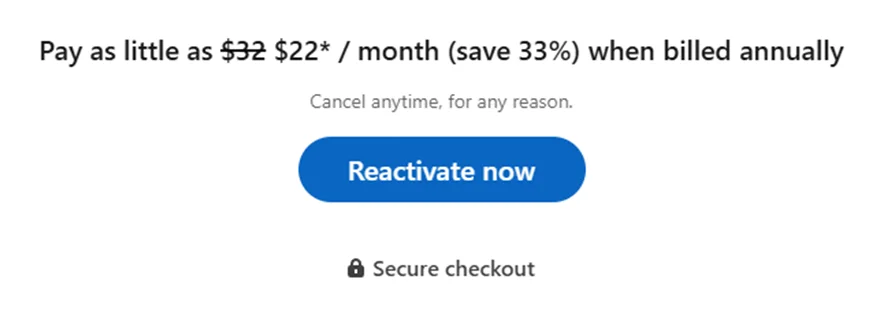
LinkedIn Learning sits at ~$239/year and is best thought of as “high-production career learning” rather than deep technical training.
Simple way to decide:
• If you’ll use it for soft skills + business skills + some light tech → worth it
• If you’re paying mainly for data/AI depth → the value can feel thin fast
Pros
• High production quality
• Strong soft skills + professional development content
• Courses often feel connected (same authors across series)
Cons
• Limited project-based learning
• Slower adaptation to AI-related content
• Not the best fit for deep technical AI/data paths
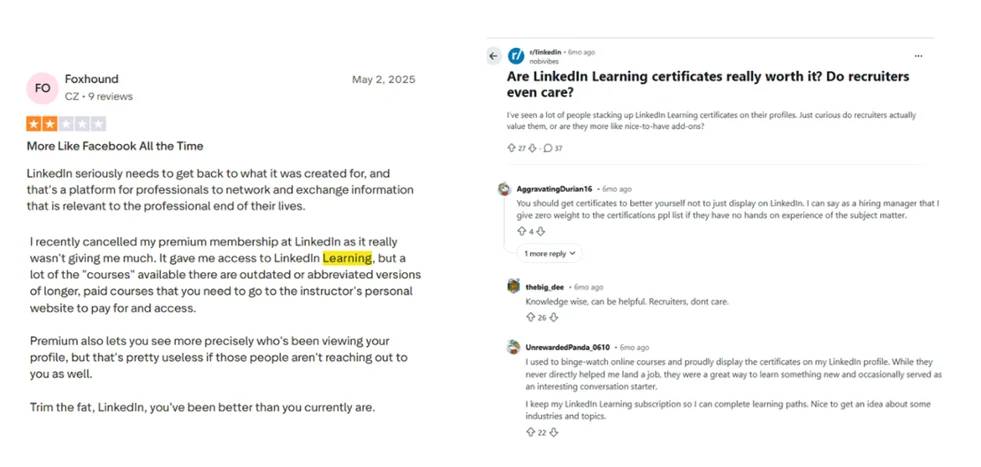
From what reviewers say, the biggest complaints are value-for-money (especially if you’re paying mainly for technical learning), some courses feeling abridged, and the reality that their certificates don’t carry much hiring weight without real projects behind them.
Key takeaway
LinkedIn Learning kept the Lynda.com production quality, and it shows. Soft skills? Great.
But for AI and data, it’s not the strongest pick. It covers a huge range of topics, which makes it slower to go deep on fast-moving areas like AI engineering, ML workflows, and modern tooling. Project-based learning is also minimal.
Dataquest
Dataquest is one of the best-known niche platforms for learning data and data science through hands-on exercises in the browser. Together with DataCamp, Dataquest was one of the pioneers of the coding-in-the-browser mechanic, which allowed students to avoid the long and confusing installation of SQL and Python.
Dataquest offers high quality text-based lessons with interactive exercises. They don’t teach theory and foundations but rather rely on a learning-by-doing approach.
The rise of AI and the growing importance of AI-related technologies poses a significant challenge to Dataquest. They have been slow at adding new AI content and don’t offer an AI engineer career track.
Dataquest remains a great solution for people who want to learn data analysis through interactive bite-sized learning.
Author’s take: If you are someone who wants to learn the newest technologies, the most recent AI tools, and build a theoretical foundation and understanding before diving into implementation, then this platform is probably not the best choice for you.
Pricing
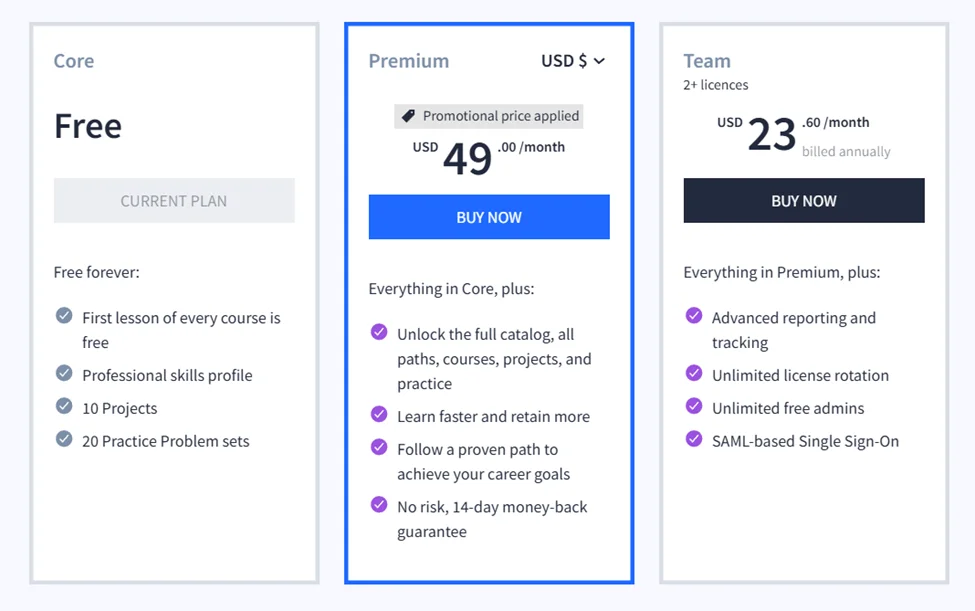
Dataquest is one of the pricier options here at ~$588/year, and the price mostly reflects the hands-on learning format.
Simple way to decide:
• If you learn best by doing (and you’ll actually practice regularly), the cost can be justified.
• If you prefer video teaching + more guided theory, you might not get your money’s worth.
Pros
• Hands-on browser learning
• Practical interactive exercises
• Good for building momentum fast
Cons
• Light on theory/foundations
• Slow to expand into modern AI topics
• No AI Engineer career track
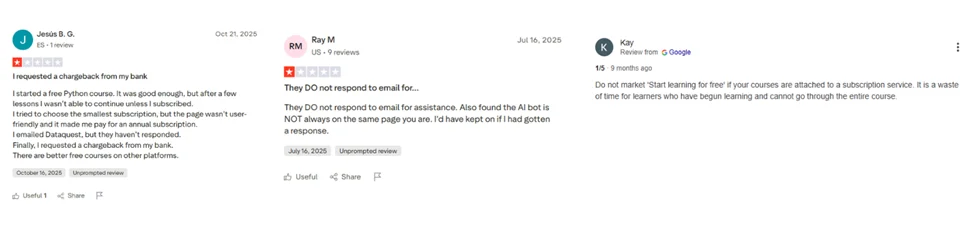
Some reviewers mention that the learning curve can feel steep for true beginners, the text-heavy format isn’t for everyone, and the platform has been slower to expand into modern AI topics.
Key takeaway
Dataquest (like DataCamp) is known for browser-based, interactive learning. It’s practical, text-based, and you’ll actually write code.
The tradeoff: it can feel intense for true beginners because it’s very “learn by doing” and lighter on theory. So, teaching the foundations isn’t their strong suit. Also, it’s been slower to expand into newer AI topics and doesn’t offer an AI engineer track.
Great for: data analysis practice
Not ideal for: a full AI career roadmap
Udemy
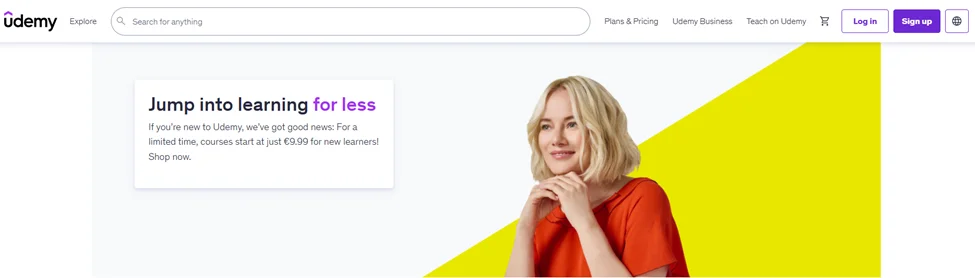
Udemy is the best-known online learning platform globally. They offer more than 100,000 courses on topics ranging from cybersecurity to baking. The company’s rich and vibrant marketplace ensures you can find content on some of the hottest topics in tech.
Anyone can create a course at Udemy. That’s the platform’s blessing and curse.
It isn’t difficult to imagine that the variety Udemy offers means there will be some amazing teachers who have created very high-quality content. At the same time, there can be courses that don’t correspond to your expectations. It makes sense to use social proof when navigating the Udemy catalogue and trying to decide what course to take next.
One of the biggest challenges when learning on Udemy is that courses don’t always follow natural progression. There aren’t structured learning paths that can guide you throughout your entire learning journey.
Moreover, the platform doesn’t offer project work you can use to implement in practice what you have learned while watching video lessons.
Pricing
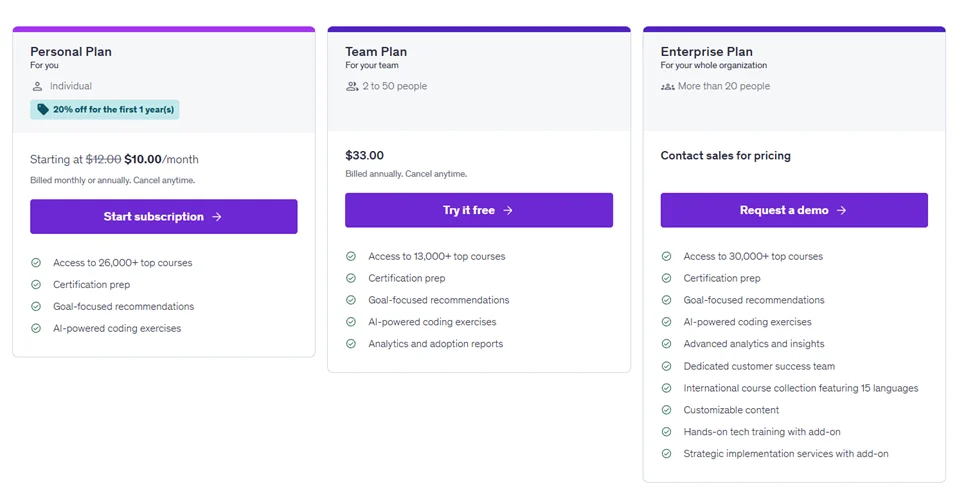
Udemy’s ~$240/year usually points to subscription access, but Udemy is also famous for frequent discounts on single courses.
Author’s take: There’s a simple way to decide if this is the right platform for you.
• You want one specific skill/tool → buying one course on sale is often the best value
• You want a structured journey → subscription might still not solve the “what next?” problem
Pros
• Massive library with tons of niche topics
• Easy to find courses on trending tools
• Some genuinely excellent instructors
Cons
• Inconsistent quality
• No reliable learning progression
• Limited built-in project ecosystem platform-wide
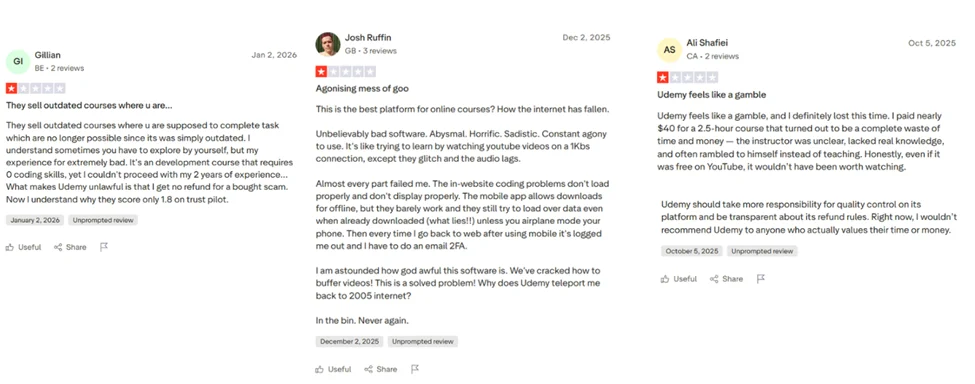
Trustpilot reviews often boil Udemy down to “amazing when you pick the right course, annoying when you don’t,” with common complaints around inconsistent quality and billing issues.
Key takeaway
Udemy is the internet’s biggest course marketplace. You can find content on almost any tool, including brand-new AI topics.
But because anyone can publish, quality is inconsistent. And most courses don’t connect into real progression—no structured learning paths, limited built-in projects, and no cohesive job-prep layer.
Best used as a “one course for one problem” platform.
Udemy is great when you know exactly what you need and can pick a strong instructor. As a full DataCamp alternative for a career change, it can feel scattered without structure.
Good if: you want a single course on a single topic
Not ideal if: you need a guided path from beginner to job-ready
DeepLearning.AI
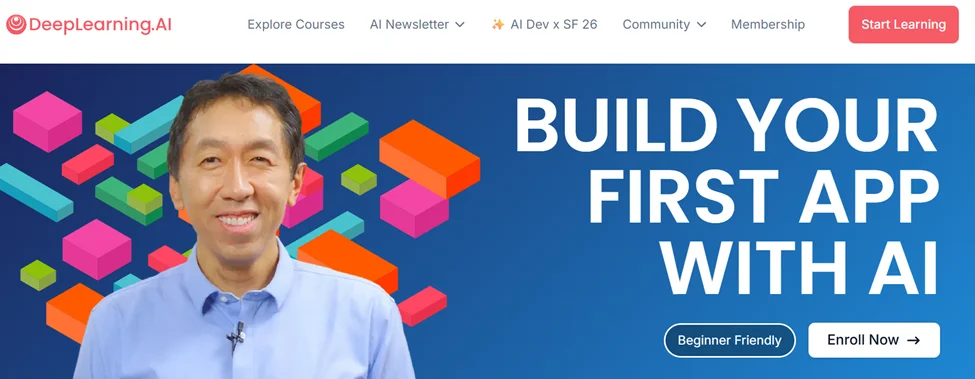
DeepLearning.ai is a platform where you can find advanced data science, data engineering, and AI content. The company specializes in AI and machine learning, but they also cover other related topics. Very often Deeplearning.ai partners with corporate organizations (in the same way Coursera does, which makes sense as Coursera and Deeplearning.ai share a founder in Andrew Ng).
Deeplearning.ai is an excellent choice in terms of content quality, instructor knowledge, and up-to-date content. Their main drawback is that the content is not always beginner-friendly and easy to digest. Depending on your level of expertise this could be a major drawback.
Author’s take: One can rightly point out that most of the platform’s courses can be found in Coursera. The key difference is whether you’d prefer a certificate issue by Deeplearning.ai or Coursera.
Pricing
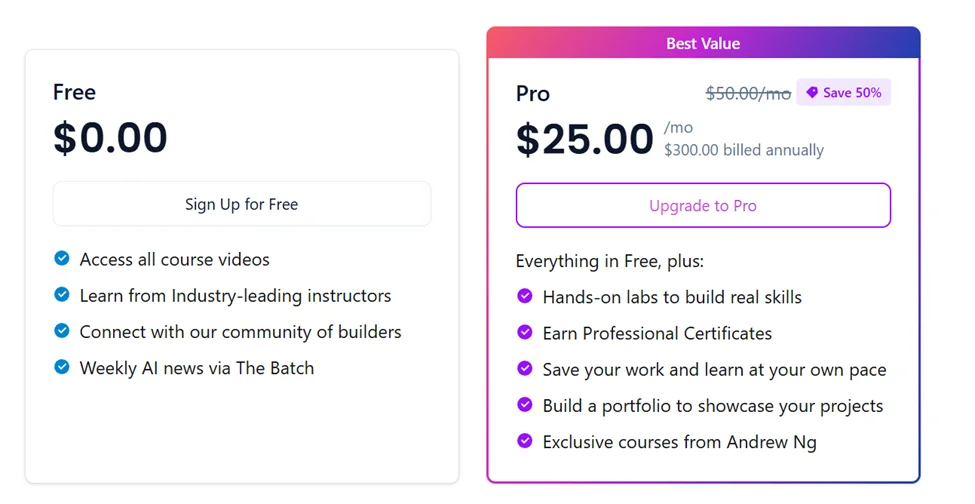
DeepLearning.AI is ~$300/year, and it’s priced more like “premium AI content” than beginner-friendly training.
Simple way to decide:
• If you already have foundations and want serious ML/AI depth → good spend
• If you’re still building basics (Python/stats/ML intuition) → it can feel like paying to struggle
Pros
• Strong AI/ML content quality
• Up-to-date material
• Great if you already have solid foundations
Cons
• Not always beginner-friendly
• Can feel advanced fast
• Overlap with Coursera catalog
Key takeaway
DeepLearning.AI is legit. Strong instructors, modern content, and serious ML depth. The issue is level. If you don’t already have a solid base in Python, math, and ML fundamentals, it can feel like jumping into the deep end. Also, a lot of the catalog overlaps with Coursera.
DeepLearning.AI is a strong pick for serious AI/ML learning, but it’s not the easiest starting point. It’s best when you already have basics and want to go deeper.
Good if: you’re intermediate/advanced and want high-quality ML/AI content
Not ideal if: you’re a beginner and need a slow, guided path
Codecademy
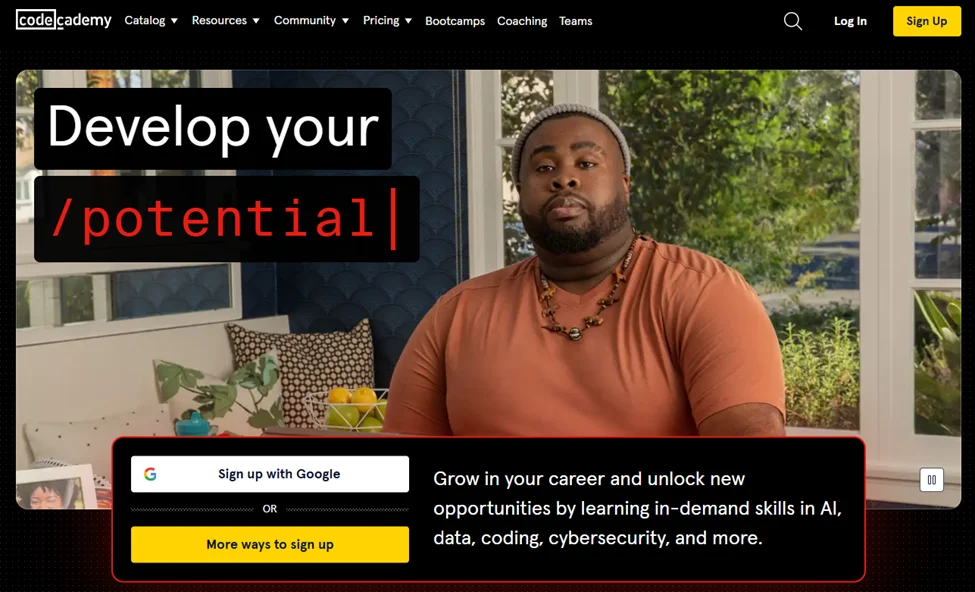
Codecademy is another major player in the learn-how-to-code space. By extension, several years ago, they added data and ML courses to the platform. Most of what we said about Dataquest applies here as well. Codecademy is great when it comes to learning by doing.
There aren’t many foundational and theoretical courses on the platform. Instead, you dive in and acquire an intuition in the subject matter while working on practical problems. This is great for some learners and clearly not ideal for others who prefer to develop a broader understanding of the field beforehand.
One notable difference to Dataquest is that Codecademy were fast to embrace AI topics and have added many AI-related courses on the platform. Ranging from Prompt Engineering to MCPs and LLMs, you will find a variety of AI courses on Codecademy.
Another positive is that the platform’s UI is engaging and easy to use.
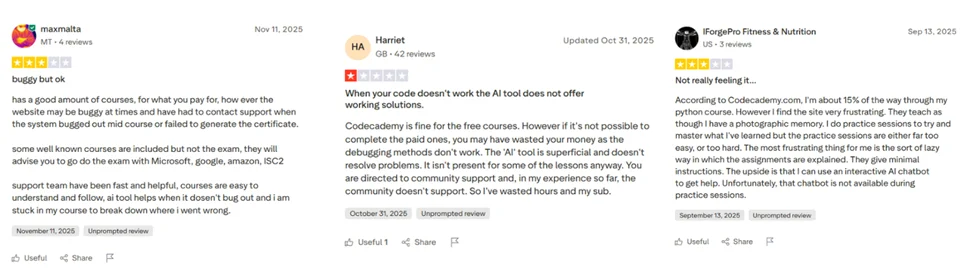
Author’s take: The main concern most users share online is the limited knowledge they acquire while working on small hands-on tasks in Codecademy. Users share that they spend a lot of time on the platform but then realize they didn’t develop a good sense of how all pieces fit together or why a particular task is important.
Pricing
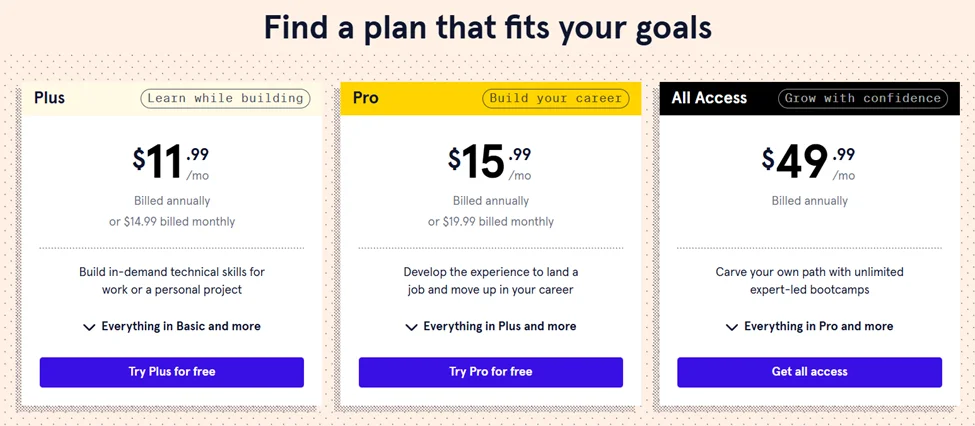
Codecademy is ~$179/year and is one of the cheaper options for interactive learning.
Simple way to decide:
• If your goal is coding confidence + habit-building → good value
• If your goal is job-ready AI & data skills with portfolio proof → you’ll likely need additional project structure
Pros
• Strong learn-by-doing experience
• Beginner-friendly UI
• Fast to add newer AI topics (prompting, LLMs, etc.)
Cons
• Light on foundations/theory
• Small tasks can feel disconnected
• Some learners finish without a clear “big picture”
Author’s take: Codecademy vs DataCamp is less about “which is better?” and more about “what learning style do you stick with?”
Codecademy gets praise for being beginner-friendly and interactive. And a lot of the negative reviews focus on subscription/billing frustration.
Key takeaway
Codecademy is great for hands-on coding momentum and newer AI topics. But if you want deeper understanding and a connected roadmap, it can feel a bit piecemeal.
Codecademy is strong at teaching coding fundamentals with interactive exercises.
Many learners run into the same frustration: “I did a lot of exercises, but I don’t understand how it all fits together.” Data jobs require context, analysis, and business thinking—not just completing small tasks.
Good if: you like interactive learning and want to build coding comfort fast
Not ideal if: you want structured, portfolio-first career prep
Maven Analytics
Trustpilot score: Not available
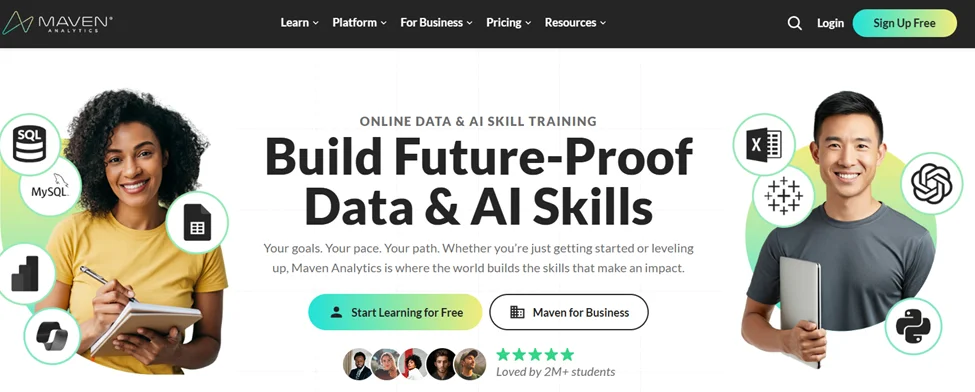
It’s one of the smaller companies on this list, but that doesn’t mean they are not a great one. Maven Analytics is a cool place to learn data analytics. Their content is created by an in-house team that pays attention to detail and follows a consistent learning path. In addition, Maven is famous for their playground section where they provide students datasets that can be used for practice and project work.
Considering the company’s size, it is not surprising they have been slower at adapting their content to the latest AI-related developments. They offer foundational AI training, but almost no intermediate and advanced AI engineering topics. Another drawback is that Maven Analytics doesn’t offer cloud training, which is a necessity in today’s dynamic data engineering and data science job market.
Pricing
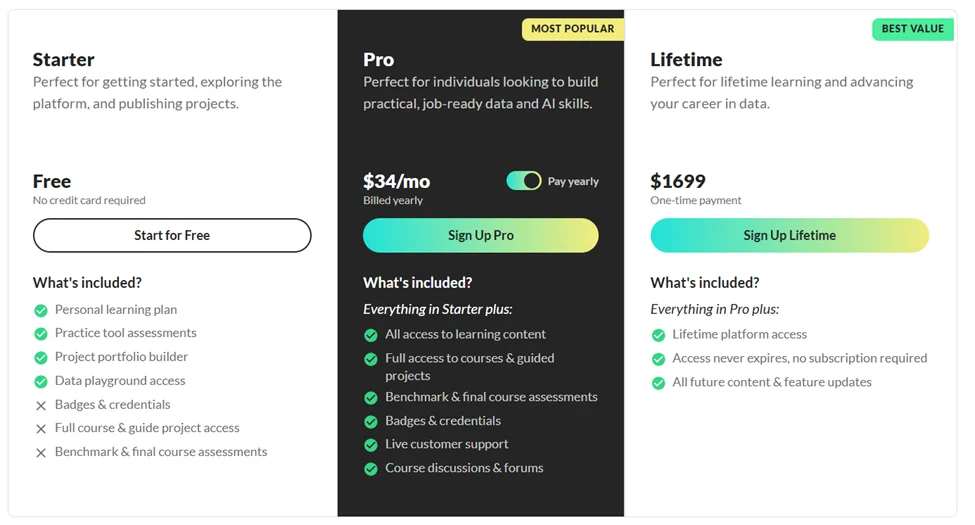
Maven Analytics is ~$399/year. You’re paying for curated, internally produced analytics training (not a huge library).
Simple way to decide:
• If your target is data analytics + BI-style skills → strong fit
• If your target is AI engineering & cloud-heavy roles → you’ll probably need to supplement
Pros
• Consistent, in-house course quality
• Great for data analytics
• Practice datasets
Cons
• Slower AI content expansion
• Limited intermediate/advanced AI engineering topics
• No cloud training (a gap for many modern roles)
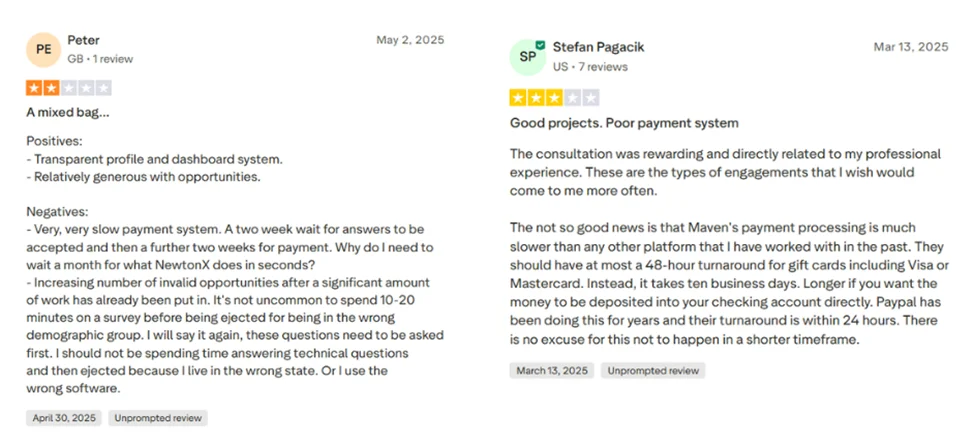
The main watch-outs people mention are auto-renewals, and that the platform is very analytics-focused—great if that’s your goal, but not the place most learners go for deep AI engineering or cloud-heavy paths.
Key takeaway
Maven Analytics is a smaller platform, but the production quality is good and the learning experience feels consistent. Their “playground” datasets are also a nice touch. It’s a strong analytics-focused platform with consistent quality and good practice options. If your goal is AI engineering or cloud-heavy roles, you’ll likely need to supplement.
Good if: you want to learn data analytics with clean structure and practice datasets
Not ideal if: you want deep AI engineering and cloud training
365 Data Science
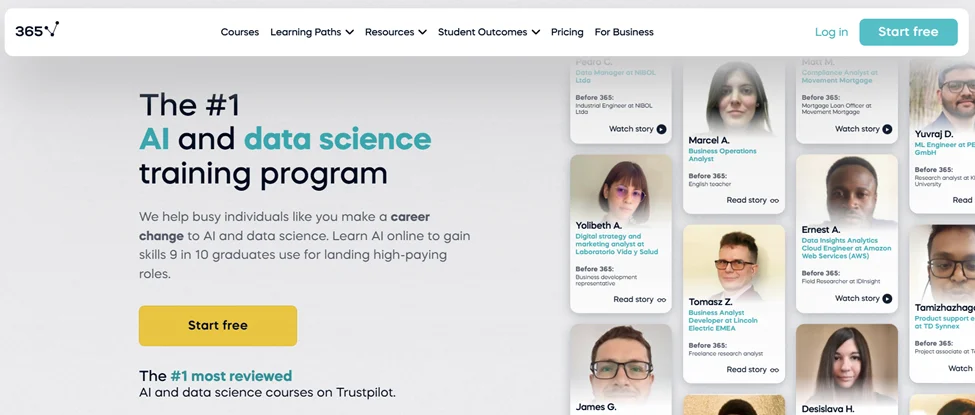
365 Data Science has the highest customer satisfaction rating among all platforms, offering AI and data training on Trustpilot. The company creates online courses in-house and in partnership with world-class experts from firms like Google, Meta, Netflix, and Apple. The content quality is regarded as best-in-class when comparing user reviews.
Some of the reasons learners indicate are easy to understand lessons, visually pleasing videos, and captivating storytelling.
The company offers structured career paths for professions such as AI engineer, AI agent engineer, machine learning engineer, data scientist, data analyst, etc. Courses blend theoretical understanding with practical implementation, building a bridge that helps learners see the big picture while acquiring relevant skills.
365 Data Science is accredited by:

E-Learning Quality Network (ELQN), NASBA for CPE credits, the Association of Data Scientists (ADaSci), the Institute of Analytics (IoA), and the European Agency for Higher Education & Accreditation (EAHEA), and GAOTE.
Author's take: If you want a DataCamp alternative that feels more like a complete learning system (not just “here are some lessons, good luck!”), 365 Data Science is the one I’d point most people to—especially career switchers.
What you actually get inside the platform
365 Data Science is one of the few platforms where “certificate” doesn’t feel like a commodity. 365 doesn’t hand you content. It’s designed around a full transition with the right structure and relevancy.
Accredited certificates (a.k.a., not just a PDF badge)
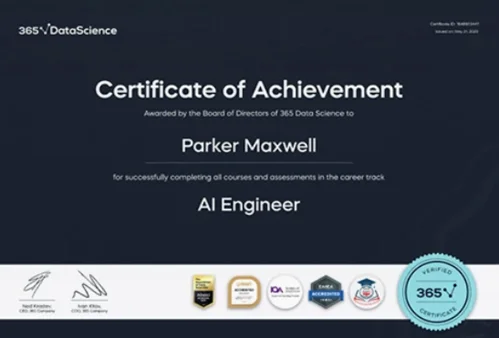
If certifications matter to you, 365 Data Science has a strong trust layer here. Their certificates are stamped by major bodies. Also, completed courses in the library can count for CPE credits, which is rare in this space. And it has an accredited AI engineer certificate.
#1 highest rated online AI & data platform
365 Data Science is the #1 most reviewed AI & data learning platform on Trustpilot with a 4.8 rating.
In reality, this matters more than most course features. A lot of platforms look great on the homepage and then fall apart once you actually try to learn consistently. Reviews catch the stuff marketing pages won’t: how clear the lessons are, whether the platform is easy to use, and if people genuinely stick with it.
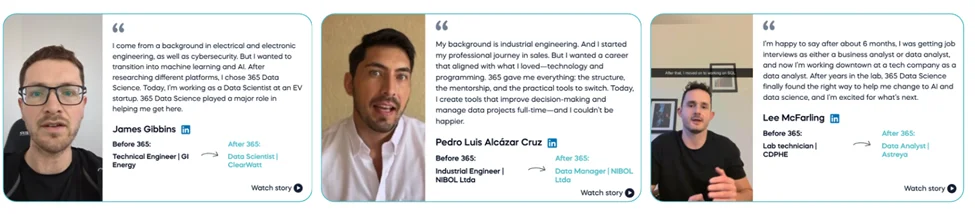
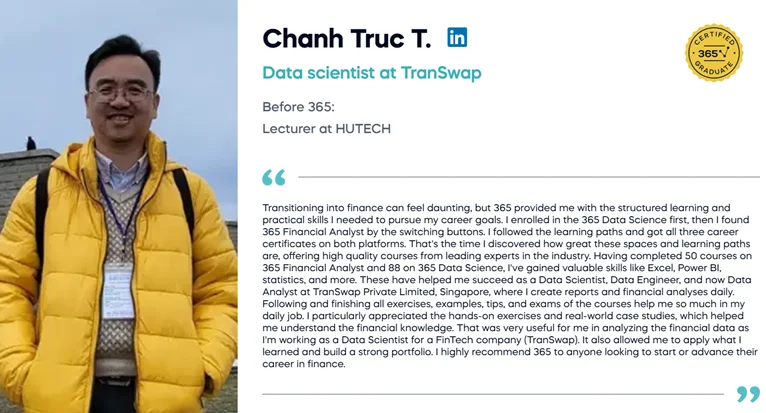
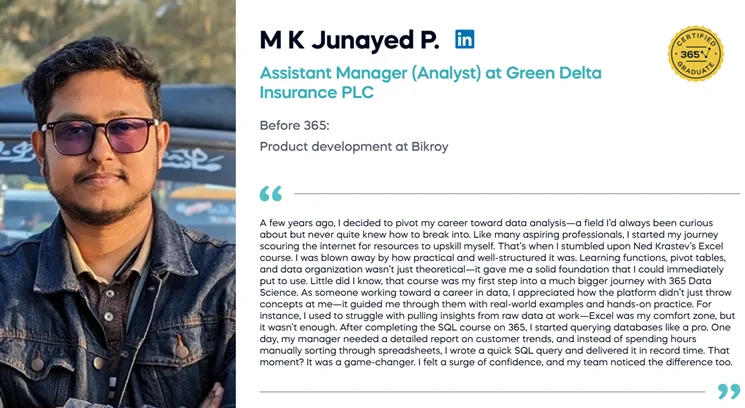
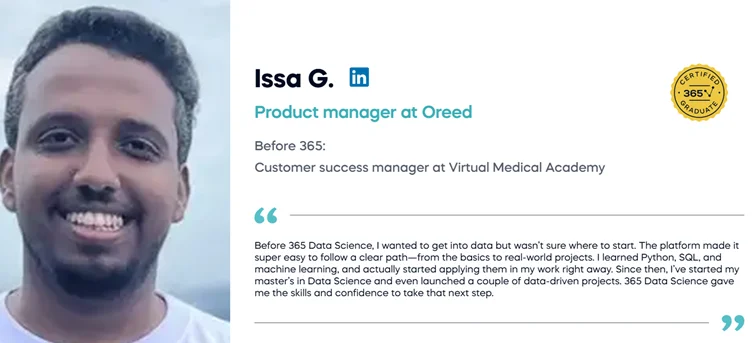
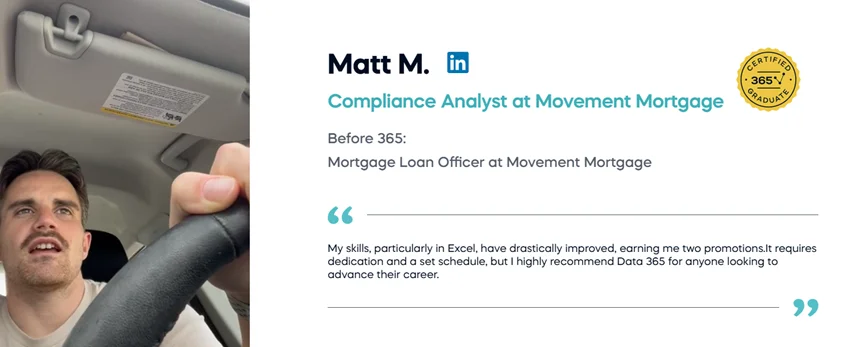
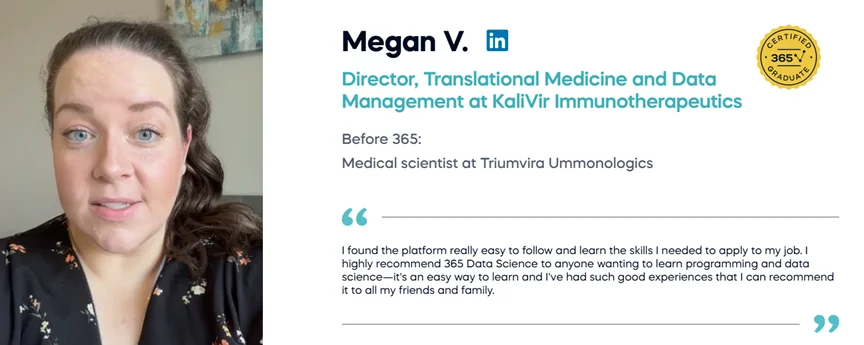
And the best testimonials aren’t the “life changed overnight” ones. They’re the ones where people talk about the boring-but-important stuff—like finally understanding SQL joins, actually finishing a track, building a project, and feeling confident enough to apply. Here are a few:
Instructors: legit backgrounds, but still good at teaching
A lot of platforms have experts. Fewer have experts who can explain things without making you feel dumb. 365 works with instructors who’ve worked at big-name companies (Google, Meta, Apple, Netflix, Apple, etc.), but the bigger point is this: the teaching style is built for real learners, not for flexing credentials. 😊
The course quality is consistent (and that matters more than people think)
One of the biggest issues with most big platforms is inconsistency. Different instructors, different styles, different standards… and you feel it.
365 is the opposite of that because a lot of the content is created internally (so it has one consistent “voice” and structure). Lessons tend to be:
- clear and beginner-friendly
- well-paced (you don’t get smacked with complexity out of nowhere)
- actually nice to watch (strong visuals, storytelling, not dry screen recordings)
A focused library (AI and data only)
No random topics. No “learn Excel, then suddenly photography.” It’s built around the stuff people actually use in top AI and data roles.
- 123+ courses across Python, SQL, Excel, stats, ML, AI, data viz, and more
- 48 projects (so you’re not just watching videos)
- 11 career tracks with step-by-step structure (e.g., Data Analyst, Data Scientist, Data Engineer, AI Engineer, AI Agent Engineer, Power BI, Tableau, etc.)
- Interactive exercises + exams to check you really learned it
- Career tools: resume builder, AI interview simulator, career templates/guides, job-focused newsletter
Pricing
365 Data Science is ~$139/year, which is honestly hard to ignore given what’s included. You’re paying for a full platform experience: structured tracks, projects, exercises, exams, accredited certificates, plus career tools like AI interview simulator.
So:
• If you want a focused AI & data platform that feels like a guided system → strong value
• If you want a general “learn anything” library → not what it’s built for
If you want a giant general learning platform that covers everything under the sun, this isn’t that. But if you look for real AI + data skills and career outcomes, that focus is honestly a strength.
How I picked these DataCamp alternatives (so you can trust the list!)
There are a lot of learn-AI-and-data-online platforms. Most aren’t really competing with DataCamp—they’re either:
- a massive course library (good luck finding the right path);
- a coding-only tool (great for syntax, not always great for job-readiness);
- a niche platform that’s awesome for one thing… and missing the rest.
Beside the facts and figures in the table I gave in the beginning, I also focused on what actually matters when you’re choosing a DataCamp alternative and came up with six main things to look out for.
1) Is it credible (and do the credentials actually mean anything)?
This includes things like accreditation, the weight of certificates, and whether the platform pushes you to build proof (projects, exams, portfolio pieces) instead of just watching lessons. Because in 2026, “I finished a course” isn’t the flex, but, “Here’s what I can do” is.
2) Do you get structure (not just content)?
A big library is nice. But if it doesn’t tell you what to learn next, it becomes a “save for later” pile.
3) Is it practical?
Video lessons are fine. But the real question is: Do you build projects, practice in a meaningful way, and prove skills with assessments?
4) Are the instructors actually good (and not just impressive on paper)?
A lot of platforms have big-name experts. Fewer have instructors who can teach clearly, keep things up to date, and explain the “why” without making you feel inferior. I favor platforms where teaching quality feels consistent—because that’s what keeps you learning past week two.
5) Do people actually like using it?
I looked at Trustpilot because it’s one of the few places where users consistently complain (or rave) without being prompted. This is also where scanning DataCamp reviews (and competitor reviews) gives you the fastest reality check.
6) Is it worth the price?
Not “is it cheap.” More like: does the value match what you pay for a whole year?
Cheat sheet to DataCamp alternatives
If you’re in a hurry, here’s the simplest way to choose:
- 365 Data Science: if your goal is a structured, career-focused path in data + AI, with accredited certificates and strong learner satisfaction
- Codecademy: if you want beginner-friendly coding practice, fast (see Codecademy vs DataCamp notes in previous sections)
- Maven Analytics: if you’re focused on analytics (and don’t need much AI depth yet)
- Coursera → if you want big-name certificates and don’t mind uneven course quality (classic DataCamp vs Coursera tradeoff)
- Pluralsight: if you’re learning through work
- LinkedIn Learning: if you want polished videos + soft skills (less ideal for deep AI and data)
- Dataquest: if you want hands-on browser practice and can live with lighter AI coverage
- Udemy: if you want one specific course and you’re willing to hunt for quality
- DeepLearning.AI: if you’re already intermediate or advanced and want serious ML content
So… what would I personally pick?
If I’m being honest, most DataCamp alternatives fall into two buckets:
- Huge course libraries that sound amazing until you realize you’re basically building your own curriculum without even knowing if that’s the right path of skills to go
- Hands-on platforms that are fun, but can leave you thinking: “Okay, but what do I learn next—and how does this turn into a job?”
That’s why 365 Data Science ends up being my easiest recommendation for most people reading this.
Sign up to 365 Data Science for free now.
Because it’s one of the few platforms that feels like it was built around a real outcome. They don’t overpromise and genuinely want to make you capable in AI & data—with structure, practice, and strong credibility baked in.
What's next?
If you’re career-switching, or you’re busy and you cannot waste months hopping between platforms, here’s the simplest rule:
Pick the option that gives you a roadmap and a way to prove you learned something (projects + exams), not just a certificate you’ll forget about. And if you’re still undecided, do this quick test:
1. Open two tabs with each platform’s curriculum + their reviews.
2. If the curriculum looks like a clear path and the reviews sound like real humans who actually finished things, you’re probably in the right place.
And if you’re still asking, “Is DataCamp worth it”, your answer is probably sitting in your calendar—not the pricing page.
FAQs