Online Course
Convolutional Neural Networks with TensorFlow in Python

Master Convolutional Neural Networks: Building advanced neural network models with TensorFlow

4.8

862 reviews on
8,405 students already enrolled
  • Institute of Analytics
  • The Association of Data Scientists
  • E-Learning Quality Network
  • European Agency for Higher Education and Accreditation
  • Global Association of Online Trainers and Examiners

Skill level:

Advanced

Duration:

4 hours
  • Lessons (5 hours)
  • Practice exams (16 minutes)

CPE credits:

6
CPE stands for Continuing Professional Education and represents the mandatory credits a wide range of professionals must earn to maintain their licenses and stay current with regulations and best practices. One CPE credit typically equals 50 minutes of learning. For more details, visit NASBA's official website: www.nasbaregistry.org

Accredited

certificate

What you learn

  • Master convolutional neural networks for visual recognition.
  • Acquire advanced deep learning skills with TensorFlow.
  • Use proven techniques to optimize neural network performance.
  • Master TensorBoard for deep learning visualization.
  • Apply TensorFlow to solve real-world computer vision problems.

Topics & tools

TheoryPythonProgrammingMachine LearningDeep LearningNeural NetworksComputer VisionTensorflowTensorboardConvolutional Neural NetworksImage ProcessingMachine and Deep Learning

Your instructor

Course OVERVIEW

Description

CPE Credits: 6 Field of Study: Information Technology
Delivery Method: QAS Self Study
This course offers a deep dive into an advanced neural network construction – convolutional neural networks. First, we explain the concept of image kernels, and how it relates to CNNs. Then, you will get familiar with the CNN itself, its building blocks, and what makes this kind of network necessary for computer vision. You’ll apply the theoretical bit to the MNIST example using TensorFlow, and understand how to track and visualize useful metrics using TensorBoard in a dedicated practical section. Later in the course, you’ll be introduced to a handful of techniques to improve the performance of neural networks, and a huge real-world practical project for classifying fashion item pictures. Finally, we will cap it all off with an intriguing look through the history of the most influential CNN architectures.

Prerequisites

  • Python (version 3.8 or later), TensorFlow 2 library, and a code editor or IDE (e.g., Jupyter Notebook, VS Code, or Google Colab)
  • Intermediate Python and machine learning knowledge is required.
  • Familiarity with NumPy and neural network fundamentals is recommended.

Curriculum

54 lessons 3 exams
  • 1. Introduction to the course
    10 min
    In this first section, we discuss the topics covered throughout this course along with the numerous benefits of learning about Convolutional Neural Networks.
    10 min
    In this first section, we discuss the topics covered throughout this course along with the numerous benefits of learning about Convolutional Neural Networks.
    What does the course cover? Free
    Why CNNs? Free
  • 2. Kernels
    17 min
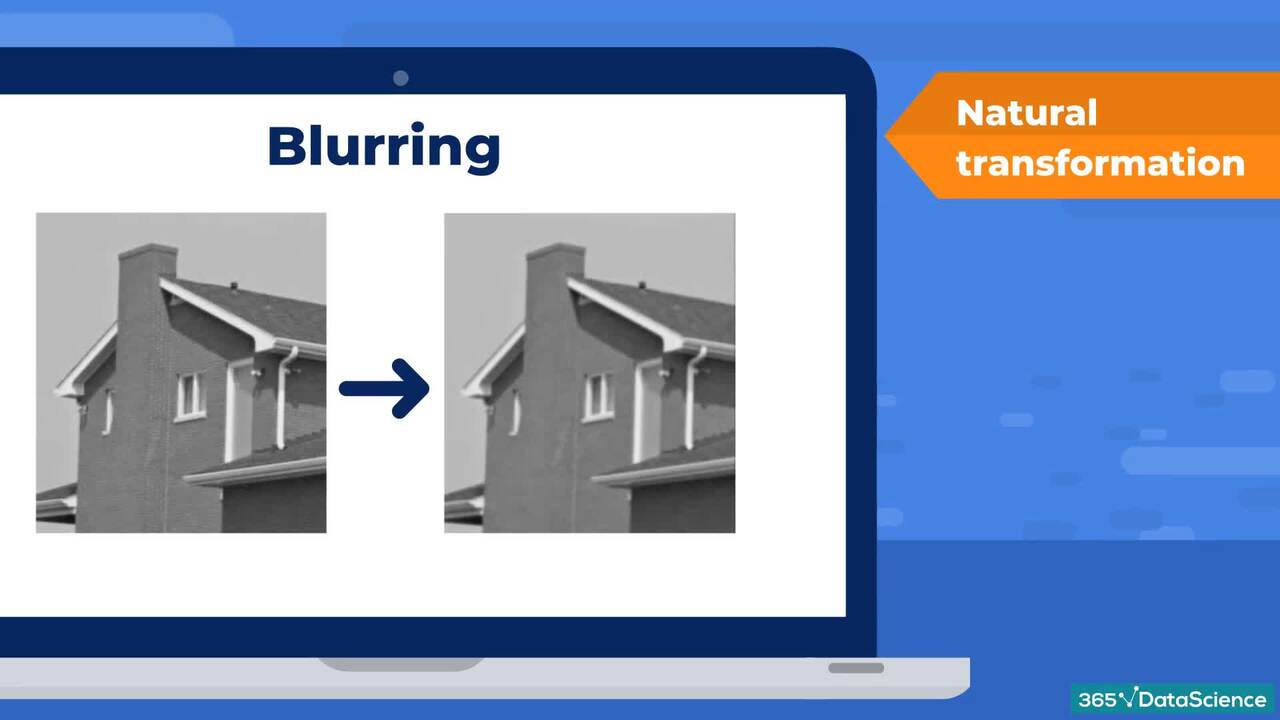
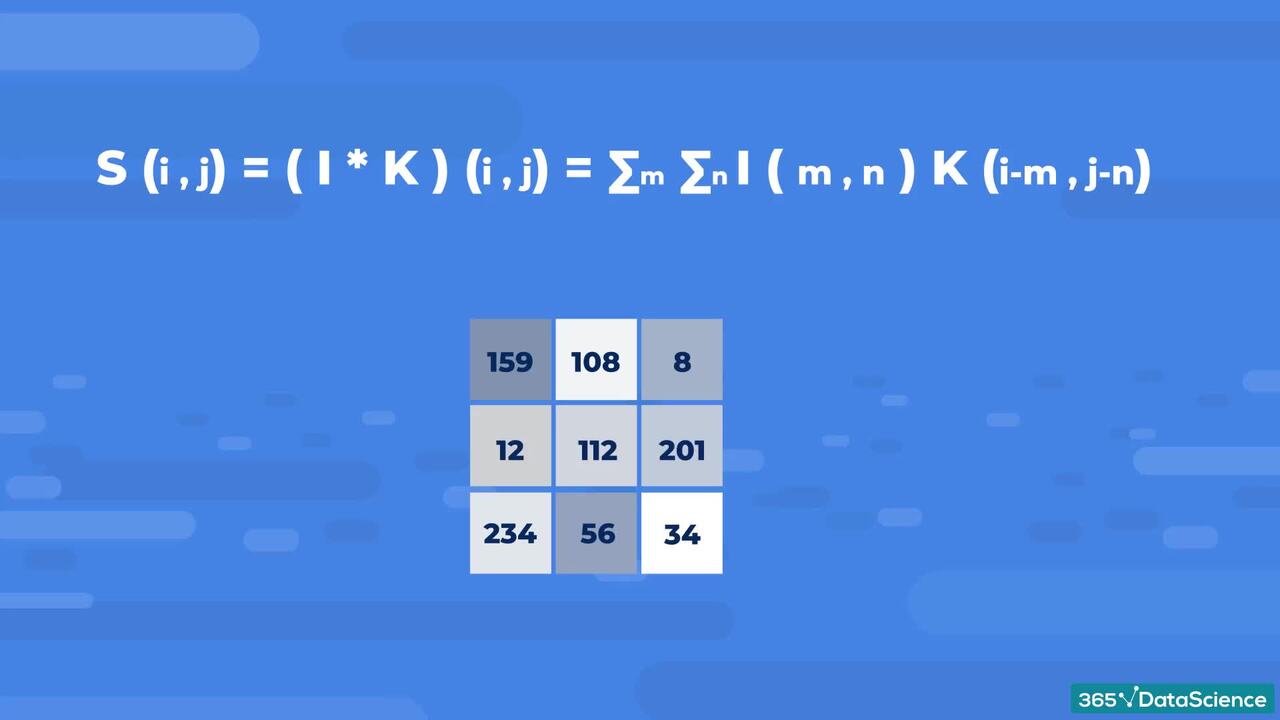
    Here, we introduce the concept of image kernels and transformations. We will explain how they work through convolution, which forms the basis for CNNs.
    17 min
    Here, we introduce the concept of image kernels and transformations. We will explain how they work through convolution, which forms the basis for CNNs.
    Introduction to image kernels Free
    How do image transformations work? Free
    Kernels as matrices Free
    Convolution - applying kernels Free
    Edge handling Free
  • 3. CNN Introduction
    23 min
    This is where we have an in-depth discussion of the Convolutional Neural Networks: you will understand the motivation and fundamental strength of this type of network and learn more about the concepts and layers that make it work – feature maps and pooling layers. Finally, you will discover how the dimensions change in such a network.
    23 min
    This is where we have an in-depth discussion of the Convolutional Neural Networks: you will understand the motivation and fundamental strength of this type of network and learn more about the concepts and layers that make it work – feature maps and pooling layers. Finally, you will discover how the dimensions change in such a network.
    CNNs motivation
    Feature maps
    Pooling and Stride
    Dimensions
  • 4. Neural network techniques (revision)
    9 min
    In this section, we quickly revise the main concepts of neural networks in general. These include activation functions, overfitting and early stopping, and optimizers. This part is intended only as a reference and is not a substitute for a full course on the basics of Machine Learning.
    9 min
    In this section, we quickly revise the main concepts of neural networks in general. These include activation functions, overfitting and early stopping, and optimizers. This part is intended only as a reference and is not a substitute for a full course on the basics of Machine Learning.
    Activation functions
    Overfitting and early stopping
    Optimizers
    Practice exam
  • 5. Setting up the environment
    3 min
    In this part of the course, you will learn how to set up Python 3 and load up Jupyter. We’ll also show you what the Anaconda Prompt is and how you can use it to download and import new modules.
    3 min
    In this part of the course, you will learn how to set up Python 3 and load up Jupyter. We’ll also show you what the Anaconda Prompt is and how you can use it to download and import new modules.
    Setting up the environment - Do not skip, please!
    Installing the packages
  • 6. CNN assembling - MNIST
    46 min
    In this section, you will put theory into practice. You will develop a simple CNN architecture, implement it from scratch, and train the model on the MNIST example.
    46 min
    In this section, you will put theory into practice. You will develop a simple CNN architecture, implement it from scratch, and train the model on the MNIST example.
    Road plan
    A simple CNN architecture
    Preprocessing the data
    MNIST CNN Homework
    Building and training the CNN
    Testing the trained CNN
  • 7. Tensorboard: Visualization tool for TensorFlow
    38 min
    After training a model to classify digits, we turn our attention to tracking and visualizing different metrics. The ability to analyze your models is crucial in Machine Learning, and here, we will lay the groundwork which makes that possible through TensorBoard.
    38 min
    After training a model to classify digits, we turn our attention to tracking and visualizing different metrics. The ability to analyze your models is crucial in Machine Learning, and here, we will lay the groundwork which makes that possible through TensorBoard.
    Tensorboard on the MNIST example
    Confusion matrix and visualizing it with Tensorboard
    Confusion Matrix Homework
    Using Tensorboard to tune hyperparameters
    Hyperparameter Tuning Homework
  • 8. Common techniques for better performance of neural networks
    19 min
    This section introduces 3 crucial concepts for improving the performance of neural networks in general. We will discuss theoretically L2 regularization and weight decay, Dropout, and Data Augmentation, which you will practice in the next section.
    19 min
    This section introduces 3 crucial concepts for improving the performance of neural networks in general. We will discuss theoretically L2 regularization and weight decay, Dropout, and Data Augmentation, which you will practice in the next section.
    Introduction
    Regularization
    L2 Regularization and weight decay
    Dropout
    Data augmentation
  • 9. A practical project: Labelling fashion items
    82 min
    So far, you have already gained some practice with CNNs in a somewhat sterile environment. However, the real world is much messier than the MNIST example. That’s why, in this section, we have prepared a huge practical example inspired by tasks you are very likely to do in your job. You will practice classifying clothes and other fashion items with multiple labels. Here, you will see why the neat results from the MNIST example are almost unattainable and gain valuable insight into the procedure of undertaking such a project.
    82 min
    So far, you have already gained some practice with CNNs in a somewhat sterile environment. However, the real world is much messier than the MNIST example. That’s why, in this section, we have prepared a huge practical example inspired by tasks you are very likely to do in your job. You will practice classifying clothes and other fashion items with multiple labels. Here, you will see why the neat results from the MNIST example are almost unattainable and gain valuable insight into the procedure of undertaking such a project.
    Introduction to the problem
    The objective and the images
    Converting images to arrays
    Getting started with the code concepts
    Primary classification task - Part 1
    Primary classification task - Part 2
    Primary classification task - Part 3
    Glasses and Sunglasses Homework
    Trousers and Jeans - discussion of approaches
    Trousers and Jeans - All
    Trousers and Jeans - Gender + Type
    Trousers and Jeans - Type - Homework
    Trousers and Jeans - comparing the methods
    Shoes Homework
    L2 regularization and Dropout
    Data augmentation - Shoes All
    Practice exam
  • 10. Understanding CNNs
    7 min
    In this section, we briefly discuss what aspects of neural networks you need to be careful with, illustrating them with real examples of models that exhibit unexpected behavior.
    7 min
    In this section, we briefly discuss what aspects of neural networks you need to be careful with, illustrating them with real examples of models that exhibit unexpected behavior.
    Unexpected failures
  • 11. Popular CNN architectures
    19 min
    This section is dedicated to exploring the most influential and breakthrough Convolutional Neural Networks of the past - AlexNet, VGG, GoogLeNet, and ResNet - and explaining the concepts behind their architectures. We will also look at the Computer Vision competition ILSVRC and its development over the years.
    19 min
    This section is dedicated to exploring the most influential and breakthrough Convolutional Neural Networks of the past - AlexNet, VGG, GoogLeNet, and ResNet - and explaining the concepts behind their architectures. We will also look at the Computer Vision competition ILSVRC and its development over the years.
    Introduction - the ILSVRC challenge
    AlexNet - CNN success
    VGG - more layers
    GoogleNet - computational efficiency
    ResNet - revolution of depth
  • 12. Course exam
    30 min
    30 min
    Course exam

Free lessons

What does the course cover?

1.1 What does the course cover?

6 min
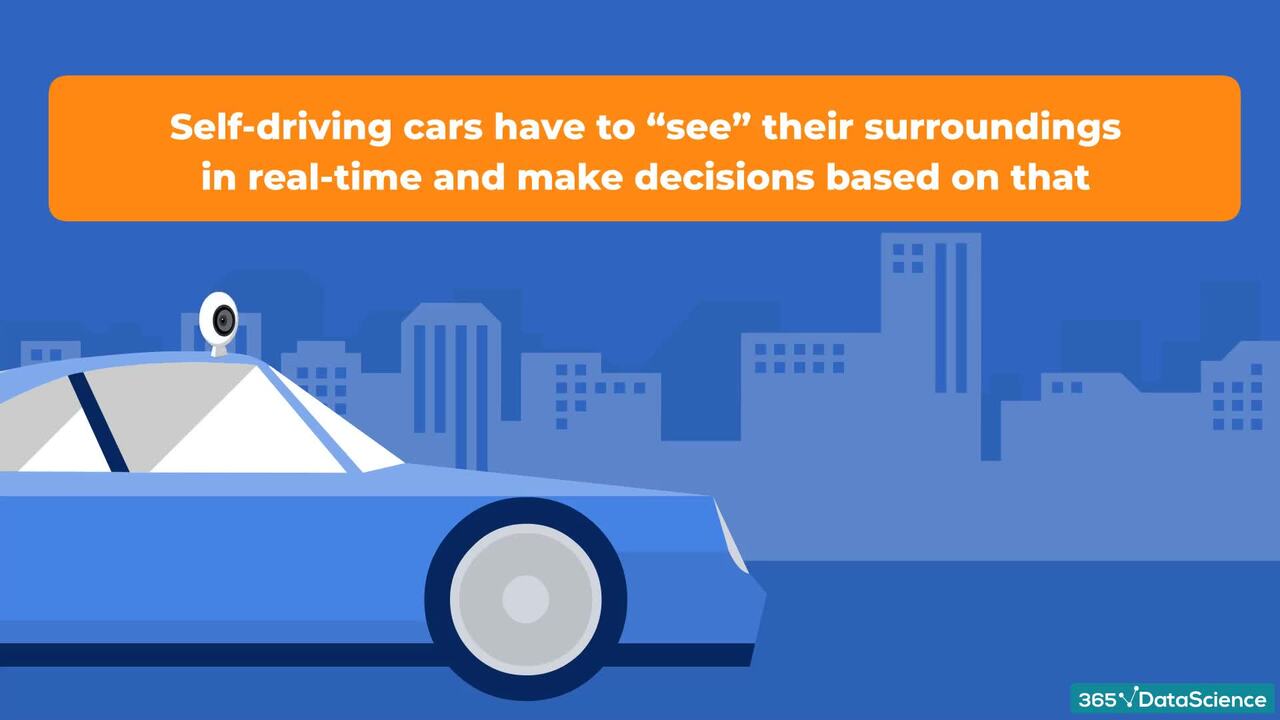
Why CNNs?

1.2 Why CNNs?

4 min

Introduction to image kernels

2.1 Introduction to image kernels

3 min
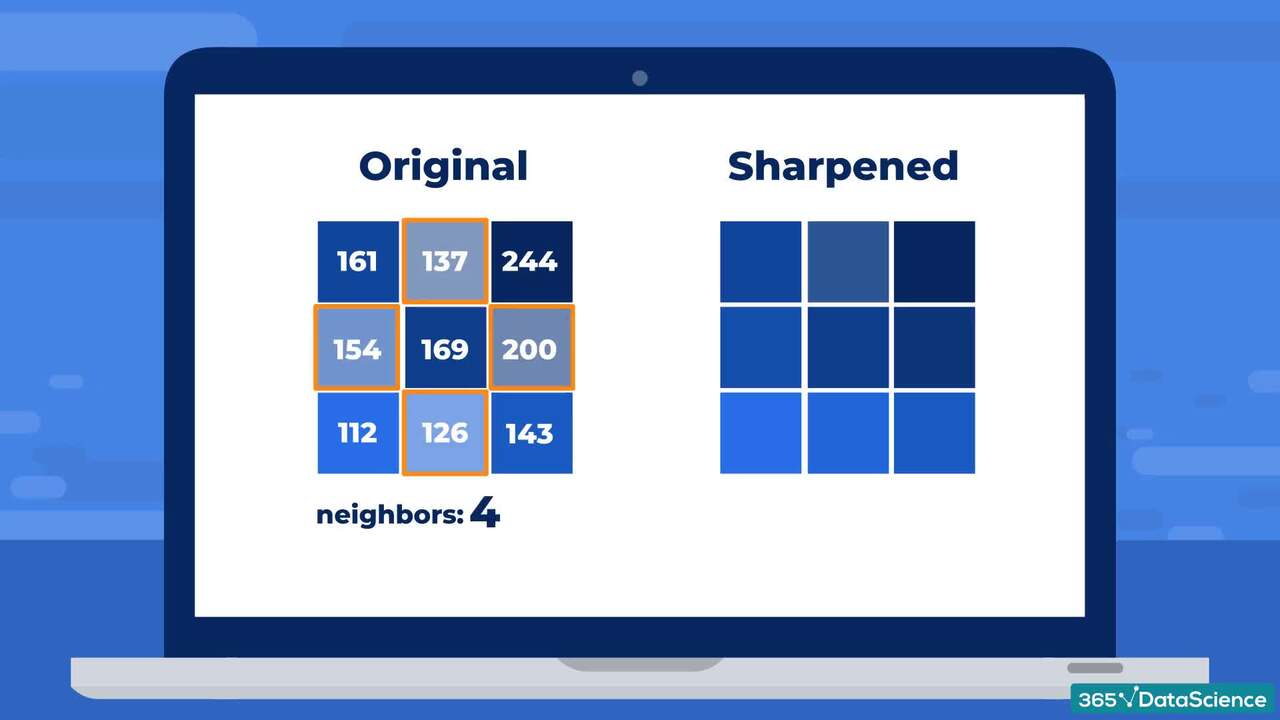
How do image transformations work?

2.2 How do image transformations work?

7 min
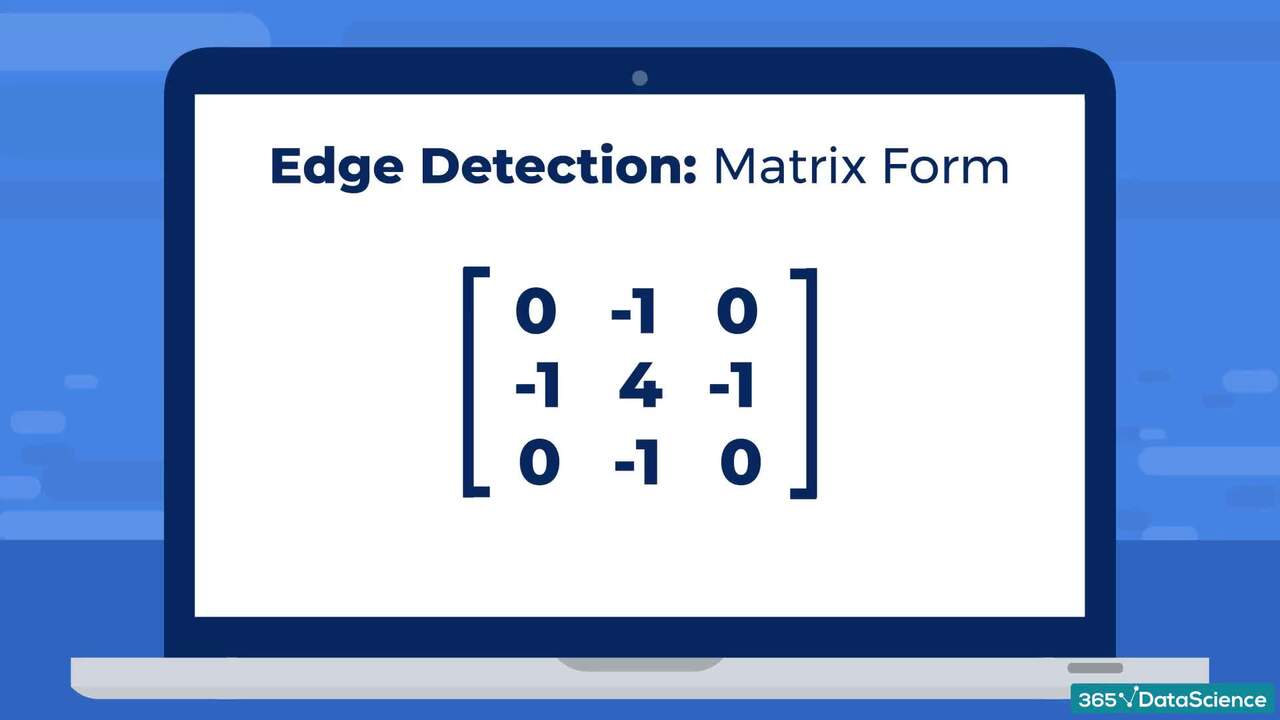
Kernels as matrices

2.3 Kernels as matrices

2 min

Convolution - applying kernels

2.4 Convolution - applying kernels

2 min

Start for free

ACCREDITED certificates

Craft a resume and LinkedIn profile you’re proud of—featuring certificates recognized by leading global institutions.

Earn CPE-accredited credentials that showcase your dedication, growth, and essential skills—the qualities employers value most.

  • Institute of Analytics
  • The Association of Data Scientists
  • E-Learning Quality Network
  • European Agency for Higher Education and Accreditation
  • Global Association of Online Trainers and Examiners

Certificates are included with the Self-study learning plan.

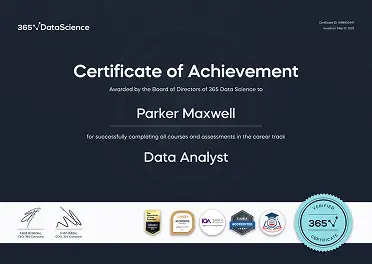
A LinkedIn profile mockup on a mobile screen showing Parker Maxwell, a Certified Data Analyst, with credentials from 365 Data Science listed under Licenses & Certification. A 365 Data Science Certificate of Achievement awarded to Parker Maxwell for completing the Data Analyst career track, featuring accreditation badges and a gold “Verified Certificate” seal.

How it WORKS

  • Lessons
  • Exercises
  • Projects
  • Practice exams
  • AI mock interviews

Lessons

Learn through short, simple lessons—no prior experience in AI or data science needed.

Try for free

Exercises

Reinforce your learning with mini recaps, hands-on coding, flashcards, fill-in-the-blank activities, and other engaging exercises.

Try for free

Projects

Tackle real-world AI and data science projects—just like those faced by industry professionals every day.

Try for free

Practice exams

Track your progress and solidify your knowledge with regular practice exams.

Try for free

AI mock interviews

Prep for interviews with real-world tasks, popular questions, and real-time feedback.

Try for free

Student REVIEWS

A collage of student testimonials from 365 Data Science learners, featuring profile photos, names, job titles, and quotes or video play icons, showcasing diverse backgrounds and successful career transitions into AI and data science roles.